
Kinship of the Realms: An Anthropological Survey
In the vast tapestry of Stellarealm, where starlight and shadow intertwine, dwell a multitude of races, each a thread of unique hue and texture, weaving the intricate fabric of this realm.
TABLE OF CONTENTS
Part I: The Dominant Folk: Major Peoples and Their Societal Structures
* Chapter 1: The Human Mosaic: Adaptability, Cultural Variance, and Geopolitical Influence
* Chapter 2: The Finmen (Merfolk): Aquatic Societies, Ecological Adaptations, and Geopolitical Significance
* Chapter 3: Vampiric Societies: Biology, Cultural Dynamics, and Geopolitical Interaction
* Chapter 4: The Werewolf Diaspora: Lycanthropy, Societal Fragmentation, and Cultural Resilience
* Chapter 5: The Vila (Fae): Aerial Kinship, Ecological Symbiosis, and Cultural Expressions
* Chapter 6: The Ogre Peoples: Ecological Adaptation, Clan-Based Societies, and Material Culture
Part II: Peoples of the Periphery: Lesser-Known Communities and Their Cultural Niches
* Chapter 7: The Vailed Kin (Draugar and Wraiths): Liminal Existence, Spectral Perceptions, and Sociocultural Roles
* Chapter 8: The Djinn (Jinn): Sentient Embodiments of Primordial Elemental Forces
* Chapter 9: The Oni ("Horned Kin"): Embodiments of Chaotic Energy and Adaptive Social Structures
* Chapter 10: The Devas ("Celestial Host"): Embodiments of Cosmic Order and Agents of Equilibrium
* Chapter 11: The Goblin Peoples: Ingenuity, Adaptability, and Dispersed Social Structures
Part III: Rarer Inhabitants: Cryptids, Constructs, and Elusive Peoples of the Wilds
* Chapter 12: The Alkonost: Avian-Humanoid Societies and Sovereignty of the Skies
* Chapter 13: The Lamiae (Naga): Serpentine Physiology, Solitary Lifeways, and Rumored Enclaves
* Chapter 14: The Minotaur Peoples ("Horned Clans"): Bovine Humanoid Ecology, Nomadic Social Structures, and Cultural Traditions
* Chapter 15: The Golems ("Stone Kin"): Sentient Constructs of a Lost Epoch
Part IV: Echoes from the Past: A Paleoethnography of Vanished and Mythic Peoples
(This universe is a living, breathing creation, which means it is constantly growing, evolving, and revealing new secrets. The lore, maps, and histories you find here are not set in stone; they will be actively changed, updated, and expanded over time. As new tales are told and new discoveries are made, the world database will be revised to reflect the most current state of this ever-changing setting.)

Chapter 1: The Human Mosaic
The human species (colloquially termed) represents the most populous and arguably the most ecologically versatile of all sentient groups inhabiting Stellarealm. Their demographic success serves as a profound testament to the inherent resilience and adaptive ingenuity of this lineage. Unlike many contemporaneous peoples whose existence is often intrinsically linked to specific environmental niches (like the Merfolk to the sea or Vila to the forest) or predicated upon innate Primal affinities, human populations have dispersed across the continental landmass with a diaspora likened to seeds carried upon the wind. They have established thriving, complex societies in nearly every conceivable biome, from the sun-drenched littoral zones of the Azure Hand to the expansive windswept plains of the Horizon Steppe and the deeply umbrageous forests of the Verdant Echoes.
The resultant societal structures are as markedly varied as the diverse landscapes they occupy, presenting a veritable kaleidoscope of cultures, belief systems, and normative traditions. Nevertheless, these disparate groups are frequently united by a shared, demonstrable capacity for technological and social innovation, coupled with a seemingly relentless impetus to explore, comprehend, and ultimately shape the world around them—an impulse often championed by adherents of the House of Exploration.
1.1 Demographic Distribution and Ecological Versatility
The defining characteristic of humans in Stellarealm is their remarkable ability to modify behavior and environment, alongside an unwavering determination to not only persist but to flourish under diverse conditions. This inherent adaptability is manifest in their material culture – from the architects of sprawling urban centers such as the Imperial capital of Tiberium and the neutral trade hub of Oakhaven, to the intrepid pioneers who venture into uncharted territories like the Shatterlands, and the dedicated scholars who commit their lives to unraveling the esoteric mysteries of the Weave and the Vail.
This capacity for adaptation has historically enabled human societies to overcome myriad challenges. These range from the rigorous climatic extremes of the Northern Expanse to the complex political machinations prevalent in the more densely settled regions, and most notably, their central, unifying role under Tiberius in the 110 Year War against the Giants. Their ethnohistory is one of perpetual transformation and sociocultural evolution.
1.2 Human Agency in Sociopolitical Systems
Human populations play a demonstrably dominant role in the macropolitical landscape of Stellarealm.
* The Empire: They constitute the primary demographic and administrative force behind the expansive, centralized Iron Dominion, their collective ambition forging its hierarchical power structure.
* The Republic: Concurrently, humans are the architects and principal ideologues of the revolutionary Republic of The Dawn (The Nation), where their emergent political philosophies shape its nascent governance from Liberion and Veridia.
* Global Influence: Across other major polities, human diplomats, merchants, military personnel, and administrators are instrumental in the functioning of the League of Free Banners (The Alliance) and hold significant, often influential, positions within the multi-racial Concordant Union and the tradition-bound Celestial Mandate (The Dynasty).
1.3 Cultural Ecotypes: Regional Variations and Societal Adaptations
The considerable geographic scale and environmental heterogeneity of Stellarealm have catalyzed the development of an extraordinary spectrum of human cultures. While sharing a common ancestral root, these distinct human populations, or Ecotypes, exhibit variations in preferred modes of subsistence, societal organization, physical characteristics, and cultural praxis.
1.3.1 The Heartlanders
* Region: The Heartland Plains (Crimson Heartlands) and Western Lowlands.
* Culture: Predominantly inhabiting the vast, fertile plains, these populations form the agricultural and demographic core of the Empire. Their lifeways are deeply enmeshed with seasonal agricultural cycles, characterized by a strong societal emphasis on work ethic, a profound connection to the land, and vibrant community spirit.
* Physicality & Style: Heartlanders typically possess square-jawed, symmetrical features often described as "noble" or robust. Their skin tones range from a sun-kissed olive to a rich tan, developed from generations of labor under the open sky. Their eyes are frequently a determined hazel or a piercing "Tiberium Steel" grey-blue, common in the martial lines of the region. Style is often disciplined; men favor short, military cuts or groomed beards, while clothing is practical and durable. Adornments are often limited to Imperial rank insignias branded or stitched onto clothing, or Celestial House amulets worn openly by the devout.
* Skills: Agriculture, animal husbandry, masonry, and logistics.
1.3.2 The Nomads
* Region: The Northern Expanse (Horizon Steppe).
* Culture: These groups subsist by roaming the expansive steppe, their movements dictated by transhumance patterns and the migration of herd animals. Their cultural values emphasize resilience, advanced survival skills, and the importance of oral tradition, guided by the Primal Accord.
* Physicality & Style: Phenotypically, Nomads tend to be lean and wiry, built for endurance rather than brute strength. Their complexions vary from a pale frost in the north to a ruddy wind-burn common among the riders. They are noted for high cheekbones and deep brown or black eyes that squint naturally against the horizon. Hair is worn long and woven into intricate braids adorned with beads, bone, or leather tokens signifying clan allegiance. During ceremonies, they often apply temporary Primal ritual paint to their faces and arms.
* Skills: Hunting, tracking, horsemanship, animal handling, and wilderness survival.
1.3.3 The Coastals
* Region: The Western Peninsula (Azure Hand) and western Southern Shores.
* Culture: Thriving along the littoral zones, these populations are foundational to the Alliance. Distinguished by their maritime expertise, their societal rhythms follow the tides. They possess a spirit of exploration and a pronounced sense of independence fostered by the oceanic environment.
* Physicality & Style: Coastals often exhibit strong, agile physiques and sharp, weather-beaten features. Their skin is deeply tanned, often likened to weathered teak or mahogany. Eyes are typically a bright, clear oceanic blue, highly valued in their folklore. Fashion is practical for shipboard life: loose, wind-blown hair held back by bandanas, gold hoop earrings (often representing wealth transportable in emergencies), and lightweight linens. Many bear Guild Tattoos, intricate ink denoting their specific trade or ship allegiance.
* Skills: Sailing, navigation, shipbuilding, fishing, and maritime trade.
1.3.4 The Hillfolk
* Region: The Emberglow Vista (Southern Uplands).
* Culture: Establishing their communities within the sun-drenched hills, these humans have cultivated a distinct culture centered around viticulture and oleoculture. They are renowned for hospitality, communal feasting, and artistic expression.
* Physicality & Style: The Hillfolk are known for their warm, golden-brown skin tones reminiscent of Mediterranean climes. Their eyes are frequently amber or gold, reflecting the sunlight of their home. Their fashion is more relaxed and elegant than their northern neighbors, favoring draped fabrics and colors that mirror the vineyards.
* Skills: Winemaking, olive cultivation, artistry, diplomacy, and social conviviality.
1.3.5 The Desert Dwellers
* Region: The Southern Waste (Scoured Waste).
* Culture: These resilient populations have adapted to the harsh environmental conditions of the Waste. They are recognized for resourcefulness, pragmatism, and intricate trade networks connecting vital oases like Azmar.
* Physicality & Style: Desert Dwellers possess deep bronze to dark umber skin, providing natural protection against the relentless sun. Their eyes are typically deep brown or black, set deep to shade them from glare. They favor loose, layered robes for heat management and are rarely seen without protective veils or scarves to filter the dust.
* Skills: Desert survival, navigation, long-distance trade, and animal handling.
1.3.6 The Mountain Clans
* Region: The Spine of the World.
* Culture: Inhabiting the rugged, high-altitude terrain, these hardy humans form isolated, clan-based societies emphasizing tradition and self-reliance. Some have formed complex, integrated societies with other races, such as in Grimfang Hold.
* Physicality & Style: Physically imposing, they tend to be stocky and muscular with thick skin adapted to the cold. Their style is utilitarian: heavy furs, wools, and leathers. Adornments are usually functional, often incorporating mined metals or trophies from mountain beasts.
* Skills: Mining, mountaineering, smithing, and guerilla warfare.
1.3.7 The Northmen
* Region: The Asgar Mountains and Valgard.
* Culture: A tribal culture of immense stature and unyielding will, adapted to the brutal cold of the northeastern coast. They are unique for their historical alliance with Werewolves and current support of the Republic.
* Physicality & Style: The Northmen are the most physically imposing human ecotype, often heavy-browed and broad-shouldered. They wear their hair and beards long, often braided in complex patterns similar to the Steppe clans but heavier. Their dress consists of heavy furs from arctic predators layered over chainmail.
* Skills: Rune-Smithing, heavy infantry combat, ice-breaking naval warfare.
1.3.8 The Islanders
* Region: The scattered archipelagos of the Celestial Sea, the Drifting Isles, and remote atolls of the Endless Sea.
* Culture: These populations live in isolation from the continental powers, often on small landmasses where resources are scarce and community is paramount. They are masters of aquaculture and have a deep spiritual connection to the tides, often viewing the Merfolk as neighbors rather than monsters.
* Physicality & Style: Islanders are distinct for their skin tones, which range from a rich, deep tan to a lustrous ebony, evolved for lives spent entirely under the open, reflective glare of the sun on the water. Their hair is often tightly curled or worn in locs to manage the salt air. They adorn themselves with materials from their environment—mother-of-pearl inlays, coral jewelry, and shark-tooth necklaces—rather than mined metals.
* Skills: Pearl-diving, small-craft navigation, weather-reading, and shallow-water hunting.
1.3.9 The Outlanders
* Region: Lawless zones such as Leviathan's Rest, Rivenport, Dead-Man's Drift, and the ships of The Kraken's Knot.
* Culture: This ecotype is defined not by geography, but by rejection of formal society. They are the scavengers, pirates, and survivors who live in the cracks of the world. They value strength, cunning, and the "Code of the Knot" over any king's law.
* Physicality & Style: Outlanders are the most visually diverse, a motley collection of runaways and exiles. However, they share a "rough" aesthetic: skin scarred by battle or labor, mismatched armor scavenged from different nations, and an abundance of tattoos—specifically Black-Tide ink or markings denoting criminal achievements. Their gear is often modified for survival, blending practicality with intimidation.
* Skills: Scavenging, intimidation, unconventional warfare, smuggling, and improvisation.
1.3.10 The Witches of the Veil
* Region: Ultima Vellus (Veil's End).
* Culture: An anomalous and highly specialized human ecotype, the Witches are a reclusive society (comprised of both males and females) isolated on the remote island nexus.
* Physicality & Style: They are instantly recognizable by their unnaturally pallid or chalk-white skin and stark white hair, often braided with small bones or dark metal rings. Their most striking feature is their eyes, which are often a spectral silver or milky white, marked by the constant exposure to Vail energies. Many bear faint, spiderweb-like Veil-Scars on their skin.
* Skills: Vail Magic, advanced Herbalism (utilizing shadow-grown flora), and potion brewing.
1.3.11 The Cosmopolitans (City Dwellers)
* Region: Major urban centers (Concordia, Oakhaven, Tiberium, Free Banner, Xylos).
* Culture: Distributed across major cities, these humans constitute diverse communities shaped by continuous migration.
* Physicality & Style: Cosmopolitans defy singular classification, representing a blend of all other ecotypes. However, they are often distinguished by their adoption of current fashions—silks from the Dynasty, wools from the Alliance—and a lack of the "weathered" look found in the frontier ecotypes. Eye colors here are the most varied, including the rare Arcane Violet seen in lineages with high magic potential.
* Skills: Commerce, bureaucracy, academic magic (Weave), politics, and espionage.
1.4 Cognitive and Spiritual Systems
While human physiology lacks the inherent Primal magical abilities observed in races like Werewolves or Vila, individuals within human populations exhibit a remarkable aptitude for the acquisition and mastery of Arcane arts, primarily focusing on the intellectual manipulation of the Weave. Driven by intellectual curiosity, human mages are renowned for their ingenuity. The esteemed Colleges of the Silent Conclave—from the Grand Athenaeum of Eldoria to the Aetherium Academy—are significantly populated by human mages and scholars, though they must remain ever-wary of afflictions like Weave Rot.
Furthermore, humans constitute the primary demographic base of followers of the Twelve Houses of the Celestial Zodiac. They predominantly fill the ranks of the clergy, dedicate themselves to the tenets espoused by the various Houses, and form the vast majority of the faithful adherents. Temples are frequently situated within human population centers, serving as spiritual anchors.
1.5 Conclusion: Trajectories of Human Influence
The future trajectory of Stellarealm is inextricably linked to the activities and evolution of its human inhabitants. As explorers, merchants, scholars, and warriors, humans persistently challenge existing boundaries and grapple with the emergent challenges of their time. The human story in Stellarealm is a dynamic, ongoing narrative, reflecting the complexities of their spirit in a world forever scarred by the Age of Falling Stars and defined by the unresolved enigma of the Star Children.
Estimated Population Demographics:
* Humans: 60% of the total known sentient population of Stellarealm.
* Rationale: Humans are the baseline and most populous, adaptable race, forming the core of the Empire, Republic, and significant portions of all other major factions.

Chapter 2: The Finmen (Merfolk)
Introduction
The Finmen, a sentient aquatic humanoid species frequently referred to as "Merfolk" or "Mermaids" in terrestrial vernacular, represent a captivating and ecologically significant population within Stellarealm. Their existence is intrinsically interwoven with the vast oceans (the Endless Sea) and complex waterway systems (the Celestial Sea) that define much of the realm's geography. Their unique physiology, a product of millennia of specialized adaptation to aquatic environments, their rich and ancient cultural traditions steeped in the cyclical rhythms of the tides, and their profound, often symbiotic, connection to marine ecosystems establish them as a powerful, if at times enigmatic, presence. This chapter endeavors to elucidate the key biological, sociocultural, and geopolitical facets of Finmen societies.
2.1 Physiological Adaptations: The Embodiment of Aquatic Life
The physical form of the Finmen exemplifies sophisticated biological adaptation, meticulously sculpted for navigation and subsistence within the underwater world, affording them unparalleled grace, speed, and power in their native element.
2.1.1 Morphological Plasticity: The Dual Nature of Locomotion
A defining physiological characteristic of the Finmen is their remarkable capacity for controlled metamorphosis of their lower bodies. In their primary aquatic state, the pelvic girdle and lower limbs seamlessly transform into a powerful, laterally compressed, and extensively scaled caudal fin, or tail, which serves as their principal means of propulsion. The coloration and patterning of these caudal fins often exhibit regional and lineage-specific variations, potentially serving as markers of identity or environmental camouflage. Crucially, Finmen can consciously revert this transformation, their tails bifurcating and restructuring into a pair of fully articulated legs, granting them a bipedal humanoid form suitable for terrestrial locomotion when required.
2.1.2 Respiratory Versatility: Bimodal Breathing
Finmen possess a highly specialized dual respiratory system, incorporating both hydrostatically efficient gills for underwater oxygen extraction and functional lungs for aerial respiration. This bimodal system affords them exceptional environmental versatility, enabling sustained activity from the abyssal trenches of the Endless Sea to sun-drenched coastal shores and even temporary incursions inland.
2.1.3 Integumentary System: The Shimmering Shield of Scales
The majority of the Finmen body, particularly in its aquatic form, is covered by closely overlapping, iridescent scales. This integumentary layer provides a natural, hydrodynamic barrier, reducing drag and offering protection against the extreme pressures of deep-sea conditions, physical abrasion, certain aquatic parasites, and reportedly, minor deleterious magical effects.
2.1.4 Sensory Acuity: Perception in Submerged Environments
Adaptation to aquatic life has endowed the Finmen with exceptional sensory capabilities. These include highly developed underwater vision, often with enhanced perception in low-light conditions; acute auditory senses capable of discerning subtle variations in underwater soundscapes; and an extraordinary sensitivity to hydrostatic pressure and current changes, allowing for precise navigation and the detection of movement or entities in their vicinity. Furthermore, many Finmen groups report an empathic capacity to perceive the emotional states of other aquatic life forms, fostering a deep, almost intuitive connection with the broader marine ecosystem that aligns with the principles of the Primal Accord.
2.1.5 Innate Magical Affinities: The Flow of Hydrokinesis
An intrinsic biological and spiritual connection to water grants most Finmen a natural affinity for hydrokinesis. This is a form of innate Primal Magic that manifests as Elemental Magic (Water). This manifests in abilities such as manipulating currents, direct communication (often telepathic or empathic) with aquatic creatures, and influencing localized weather patterns, particularly over water. The potency and expression of this magic are often tied to individual emotional states and the perceived health of their immediate environment, with certain ancestral lineages reputed to possess more potent or specialized forms of these abilities.
2.2 Sociocultural Frameworks: The Rhythms of Finmen Civilization
Finmen culture presents as a rich and intricate tapestry, fundamentally woven from their profound connection to the oceanic world. It reflects a deep societal reverence for the sea and a prevailing ethos of harmonious coexistence with its myriad inhabitants, though this is not without instances of fiercely defended territoriality and historical conflict.
2.2.1 Subaquatic Polities: Kingdoms Beneath the Waves
Finmen populations typically organize into complex societies, often forming elaborate underwater kingdoms within the Celestial Sea and the more extensive Endless Sea. Their urban centers and settlements are frequently constructed from living coral, luminous pearls, and other biogenic or lithic aquatic materials, designed to blend seamlessly and sustainably with the surrounding marine environment. Notable among these is the kingdom of Coralia, which is documented as maintaining consistent diplomatic and trade relations with the terrestrial League of Free Banners (Alliance). The Concordant Union is also known to foster broad diplomatic ties with many kingdoms. These submerged polities are generally characterized by monarchical rule, with leadership (queens or kings) deriving authority from established lineage, demonstrated wisdom, and mastery of hydrokinetic magic. Royal courts serve as centers of cultural production, diplomatic engagement, and the preservation of ancient traditions, bearing the cultural scars and collective memories of devastating historical events such as the War of the Shattered Sea.
2.2.2 Oral and Sonic Traditions: The Songs of the Deep as Communication and Ritual
Finmen are renowned for their complex vocalizations, often described as beautiful and haunting songs capable of resonating for considerable distances underwater. These sonic expressions serve multifaceted roles: as a primary mode of communication, as repositories of oral history and mythology, and as integral components of ritual. Adherents of the Primal Accord theorize these songs are a direct and pure expression of the World-Song itself, resonating with the deep currents and the very pulse of the sea. Ethnographic accounts suggest these songs can also possess potent magical properties, capable of influencing emotional states, calming turbulent waters, or even enchanting objects and other sentient creatures.
2.2.3 Ecological Stewardship and Conflict: Guardians of the Reefs
A core tenet of many Finmen cultures is a deeply felt responsibility for the stewardship of aquatic habitats, particularly vulnerable ecosystems such as coral reefs. They often act as fierce guardians against anthropogenic or other pollution, destructive harvesting practices, and various external threats. Their historical narratives include significant conflicts over resources, such as the Age of Sunken Grief (c. 1201-1300 NE), during which Finmen polities engaged in the War of the Shattered Sea, leading to the eradication of the Siren race. This act is framed within their narratives as necessary for the protection of their domain and ecological balance. Alliances are frequently forged with other aquatic creatures to maintain oceanic equilibrium.
2.2.4 Temporality and Ritual: The Influence of Tidal and Lunar Cycles
Finmen society and its attendant ritual calendar are deeply structured around the observable rhythms of oceanic tides and the phases of the Thirteen Moons. These celestial and gravitational influences are often celebrated with elaborate festivals and ceremonies, shaping their measurement of time, spiritual beliefs, and communal activities.
2.2.5 Epistemology: Keepers of Deep Lore and Generational Knowledge
As a long-lived race with a sustained connection to the marine environment, Finmen possess vast accumulated knowledge pertaining to oceanography, marine biology, and submerged geographies. This lore, passed down through generations via oral histories, intricate carvings (often on shell, bone, or enduring stone), and ritual reenactments, is maintained by designated Lorekeepers. Their corpus of knowledge encompasses everything from complex cetacean migration patterns to the purported secrets of long-vanished submerged civilizations, such as the legendary Sunken City of Indor.
2.3 Ecological Variants and Sub-Cultures: Diversity within Finmen Populations
The diverse aquatic environments of Stellarealm, ranging from shallow coastal reefs to abyssal plains, have fostered the development of distinct Finmen ecotypes, each exhibiting specific adaptations and cultural nuances:
* 2.3.1 Reef Finmen: These populations typically inhabit vibrant coral reef ecosystems (e.g., near Coralia). Their scale coloration is often bright and variegated, serving as effective camouflage. They are skilled in coral cultivation and are often fiercely territorial.
* 2.3.2 Deep-Sea Finmen: Adapted to the high-pressure, low-light conditions of deep-sea trenches, these Finmen often exhibit darker or bioluminescent scale patterns. They possess sensory adaptations suited for near or total darkness and are frequently more solitary. They are reputed to be keepers of particularly ancient or esoteric knowledge.
* 2.3.3 River Finmen: Inhabiting major river systems and freshwater lakes, these Finmen display scale colorations tending towards duller greens, browns, or greys. Their caudal fins may be more streamlined for navigating strong currents. They often act as traders or messengers along inland waterways.
* 2.3.4 Coastal Finmen: Living in shallow coastal regions, estuaries, and significant harbors, these groups have the most frequent and sustained contact with land-dwelling populations. They are often more adaptable to both terrestrial and marine environments. They serve as vital intermediaries, with communities known to interact with or live among terrestrial populations in port settlements such as Seadrift and Seabreeze Haven, fostering particularly strong ties with polities like the Concordant Union.
* 2.3.5 Abyssal Finmen: Residing in the deepest, largely unexplored abyssal plains of the Endless Sea, this variant is rarely encountered. Legends attribute to them unique, potent forms of magic, guardianship over ancient, submerged secrets, and possible symbiotic relationships with colossal, abyssal megafauna (Leviathans).
2.4 Geopolitical Dynamics: Finmen Influence in the Wider Stellarealm
While often preferring the relative tranquility of their subaquatic domains, Finmen societies represent a formidable force due to their unique abilities and dominion over vast oceanic territories.
2.4.1 Sovereignty and Stewardship: Guardianship of Oceanic Territories
Most Finmen polities view themselves as sovereign entities and hereditary stewards of the oceans, asserting rights to protect these domains from land-based threats. Under the overarching legal frameworks maintained by The Order of the Immutable Scales, Finmen are recognized as a sentient race with rights equal to other recognized peoples, though the practical enforcement of such rights in remote aquatic territories remains complex.
2.4.2 Naval Capabilities and Maritime Control
The Finmen's innate mastery of aquatic environments, including current navigation, underwater reconnaissance, and the ability to command other aquatic creatures, renders them a significant naval power. Their "fleets," which may consist of individuals mounted on trained aquatic mounts, magically propelled vessels, or coordinated groups employing hydrokinetic force, can effectively control sea lanes and defend coastlines, leveraging their intimate knowledge of underwater geography to strategic advantage.
2.4.3 Inter-Species Diplomacy: Envoys to Terrestrial Polities
Recognizing the interconnectedness of realms, Finmen kingdoms frequently dispatch diplomatic missions to terrestrial kingdoms. These engagements are typically focused on negotiating trade agreements (such as the established links between Coralia and the Alliance), forming strategic alliances (evidenced by their broader, multifaceted relationship with the Concordant Union), or addressing matters of mutual concern.
2.4.4 The Deterrent of Oceanic Power: Responses to Existential Threats
While generally described as peaceful, Finmen societies possess the capacity for formidable retaliatory action if their populations or critical habitats are existentially threatened. Historical accounts (such as the War of the Shattered Sea) and anecdotal evidence suggest they can unleash the ocean's fury upon aggressors by summoning storms, rogue waves, and commanding deep-sea denizens (such as selachian swarms or krakens) to act against offenders. This potential serves as a powerful deterrent.
2.5 Conclusion: The Enduring Tides of Finmen Destiny
The collective destiny of the Finmen is inextricably bound to the health and stability of Stellarealm's oceans and waterways. In an era marked by increasing environmental pressures from terrestrial activities and inter-factional conflicts that spill into marine territories, their role in preserving aquatic ecological balance is of critical importance. Their deep, intrinsic connection to the sea, their sophisticated mastery of water-based magic, and their repository of ancient ecological wisdom position them as a vital and enduring force, shaping the future of Stellarealm.
2.6 Population and Demographics
> Estimated Population Demographics:
> * Finmen (Merfolk): 9% of the total known sentient population of Stellarealm.
> * Rationale: As a "Significant Population," the Finmen represent one of the largest non-human groups in Stellarealm, estimated to comprise approximately 9% of the total known sentient population. This figure places them on par with the Vila (Fae). While their visible presence on land is limited to specific coastal communities and diplomatic missions, this high population estimate is justified by the sheer scale of their vast, unseen underwater kingdoms and settlements, which are believed to house the overwhelming majority of their populace within the Celestial and Endless Seas.
>

Chapter 3: Vampiric Societies
Introduction
The vampires of Stellarealm constitute a distinct and ancient sapient race, coexisting alongside human and other major constituent peoples of the realm. Possessing a unique physiology that differentiates them fundamentally from narratives of undeath or inter-species transformation, and a rich, multifaceted cultural heritage shaped by extended periods of cooperation, internal schism, and external interaction, they represent a significant, albeit often circumspect, presence. Their influence is woven, sometimes subtly, sometimes overtly, into the broader societal fabric of Stellarealm. Far from monolithic folkloric archetypes, vampires exhibit a wide spectrum of personalities, ethical frameworks, and societal structures. Their extensive history is punctuated by eras of acknowledged prominence, devastating internecine conflicts (notably the Blood Wars), and periods of quiet, yet potent, influence. A core aspect of their being involves inherent biological abilities tied to the manipulation and assimilation of the vital life essence that permeates all living organisms.
3.1 Biological Foundations: The Nature of Vampiric Existence
The essential nature of vampiric existence in Stellarealm is an inherent racial characteristic, defined by a unique biological makeup rather than a state of undeath or a consequence of transformation from another species.
3.1.1 The Vital Draw: Sustenance and Energy Acquisition
Vampires possess an innate, biological imperative and the physiological capacity to draw upon the vital energy of other living beings for their sustenance. This process, often referred to as the "Vital Draw," is essential for maintaining their unique physiology and fueling their inherent abilities. The act of drawing vital essence (often, but not exclusively, through blood as a conduit) is not necessarily lethal and can manifest across a spectrum, from a subtle, almost symbiotic exchange, to a more significant and potentially deleterious intake. The intensity and impact of this process are contingent upon the individual vampire's control, immediate needs, and prevailing ethical considerations.
3.1.2 Somatic Resilience and Extended Longevity
Vampires are characterized by natural somatic resilience, possessing enhanced physical capabilities encompassing strength, speed, and sensory acuity, which typically develop and refine as they mature. They exhibit remarkable regenerative capacities, healing from injuries that would prove permanently debilitating or fatal to many other humanoid races. This unique connection to, and assimilation of, vital essence grants them significantly extended lifespans compared to Humans, allowing individuals to witness and accumulate knowledge over centuries, and in some cases, millennia.
3.1.3 Intrinsic Connection to Vital Essence and the Development of Blood Magic
Many vampires develop a deep, inherent, and intuitive understanding of the flow and manipulation of vital energy within themselves and others. This intrinsic connection, sometimes referred to as the Art of Darkness, allows for the potentiation of physical feats, accelerated healing processes, and the exertion of subtle, often psychic or empathic, influences upon other beings. Building upon this innate biological foundation, some individuals pursue the disciplined study and practice of Blood Magic—a potent, historically contentious, and sometimes perilous arcane art that facilitates more complex and powerful manipulations of life force. This practice is distinct from their innate biology and carries the significant metaphysical risk of The Siphoner's Hunger—a debilitating magical addiction—if overused or abused.
3.2 Sociocultural Organization and Historical Context
Vampire society across Stellarealm is demonstrably diverse, exhibiting a wide array of customs and organizational structures shaped by extensive historical trajectories, philosophical developments, and geographical particularities. Their cultures invariably encompass sophisticated expressions in art, extensive traditions of learning, and complex modes of social organization.
3.2.1 The "Courts of Night" and "Great Houses": Sociopolitical Structures
Vampiric societies are frequently organized around ancient, influential entities known as "Courts of Night" or "Great Houses." These structures often function less like traditional hereditary nobilities (though lineage can play a role) and more akin to long-established corporate entities, influential institutions, or powerful, extended familial estates. Their headquarters are often located within imposing castles, fortified keeps (Shadowed Citadels), or ancestral manors, such as those found within, or exerting significant influence upon, city-states like Nocturne. These entities typically manage substantial resources, wield considerable political influence, engage in intricate internal power dynamics, and serve as custodians of ancient traditions and accumulated lore.
3.2.2 The Blood Wars: Historical Conflicts and Their Societal Impact
The historical narratives of vampire societies are notably scarred by periods of devastating internal conflict, collectively referred to as the "Blood Wars," which reached their peak during the Age of Hidden Shadows (c. 701-800 NE). These were primarily internecine struggles ignited by the "Great Scour"—the realm-wide hunt for knowledge lost during the Age of Falling Stars. The war was fought over the ethics of this recovered knowledge:
* The "Sequestration Faction" (traditionalists) sought to hoard this dangerous magic, believing themselves the only suitable guardians.
* The "Integration Faction" (pragmatists, centered in proto-Nocturne) sought to study, leverage, and integrate this new magic to secure their place in the rising mortal world.
This philosophical war escalated into clandestine violence, fueled by the widespread use of Blood Magic. The excessive, desperate use of this power during the conflict led to the secondary catastrophe of The Siphoner's Hunger, as large groups of combatants became afflicted with the debilitating magical addiction. The war, and its subsequent addiction crisis, threatened to expose the entire race and destabilize the mortal realms. This crisis was the catalyst for the formation of The Order of the Immutable Scales, which, in its first major act, allied with the Concordant Union and moderate Vampires to mediate a peace. This event directly led to the Order's strict, realm-wide regulations concerning the practice of harmful Blood Magic and the hoarding of forbidden lore.
3.2.3 Intellectual and Artistic Traditions: Centers of Learning and Cultural Production
Despite, or perhaps partly because of, their turbulent history and long lifespans, vampire societies often establish and maintain significant centers dedicated to knowledge acquisition, artistic expression, and historical preservation. These can range from grand academies and libraries within integrated urban centers like Nocturne to more secluded artistic enclaves and private archives, through which they contribute intellectually and creatively to the broader cultural milieu of Stellarealm.
3.2.4 Philosophical Pluralism and Ethical Frameworks
Reflecting their extended lifespans and unique mode of existence, vampires exhibit a broad spectrum of philosophical perspectives, such as the codified Philosophy of Blood. These frameworks concern ethics, the nature of existence, their intrinsic relationship with vital energy, and their place among other sentient races. The legacy of the Blood Wars frequently informs these diverse philosophies, leading to ongoing debates and varying interpretations of responsibility and societal contribution.
3.2.5 Modes of Interaction: Integration and Seclusion in Relation to Other Polities
The degree of interaction between vampire communities and other races varies considerably by region and the prevailing ethos of the dominant Court or Great House. Some vampire groups (like the "Integration Faction") integrate relatively openly with other races, participating in commerce (often facilitated through networks like the Concordant Union), diplomacy, and shared civic life. Others (like the "Sequestration Faction") maintain more secluded, self-sufficient existences within their ancestral strongholds or remote territories, limiting external contact.
3.3 Social Roles and Specializations within Vampiric Communities
Across Stellarealm, different enclaves and individuals within vampire society have adapted to fulfill various specialized roles and niches, reflecting their diverse talents and the opportunities available within their specific contexts.
* 3.3.1 Leadership Cadres: The Influential Heads of Houses and Courts
These individuals function as leaders and administrators, shaping local and sometimes regional events through diplomatic acumen, strategic economic maneuvering, and the leveraging of accumulated influence and historical knowledge. They often preside over the complex, "company"-like structures that characterize many of their societal organizations.
* 3.3.2 Peripatetic Individuals: The Wandering Kindred and Their Networks
Comprising nomadic individuals or small, itinerant groups, the Wandering Kindred travel extensively throughout Stellarealm. In doing so, they experience diverse cultures and often function as scouts, independent traders, information brokers, or neutral observers, forming loose networks of communication and exchange.
* 3.3.3 Urban Integration: Vampiric Citizenry in Cosmopolitan Centers
Certain vampires choose to reside openly within diverse urban environments, such as the notable city-state of Nocturne (a Union member) or in enclaves like the Crimson Balcony in Rivenport. Here, they contribute to the multifaceted fabric of urban society alongside other races, engaging in various professions and civic activities.
* 3.3.4 Scholarly Pursuits: The Vital Scholars and Keepers of Arcane/Historical Knowledge
A significant cohort within vampire society dedicates themselves to the systematic study of vital energy, the intricacies of Blood Magic (often within accepted ethical and legal limits), the mastery of the Art of Darkness, extensive historical research, and other arcane or mundane fields of knowledge. These scholars are frequently found within dedicated academies, ancient libraries, or serving as archivists for their respective Houses.
* 3.3.5 Gerontocratic Influence: The Role of "Ancient Ones" as Lorekeepers and Advisors
The oldest vampires, by virtue of their exceptionally long lives, become repositories of immense historical knowledge, possessing a deep understanding of their race's complex nature and the long, cyclical patterns of world events. These "Ancient Ones" are often revered as advisors, mediators, or reclusive keepers of profound lore, their influence subtle yet pervasive.
3.4 Geopolitical Engagement and Influence
As a long-lived, intellectually inclined, and often resource-rich race, vampires are frequently deeply involved, whether directly or indirectly, in the broader political landscape of Stellarealm.
* 3.4.1 Diplomatic and Economic Relations: Many influential Vampire Courts or Great Houses engage in open, or at times more discreet, diplomatic and trade relations with other polities. These interactions are often facilitated through neutral intermediaries or with factions known for their tolerance or pragmatism, such as certain member-states of the Concordant Union.
* 3.4.2 Political Representation and Participation in Wider Governance: In regions where vampires are more integrated into mixed societies (such as Nocturne), they may hold formal or informal representation in local or regional governing bodies, advocating for their interests and contributing to public policy.
* 3.4.3 Cultural Dissemination and Inter-Societal Influence: The unique artistic traditions, philosophical perspectives, and historical knowledge developed within vampire societies can, over time, disseminate and influence the broader cultural currents of Stellarealm, contributing to its diverse intellectual and aesthetic tapestry.
* 3.4.4 Intra-Species Power Dynamics: The internal political landscape of vampire society is itself a constant factor, characterized by ongoing power struggles, shifting alliances, and potential conflicts between different Courts, Great Houses, or philosophical factions. These internal dynamics can have external repercussions.
* 3.4.5 Formation of Alliances and Engagement in Conflicts: Vampiric polities and influential individuals form alliances and engage in conflicts based on a range of factors, including pragmatic self-interest, long-standing historical grudges (particularly those stemming from the legacy of the Blood Wars), or deeply held ideological stances concerning their role in the world.
3.5 Population and Demographic Distribution
> Estimated Population Demographics:
> * Vampires: 3% of the total known sentient population of Stellarealm.
> Rationale: Based on consolidated census estimates from the Order of the Immutable Scales and trade metrics from the Concordant Union, the vampire population constitutes approximately 3% of the total sentient population. This positions them as a notable minority, demographically equivalent to the scattered Werewolf populace and significantly more numerous than the rarer integrated peoples (Oni, Devas) or the spectral races (Draugar, Wraiths).
> This population is not evenly distributed, but rather concentrated in several key areas:
> * Urban Centers: The largest and most visible concentration of vampires resides in the Concordant Union city-state of Nocturne, which serves as their primary demographic and cultural hub. Smaller, yet influential, integrated enclaves exist in other cosmopolitan centers that permit their presence, such as the Crimson Balcony in Rivenport or within the trade hubs of the Alliance.
> * Secluded Holdings: A significant portion of the population, particularly those aligned with the more traditionalist "Sequestration Faction" Courts, resides in secluded, self-sufficient strongholds, Shadowed Citadels, and ancestral estates, often located in remote regions of the Southern Uplands or the foothills of the Spine of the World.
> * Transient Populations: A small, fluctuating percentage of the population consists of the "Wandering Kindred," who maintain no fixed residence.
> This demographic weight, combined with their longevity and institutional wealth, grants them a level of political and economic influence disproportionate to their modest numbers, solidifying their role as a key power in the realm.
>
3.6 Conclusion: Enduring Presence and Future Trajectories
The future of the vampire race within Stellarealm is intrinsically intertwined with that of all other major peoples inhabiting the realm. Their inherent biological resilience, the unique perspective afforded by their extended lifespans, their substantial accumulated knowledge, and their potent innate abilities ensure that they will remain vital, if sometimes controversial, players on the world stage. As Stellarealm continues to evolve and face new challenges, the vampires will undoubtedly continue to adapt, innovate, and contribute their distinctive thread to the realm's unfolding historical tapestry, their existence forever marked by their profound and complex relationship with the very essence of life itself.

Chapter 4: The Werewolf Diaspora
Introduction
The Werewolves of Stellarealm represent a distinct humanoid population whose identity and societal structures are intrinsically linked to their capacity for lycanthropic transformation—a metamorphic shift into formidable wolf-like hybrid forms. This biological potential, a core expression of their Primal Magic, is a cornerstone of their being, profoundly influencing their cultural expressions, historical trajectory, and their complex position within the broader sociopolitical landscape of the realm. A unique characteristic of this group is the individual-specific olfactory signature, a complex scent profile that serves as a marker of lineage and geographic origin, akin to a sociobiological fingerprint, subtly woven into the fabric of their communal identity.
Historically, the Werewolves were unified under a sovereign entity known as "The Pack," a kingdom whose dominion was characterized by a collective strength and resonant cultural unity, symbolically expressed through the Howl of Unity. However, this era of centralized power met a tragic cessation during the Age of the Fangs (c. 1401-1500 NE). Its decline was attributed not solely to external conquest but also significantly to internal schisms and the strategic manipulations of the neighboring, ambitious Empire and Alliance.
Consequently, the Werewolf people were scattered in a great diaspora. While many still inhabit untamed territories, their existence is now marked by a resilience that has seen them integrate into nearly every facet of Stellarealmic life. The tension between their primal instincts and the cultural echoes of their former nobility persists, but their mournful howls, sometimes heard from remote lands like the Whispering Passes, are interpreted less as a universal lament and more as a solemn remembrance of a sovereign past—a source of collective grievance for some, and a mark of cultural heritage for all.
4.1 The Nature of Lycanthropy: Biological Manifestations and Sociosensory Significance
The capacity to transform, the defining trait of Werewolf identity, is not a uniform biological phenomenon. Lycanthropy manifests across a spectrum of expressions, influenced by ancestral bloodlines, the specific ecological niches inhabited by different groups, and the unique psycho-physiological constitution of each individual.
4.1.1 Metamorphic Spectrum: Primal Surge and Disciplined Transformation
The most widely reported manifestation is the "Primal Surge," a profound metamorphic event. This transformation is typically catalyzed by the potent ambient energies associated with the full moon, and can be amplified by intense emotional states. The individual undergoes a dramatic physical alteration into a large, powerfully built, wolf-like hybrid form, characterized by significantly enhanced physical strength, speed, agility, and acutely sharpened sensory perception. This primal shift, if uncontrolled, can result in a temporary suppression of higher human intellect, superseded by heightened territoriality and predatory instincts.
Conversely, through rigorous mental and physical discipline (often passed down through specific lineages), many Werewolves achieve a significant degree of conscious control over their transformations. These individuals can initiate the shift at will, modulate the degree of metamorphosis, and crucially, retain their human intellect, memory, and capacity for reasoned judgment. Such "Disciplined Shifters" are highly valued across the realms, serving as effective scouts, elite warriors in The Legion, or respected leaders.
4.1.2 The Olfactory Tapestry: Scent as Social and Individual Marker
Each Werewolf possesses a unique and complex olfactory signature. This scent is a nuanced blend of individual pheromones, absorbed environmental markers (indicative of their birthplace, such as the pine of the Verdant Echoes or the salt of the Azure Hand), and subtle ancestral imprints. More than a simple musk, it functions as a complex biochemical signature that can be interpreted by other Werewolves and skilled trackers. This scent is often considered a vital component of identity, akin to a clan banner or familial crest.
4.1.3 Lunar Resonance: Physiological and Psychological Influences
The phases of Stellarealm's thirteen moons exert a profound influence on Werewolf physiology and psychology, a core aspect of their Primal Magic connection. The full moon is documented as a catalyst for the most intense transformations and a period of heightened primal urges. Other lunar phases are reported to subtly affect moods, energy levels, and the ease of transformation. Their spiritual traditions, rooted in the Primal Accord, revere the moon as the "Silver-Eyed Watcher," a guiding spiritual entity.
4.2 Ethnohistory: The Rise and Fall of "The Pack"
The socio-political history of the Werewolves is dominated by the narrative of their unified kingdom, "The Pack," and its subsequent fragmentation.
4.2.1 Internal Strife and External Pressures
The decline of The Pack was precipitated by escalating internal divisions. Disputes over leadership and, critically, differing philosophies regarding the control of lycanthropy created deep fissures. This internal discord was observed and strategically exploited by the neighboring Alliance (through economic pressure and sowing dissent) and the Empire (through military ambition and fanning rivalries).
4.2.2 The Cataclysm: Assassination and Societal Collapse (c. 1489 NE)
The assassination of King Ulfric the Fearsome (on the 28th of the Shadowed Moon, 1489 NE) served as the immediate catalyst for the shattering of The Pack. The unifying Howl of Unity ceased. The kingdom disintegrated into civil conflict, which was immediately followed by a full-scale invasion from the combined forces of the Empire and Alliance. This culminated in the Siege of Fang, where the fortress was magically "erased" and folded into the mountain by its defenders, and the capital, Moonglow, was destroyed and sunk into the fens (c. 1st-2nd Celestial Moon, 1489 NE).
4.2.3 The Aftermath: Diaspora and the Order's Intervention
Following the collapse, the territories once controlled by The Pack were carved up by the victorious Alliance and Empire. The Werewolf people were scattered, facing indiscriminate hunts. This chaos prompted the intervention of The Order of the Immutable Scales, which promulgated the Edicts of The Order Concerning Lycanthropic Populations (c. 1489 NE). These landmark edicts affirmed Werewolves as a sentient people (not "mere beasts"), forbade collective guilt, and established the Wildlands Settlement Charter, providing the legal framework for survivors to exist, preventing their total extinction.
4.3 Contemporary Cultural Expressions and Social Organization
Despite their fractured state and geographical dispersal, Werewolf populations retain distinct cultural identities that blend primal instincts with the traditions of their former kingdom.
4.3.1 The Symbolic Howl: Expressions of Collective Memory and Identity
Werewolf vocalizations, particularly the complex communal howls, remain potent expressions. They can convey territorial boundaries, but also grief for their lost kingdom, anger at perceived injustices, and a longing for renewed unity. The memory of the Howl of Unity serves as a powerful cultural touchstone. They also commune with the "Great Howl," the lingering ancestral spirit of their fallen people.
4.3.2 Persistent Social Structures: Pack Loyalty and Kinship Bonds
An intrinsic sense of pack loyalty and strong kinship bonds persist within most Werewolf communities. These social structures, emphasizing cooperation and mutual protection, have been crucial in facilitating their survival and integration into a complex and often challenging world.
4.3.3 Preservation of Tradition: Warrior Ethos and Resilience
A strong warrior ethos is prevalent, emphasizing physical strength, courage, and loyalty to one's pack and traditions, as defined by the 'Code of the Hunt.' This martial prowess, deriving from their natural strength and lycanthropic abilities, is widely acknowledged and valued in many societal roles.
4.3.4 Adaptive Strategies and Sub-Cultural Groupings
The diaspora and subsequent integration have led to distinct Werewolf sub-cultural groupings:
* 4.3.4.1 The Wild Kin: These groups tend to embrace their primal connection more fully, forming nomadic or semi-nomadic packs primarily within untamed wilderness areas like the Spine of the World or the deep Verdant Echoes. They are typically skilled hunters and survivalists, often maintaining a cautious distance from major settlements.
* 4.3.4.2 The Vengeance Bound: Certain factions, often descended from those who lost the most in the War of Fangs, are consumed by a desire for retribution against the Empire and Alliance. These groups often form clandestine rebel cells, engaging in guerrilla warfare. They are generally regarded as dangerous and unpredictable.
* 4.3.4.3 The Moon's Chosen: Individuals within this loosely defined group often exhibit a particularly strong spiritual connection to lunar energies, sometimes manifesting in greater control or a deeper understanding of their lycanthropic nature. They may be more introspective, serving as spiritual guides or leaders.
4.4 Political Dynamics and Societal Integration
In the modern era (c. 1509 NE), the Werewolf people are not a singular political entity but a diverse, integrated population. Their status is defined by the Order's Edicts, which grant them legal sentience and the right to exist.
4.4.1 Asymmetrical Conflict and Mercenary Service
The Vengeance Bound groups pose localized threats to Imperial and Alliance stability through raids. More commonly, Werewolves seeking a martial life find pragmatic employment in mercenary organizations like The Legion (Steel Contract), where they serve as highly effective and respected auxiliary shock troops.
4.4.2 Modes of Integration and Coexistence
Contrary to the fears of past eras, the majority of Werewolves are not "hidden" but are an integrated, if minority, population across Stellarealm.
* Tolerant Havens: They are widely accepted in the Republic of The Dawn and the city-states of the Concordant Union (like Oakhaven), where their skills as trackers, guides, artisans, and warriors are valued.
* The Alliance: The League of Free Banners maintains complex, but functional, relationships. The Barony of Grimfang Hold, a Werewolf-Human co-governed society, remains a formal ally of the Alliance, controlling vital trade passes. In port cities like Free Banner or Port Azure, Werewolves work openly as longshoremen, guards, or smiths, their strength a valued commodity.
* The Empire: The Iron Dominion, while the historical enemy, is pragmatic. In the century since the war, the Empire has incorporated Werewolf populations. While often subject to registration and Imperial oversight, Werewolves can be found serving in auxiliary roles within the Legions, or working as laborers and artisans in heavily industrial cities like Aethelburg. Their status is often that of a "useful asset" rather than an equal, but they are a present and legal part of Imperial society.
4.5 Conclusion: Navigating a Fractured Identity
The future trajectory of the Werewolf people is one of continued adaptation. The central challenge for many is reconciling their potent, primal nature with the cultural memory of a lost kingdom. Having survived the shattering of The Pack, they have proven their resilience, finding new paths to survival and prosperity within the diverse cultures of Stellarealm, protected by the very laws born from their tragic defeat.
4.6 Population Demographics (Estimated)
> * Total Population: Werewolves comprise approximately 3% of the total estimated population of Stellarealm. This makes them a significant minority, equal in number to the Vampires. This population is widely dispersed, from dedicated settlements like Grimfang Hold to integrated minorities in nearly all major cities and factions.
>

Chapter 5: The Vila (Fae)
Introduction
The Vila, a sapient species also known by the ancient and often imprecisely applied term "Fae," represent a significant population within the diverse tapestry of Stellarealm. Their most salient and defining biological characteristic is the natural endowment of wings, an integral anatomical feature that facilitates aerial locomotion and connects them intimately to the atmospheric realms. To categorize the Vila merely as fragile sprites or simple winged humanoids would be a significant misrepresentation, failing to acknowledge their diverse morphological expressions, demonstrable resilience, and profound, often symbiotic, connection to the Primal Accord. The Vila exhibit as much variation as the myriad winged fauna that grace the skies of Stellarealm, their physical forms and intricate cultural systems having been shaped by, and in turn shaping, the diverse environments they inhabit across the continent.
5.1 Biological Distinctions: The Morphology and Sensory Attributes of Winged Folk
The biology of the Vila is centrally characterized by their wings, which are far more than mere appendages; they are fundamental to their physiology, locomotion, cultural expression, and ecological niche. The morphology of these wings—including size, shape, and coloration—varies dramatically among sub-groups, a testament to distinct evolutionary lineages, specific environmental adaptations, and perhaps, varying affinities for particular aspects of the Primal world.
5.1.1 The Aerial Spectrum: A Typology of Wing Structure and Function
Four primary typologies of wing structure are commonly documented among Vila populations, each associated with distinct flight capabilities and ecological specializations:
* 5.1.1.1 Lepidopteran Kin (Butterfly and Moth Wings): These Vila are distinguished by broad, often intricately patterned wings that mirror the delicate beauty and aerodynamic properties of butterflies and moths. Their wings, frequently adorned with a kaleidoscope of vibrant hues or subtle iridescence, facilitate graceful, fluttering flight and exceptional aerial agility, particularly in calm atmospheric conditions. They are most frequently encountered in sun-drenched meadows and flower-rich glades, such as the Sunstone Orchards in the Eastern Heartland. Their lifecycles are often deeply intertwined with botanical cycles, and many possess an innate, culturally transmitted understanding of herbalism.
* 5.1.1.2 Odonatan Flight (Dragonfly and Damselfly Wings): Vila of this morphotype possess long, slender, membranous wings that shimmer with an ethereal iridescence, akin to the wings of dragonflies. These powerful and highly agile wings grant them swift, direct flight capabilities and remarkable aerial acrobatics, allowing for precise navigation through complex environments. They are frequently found dwelling near rivers, lakes, and wetlands. Their keen eyesight is legendary, and many possess an intuitive, culturally reinforced understanding of hydrological systems.
* 5.1.1.3 Hymenopteran Swarm (Bee and Wasp Wings): These Vila are characterized by their comparatively smaller, though highly functional, membranous wings, reminiscent of those found in bees and wasps. Their wings are remarkably efficient and powerful, enabling sustained flight and the capacity to carry significant loads relative to their body mass. They are commonly found in forested environments, often exhibiting industrious behavioral patterns, strong intraspecies social bonds, and a notable capacity for coordinated group activities, sometimes forming intricate, hive-like social structures.
* 5.1.1.4 Coleopteran Guard (Beetle Wings): Vila of this group possess a unique wing adaptation: a hardened pair of forewings (elytra) that serve as protective carapaces, shielding a more delicate, membranous set of hindwings. This sturdy anatomical feature allows them to thrive in denser forest undergrowth and more rugged, rocky terrains (like the Spine of the World). They are known for their physical resilience and often exhibit a talent for craftsmanship, particularly in working with lithic and metallic materials.
5.1.2 Aeromantic Communication: "Whispers on the Wind" as Language
Beyond their physical capacity for flight, the Vila possess a subtle yet profound innate connection to the element of air. Ethnographic accounts suggest they have the ability to perceive and even manipulate the faintest shifts in air currents. This sensitivity allows them to utilize these subtle changes as a medium for communication, often referred to as the "whispering wind," conveying messages over considerable distances with remarkable speed and discretion. Skilled individuals can reportedly navigate vast distances, even through dense forests such as the Heartwood, by interpreting these nuanced aerial currents.
5.1.3 Extrasensory Perception: "Fae Sight" and the Liminal Overlay
The Vila are also widely reported to possess a heightened form of perception known as "Fae Sight." This faculty is believed to be their unique term for the ability to perceive the subtle flows of Primal Magic, the resonance of the World-Song, and the "liminal overlay" of the Spirit World—the very essence of the Vail where it is thin. This unique sensory modality is crucial for navigating the elusive "fae roads"—liminal transitways found at specific geographical nodes like the "Fae Crossroads" within the Heartwood. Fae Sight also purportedly enables them to pierce through certain types of illusions and Weave-based magical enchantments.
5.2 Sociocultural Ecology: Habitats, Social Structures, and Ritual Practices
Vila culture is deeply interwoven with the natural world, reflecting their intrinsic biological and spiritual connection to the Primal Accord and a profound societal reverence for the beauty, complexity, and delicate balance of natural ecosystems.
5.2.1 Settlement Patterns: Harmonious Integration
Vila often establish their communities in secluded glades, sunlit meadows (such as the Emerald Groves in the Western Lowlands), or within ancient forests. Their dwellings are typically crafted from natural, locally sourced materials—living wood magically shaped rather than felled, intricately woven vines, and smoothed river stones—designed to blend effortlessly with the surrounding environment. The Concordant Union city-state of Sylvandell, situated within the expansive Heartwood forest, serves as a prominent example of this settlement pattern realized on a grander, more permanent scale.
5.2.2 Kinesic Art Forms: The "Dance of the Winds"
The Vila celebrate their aerial nature through elaborate and often breathtaking aerial dances. In these performances, their wings become primary instruments of artistic expression, creating intricate patterns against the sky. These dances are integral to festivals, communal ceremonies, and rites of passage, serving to convey a wide range of emotions and a deep societal reverence for the natural world.
5.2.3 Magical Traditions: A Primal Conversation
Vila possess a natural affinity for Primal Magic, their practices often characterized by subtlety and harmony. This is not the intellectual manipulation of the Weave, but a "conversation" with the World-Song. They weave enchantments into the air itself, coaxing blossoms to bloom, guiding gentle breezes, and mending subtle disturbances in the fabric of local ecosystems. As noted in their own songs, their magic is often seen as a "force of love" or harmony, not a force of will. Such practices are reportedly studied and refined at institutions like the Silent Conclave's Scholarium Arcanum, located within the Heartwood.
5.2.4 Custodianship of Liminal Pathways: Guardianship of Fae Roads
The Vila are widely considered the primary keepers and guardians of the network of hidden paths and fae roads that crisscross Stellarealm. These routes, often invisible or inaccessible to other races, are believed to be paths through the Vail's "liminal overlay" (the Spirit World). Vila communities typically exercise careful control over access, permitting passage only to those they deem respectful of the natural world.
5.2.5 Chronobiology and Ritual: The "Circle of Seasons"
Vila society, particularly in traditional communities, revolves around the cyclical rhythms of the seasons, as defined by the Cycle of Thirteen Moons. They hold vibrant festivals to mark significant astronomical events (solstices and equinoxes) and perform ancient rituals to honor the changing of the year, reflecting a deep societal attunement to the ebb and flow of nature’s energies.
5.3 Sub-Cultural Diversification and Environmental Adaptation
The diverse ecological niches across Stellarealm have fostered the development of distinct Vila subcultures, each with its own unique set of adaptations, material cultures, and social characteristics:
* 5.3.1 Sylvan Vila: Dwelling within ancient forests like the Heartwood, these Vila (often Lepidopteran or Hymenopteran) possess wings adorned with muted colors of leaves and bark for camouflage. They are skilled in forest-specific Primal Magic, herbalism, and interspecies communication. They often act as guardians of sylvan domains like Sylvandell and contribute to institutions like the Scholarium Arcanum.
* 5.3.2 River Vila: Making their homes along rivers and lakes, these Vila (frequently Odonatan) may have wings that shimmer with aquatic iridescence. They commonly possess an affinity for water-aspected magic, demonstrate skill in fishing and navigation, and sometimes act as guides.
* 5.3.3 Meadow Vila: Inhabiting sunlit meadows, these Vila (often Lepidopteran) tend to boast brightly colored wings. They are often masters of plant-focused magic, healing arts, and artistic expression, maintaining strong connections to fecund areas like the Sunstone Orchards.
* 5.3.4 Mountain Vila: Dwelling in high-altitude environments such as the Spine of the World or the Skywatcher Peaks in the Northern Expanse, these are typically hardy Vila (potentially Coleopteran or robust Hymenopteran) with resilient wing structures. They may possess an affinity for air magic and skills in stone working or mountain navigation.
* 5.3.5 Urban Vila: Demonstrating considerable adaptability, some Vila populations have integrated into multi-species urban centers, such as the Concordant Union city of Silverwood in the Western Lowlands. In these environments, their aerial capabilities offer advantages, allowing them to serve as swift messengers, agile traders, or unique entertainers.
5.4 Geopolitical Positioning and Inter-Societal Relations
While often characterized by a preference for remaining aloof from the large-scale political machinations of other races, the Vila's unique abilities and control over certain resources render them a significant, if sometimes underestimated, force within Stellarealm.
* 5.4.1 Ecological Conservators: Vila communities often see themselves as staunch protectors of their ancestral natural realms, such as the Heartwood. They may forge alliances with other nature-focused groups to resist encroachment.
* 5.4.2 Specialized Roles: Their capacity for flight makes individual Vila invaluable as messengers and scouts. Instances are recorded where Vila have been employed by various factions, including mercenary organizations like The Legion (Steel Contract), for reconnaissance.
* 5.4.3 Control of Hidden Networks: As the traditional keepers of the fae roads (liminal pathways), Vila communities effectively control access to these hidden transit networks, providing them with unique leverage and intelligence.
* 5.4.4 Political Neutrality and Strategic Engagement: Many Vila communities maintain political neutrality, intervening primarily when the natural world is threatened. However, specific communities do engage directly with other powers. Examples include the city-state of Sylvandell's membership in the Concordant Union, the engagement of Vila seers on the Isle of Whispers with representatives of both the Silent Conclave and the Union, and the Vila farmers of the Sunstone Orchards operating within the sphere of influence of the Celestial Mandate (Dynasty).
5.5 Conclusion: The Ethereal Weave – Vila Futures in a Changing Stellarealm
The collective destiny of the Vila peoples is inextricably linked to the fate of Stellarealm’s natural environments. As the realm faces increasing pressures from expanding civilizations and inter-factional conflict, the Vila will undoubtedly play a crucial role in preserving the delicate ecological balance and safeguarding the ancient, Primal magic that lingers in the hidden corners of the world. Their innate connection to the elements, their mastery of subtle nature-aspected magic, and their deep societal reverence for the Primal Accord position them as a vital and enduring force in shaping the unfolding destiny of Stellarealm.
5.6 Population and Demographics
> Estimated Population Demographics:
> * Vila (Fae): 9% of the total known sentient population of Stellarealm.
> * Rationale: The Vila are classified as a Significant Population, estimated to comprise approximately 9% of the total sentient population. This high number is justified by their widespread presence in forested regions (like the vast Heartwood), numerous hidden glades and groves, and their successful integration into major multi-species urban centers such as Sylvandell and Silverwood.
>

Chapter 6: The Ogre Peoples
Introduction
The Ogre peoples of Stellarealm, sometimes referred to by the exonym "Orcs" (often carrying pejorative connotations in outsider discourse), represent a prominent and ecologically diverse group of large, powerfully built humanoids. They inhabit a wide array of terrains across the continent, frequently favoring rugged and less tamed environments. Their imposing physical stature, characteristically marked by prominent tusks and a spectrum of integumentary pigmentation that often reflects their local environments, identifies them as a people deeply connected to the raw, elemental forces of the earth. Shaped by the wilderness ecosystems they often call home, Ogre culture typically presents as a unique amalgamation of demonstrable physical strength, sophisticated, if often unembellished, craftsmanship, and a profound, culturally ingrained respect for the natural world as defined by their interpretation of the Primal Accord.
6.1 Somatic Characteristics and Environmental Attunement
The physiology of the Ogre peoples is a direct testament to their long-term adaptation to, and interaction with, the diverse physical landscapes of Stellarealm. This has resulted in remarkable physical attributes that distinguish them from many other contemporaneous humanoid races.
6.1.1 Imposing Physique and Physical Capabilities
Ogres generally possess a significant size and mass advantage over human populations and many other humanoid groups. Their frames are typically much larger and more heavily muscled, a clear manifestation of their inherent physical power. This grants them a natural advantage in contexts requiring brute strength or close-quarters combat and enables them to perform feats of labor (such as mining, smithing, and heavy construction) and physical endurance often beyond the capacity of smaller-bodied races.
6.1.2 Dental Morphology: The Significance of Tusks
Prominent tusks, typically bilateral extensions of the mandibular canines or incisors, are perhaps the most immediately recognizable Ogre phenotypical feature. These vary considerably in size, curvature, and sharpness among individuals and regional populations. They serve as natural weapons capable of inflicting severe damage in altercations and are often culturally imbued with significance, potentially signifying status, lineage, martial prowess, or age within their social structures.
6.1.3 Integumentary Variation and Protective Qualities
An Ogre's skin is notably thick and tough, offering a degree of natural defense against environmental abrasion, minor physical trauma, and climatic extremes. Integumentary coloration exhibits a wide spectrum, frequently reflecting correlative camouflage or thermoregulatory adaptations to their primary environments. Documented variations include deep greens among forest-dwelling groups (e.g., near the Heartwood); stony blues and grays in montane populations (e.g., near the Spine of the World); sandy or ochre browns in desert inhabitants (e.g., the Southern Waste); and other earthy reds, browns, and grays contingent upon local geology and flora.
6.1.4 Innate Connection to Terrestrial Energies
Many Ogre oral traditions and observed practices suggest a deep, almost intuitive connection to the earth. This manifests as an affinity for natural energies, aligning with the principles of the Primal Accord, and in some lineages, presents as rudimentary Elemental (Geomantic) or Primal magic. It also presents as an enhanced sense of terrain, allowing for adept navigation through complex landscapes and the detection of subtle telluric vibrations or subterranean pathways, a skill highly valued in their mining communities.
6.2 Material Culture and Craftsmanship: Beyond Martial Stereotypes
Contrary to widespread external perceptions that often focus solely on their martial capabilities, Ogres frequently exhibit sophisticated skills as artisans and craftspeople. Their material culture tends to prioritize practicality, durability, and robust functionality, often utilizing resources such as stone, bone, wood, and metal sourced directly from their local environments.
6.2.1 Principles of Ogre Artistry: Durability and Functionality
Ogre-crafted items are typically built to last and to perform their intended function with maximum efficiency. Aesthetic considerations, while not entirely absent (particularly in gem-cutting), are generally secondary to structural integrity and utility. This emphasis results in tools, weapons, and habitations that can withstand significant wear and harsh conditions.
6.2.2 Specializations in Craft
Specific Ogre communities have developed renowned specializations, becoming indispensable to the economies of other major powers:
* 6.2.2.1 Mining and Metallurgy: The Ogre populations associated with the subterranean Concordant Union city-state of Undercroft are noted as master miners, metalworkers, and gem-cutters, demonstrating a profound understanding of geology and extractive processes.
* 6.2.2.2 Ceramics and Pottery: Ogre potters, such as those operating within the Artisan Guildholds of Porthaven, are known to supply various polities, including the Celestial Mandate (Dynasty), with durable and functional ceramic wares.
* 6.2.2.3 Smithing and Weapon Forging: Ogre smiths are vital to the massive industrial operations of the Iron Forges of Corvus, which supply the Empire. Ogre-forged weapons and armor are particularly sought after for their exceptional durability and capacity to withstand extreme stress in combat.
6.2.3 Ritualistic Craft and Runic Application
Ogre craftsmanship, particularly in metallurgy and armory, is often inseparable from their Primal Accord beliefs. Master smiths, especially those from traditional clans, are known to hammer blocky, powerful runes directly into cooling metal. This process is believed to bind the 'spirit of the ore' and the 'spirit of the forge-fire' into the object, imbuing it with a Primal magical resilience that goes beyond mere material strength. This practice is distinct from the Weave-based Enchantment studied by the Silent Conclave.
6.3 Sociocultural Organization and Normative Behaviors
Ogre society is predominantly organized around tribal clans, each possessing unique traditions, recognized territories, and established leadership structures. Leadership often falls to the strongest warrior, the wisest elder, or an individual who embodies both qualities. Loyalty to one's clan is typically paramount and forms the bedrock of their social identity.
6.3.1 The Clan System: Fundamental Social and Political Units
The clan serves as the fundamental unit of Ogre social and political life. These units can range in scale and structure from relatively small, nomadic or semi-nomadic bands to larger, settled communities, such as those that support specialized economic centers like Corvus or Porthaven. Clan identity is primary for most individuals, and clan territories are generally fiercely defended.
6.3.2 The Warrior Ethos: Martial Prowess and Codes of Conduct
Combat skill and martial readiness are integral to many Ogre cultures and are often ritualized. Valued traits typically include physical strength, courage, and a sense of honor in combat. While their fighting styles may appear brutal to external observers, Ogres often adhere to specific codes of conduct that emphasize directness, fair confrontation (by their standards), and respect for worthy opponents. Martial prowess is a key determinant of status and influence within many clans.
6.3.3 Ritual Practices and Cosmology
Ritual observances commonly honor the earth, ancestral spirits, and significant natural forces. In many montane clans (like those of the Spine of the World), the mountain itself is revered as a living, deified ancestor, the 'Stone-Father.' Shamans, known as Stone-Seers, function as geological mystics, reading omens in ore veins, structural fault lines, and the deep telluric currents of the land, guiding their clan's actions in accordance with their perception of the World-Song.
6.3.4 Oral Traditions: Storytelling and Cultural Transmission
Ogre cultures typically possess rich oral traditions. Storytelling, chants, and songs are employed to preserve clan histories, commemorate significant hunts and battles, impart traditional knowledge and values, and reinforce cultural identity. These narratives are often performed at communal gatherings, festivals, and celebrations.
6.3.5 Territoriality and Resource Defense
A strong sense of territorial imperative is characteristic of most Ogre clans. They tend to defend their recognized lands and resources fiercely against intruders, whether they be members of other races or rival Ogre clans. This territoriality can often lead to localized conflicts and a general suspicion of outsiders.
6.3.6 Ritual Scarification and Identity
Physical markings are culturally significant. Tattoos are characteristically bold, heavy, and deeply symbolic, often depicting the geological strata of their home mountain, the shape of their clan's founding cavern, or totemic symbols of powerful subterranean creatures. In many traditional clans, the ink is ritually mixed with powdered stone and iron filings, making the tattoo feel slightly raised and gritty to the touch—a permanent, tangible piece of their mountain home worn upon the skin.
6.4 Regional Variants and Ecological Adaptations
The diverse environments across Stellarealm have fostered the development of distinct Ogre regional variants, each exhibiting specific physical and cultural adaptations to their local ecological niche.
* 6.4.1 Heartwood Ogres: These forest-dwelling Ogres often display deep green or mottled brown skin, providing camouflage within sylvan environments like the Heartwood. They are typically skilled hunters and trackers with an intimate knowledge of local flora and fauna, possibly including expertise in herbalism, knowledge of natural poisons, or even rudimentary forms of communication with what they perceive as forest spirits.
* 6.4.2 Spine of the World Ogres: Inhabiting high-altitude mountain ranges such as the Spine of the World, these Ogres frequently possess stony blue or gray skin, aiding in camouflage among rocks and snow. They are exceptional climbers, adapted to cold temperatures and high altitudes, and are often skilled miners and stone carvers, crafting weapons, tools, and dwellings from mountain resources. The populations associated with the subterranean city of Undercroft fall within this broad category.
* 6.4.3 Wasteland Ogres: Adapted to arid desert environments like the Southern Waste, these Ogres often have dusty brown or ochre-colored skin. They are skilled desert survivalists, proficient in navigation, locating water sources, and enduring extreme heat. Many are nomadic or semi-nomadic (such as the Southern Waste Nomads who maintain ties with the Concordant Union), utilizing desert-adapted mounts and possessing unique food preservation techniques.
* 6.4.4 Coastal Ogres: Ogres inhabiting littoral zones may exhibit blue-green or deep gray skin tones. They are often adapted to marine or estuarine environments, demonstrating skills as fishermen, boat builders, and may possess an enhanced capacity for extended breath-holding. They may engage in trade with maritime communities or even, cautiously, with Merfolk populations.
* 6.4.5 Plains Ogres: Found in more fertile grasslands and open plains, such as regions within the Heartland Plains or the Eastern Heartland, these Ogres often have earthy brown or dull green skin. Their cultures may be more centered on animal husbandry or rudimentary agriculture, often forming larger, more settled communities (such as those near the Imperial forges of Corvus or potentially supplying agricultural goods to Porthaven). They possess knowledge related to the cultivation of hardy crops or the management of livestock.
6.5 Geopolitical Interactions and Influence
While many Ogre clans maintain a degree of aloofness from the broader political machinations of Stellarealm, their collective strength and control over certain territories make them a significant political factor.
6.5.1 Mercenary Service and Martial Contributions
Some Ogre clans, or individuals from various clans, offer their martial services as mercenaries. Groups such as the feared "Ogre Berserkers," sometimes employed by organizations like The Legion (Steel Contract), are highly valued for their raw strength, ferocity, and resilience in battle, though their loyalty is often primarily tied to consistent payment and fair treatment.
6.5.2 Economic Integration
Beyond mercenary work, Ogre artisans are foundational to several economies. They are the master craftsmen of the Union city-state Undercroft, the vital smiths of the Empire's Iron Forges of Corvus, and the potters of the Dynasty-aligned Porthaven Guildholds. Their skills in mining and masonry are also highly sought after by the Ironhand Guild in the anarchic, vertical city of Rivenport, which lies at the juncture of the Spine of the World and Verdant Echoes.
6.5.3 Intergroup Conflict: Territorial Disputes and Resource Competition
The strong territorial instincts of Ogre clans frequently lead to conflicts with encroaching populations of other races or with rival Ogre clans, as documented in the Age of Strife. These disputes, often over resources or perceived transgressions of borders, can disrupt regional peace and complicate broader political alliances.
6.5.4 Alliances and Inter-Clan Diplomacy
Despite their territoriality, Ogre clans may forge pragmatic or, more rarely, enduring alliances. These can include alliances with other Ogre clans for mutual defense, or with non-Ogre groups such as certain Goblin tribes or even established powers (like the Union's diplomatic ties to Wasteland nomads) if their interests align or if a significant mutual threat is perceived.
6.5.5 Unintended Ecological Roles: Guardians of Wilderness Areas
Due to their fierce territoriality and preference for less developed lands, Ogre clans often act as unintentional guardians of wilderness areas. Their presence can deter large-scale encroachment or exploitation by other races, thereby contributing to the preservation of natural ecological balances in certain regions.
6.6 Conclusion: The Enduring Legacy of Earth-Forged Clans
The future of the Ogre peoples is intrinsically tied to the fate of Stellarealm’s remaining wilderness areas and their capacity to adapt to increasing pressures from expanding civilizations and ongoing inter-factional conflicts. Their formidable strength, innate resilience, and deep, culturally reinforced connection to the earth position them as a vital and enduring force within the realm. Whether they continue to exist in relative isolation, engage more broadly as mercenaries or allies, or find new pathways for adaptation and societal development, the earth-forged Ogre clans will undoubtedly continue to shape the history and ecological landscape of Stellarealm.
6.7 Population and Demographics
> Estimated Population Demographics:
> * Ogres: 7% of the total known sentient population of Stellarealm.
> * Rationale: According to demographic estimates compiled by Concordant Union and Order of the Immutable Scales census-takers (primarily for trade and legal purposes), the Ogre peoples constitute approximately 7% of the total sentient population, making them a "Significant Population" bloc.
> This 7% is widely distributed but heavily concentrated in specific environments and economic centers. The largest sedentary populations are found in:
> * The Spine of the World (and its foothills)
> * The subterranean city-state of Undercroft
> * The Imperial industrial center of the Iron Forges of Corvus
> * The artisan communities near Porthaven
> Significant nomadic populations also exist, most notably in the Southern Waste. While less numerous than Humans or Vila, their population is substantial and self-sustaining, justifying their integral role in the economies and conflicts of the Realms.
>

Chapter 8: The Djinn (Jinn)
Introduction
The very fabric of the realm known as Stellarealm pulses with various forms of elemental energy, a legacy from its primordial cosmogony and the enduring celestial influences of the Age of Whispering Stars. From this foundational, raw power emerge the Djinn (a term often rendered as "Jinn" in older or regional dialects). These entities are not conceptualized as mere transient spirits loosely bound to elemental phenomena, but rather as a sentient, ancient, and distinct sapient species whose societal structures and very biological beings are intrinsically and inseparably linked to the fundamental forces of Elemental Magic. They are often described as living embodiments of nature's perceived might and its intricate, often precarious, equilibrium. The Djinn represent a constant, though often veiled, presence within Stellarealm, their influence considered as undeniable and pervasive as the wind, fire, water, and earth they command.
Phenotypically, Djinn individuals stand, on average, slightly taller than typical human specimens. Their physical forms are vibrant and often dramatic testaments to their specific elemental affinities. While juvenile Djinn are frequently reported as possessing skin tones of neutral grays, earthy browns, or muted, cloudy whites, a profound and permanent physiological transformation is said to occur as they mature and their primary elemental connection fully manifests. This process, termed the "Quickening" in some Djinn scholarly traditions, results in a striking alteration of their integument. For instance, the skin of those aligning with air (Aerdjinn) may brighten to resemble storm clouds or adopt pale yellows; those with fire affinity (Ignidjinn) may exhibit fiery reds, deep oranges, or even shades of obsidian with ember-like undertones; water-attuned Djinn (Hydradjinn) might display calming ocean blues, riverine teals, or the deep indigo of abyssal depths; and earth-aligned Djinn (Terradjinn) often present with grounding greens of ancient forests, the rich brown of fertile soil, or the steadfast gray of mountain stone. A further distinguishing characteristic is the presence of intricate, naturally occurring sigils upon their bodies—mystical, tattoo-like markings that pulse with a soft, internal elemental luminescence. These are not considered mere decorations but are understood as visible conduits and external manifestations of their potent innate magical capacities.
7.1 Biological Manifestations and Elemental Symbiosis
The physiology of the Djinn is a subject of intense, if often speculative, study by scholars of other races, appearing as a marvel of adaptive evolution and profound magical integration. This grants them a unique array of abilities stemming directly from their deep-rooted connection to specific elemental forces.
7.1.1 Phenotypic Expression and the "Quickening": Transformation and Elemental Attunement
As previously noted, the "Quickening" is a critical developmental stage wherein a Djinn's primary elemental affinity becomes fully expressed phenotypically. Beyond integumentary changes, other physical traits may further align with their element: the hair of Aerdjinn might resemble spun glass or cloud-stuff; Ignidjinn hair may flicker like living flames; Hydradjinn hair can appear as cascading waterfalls or kelp-like strands; and that of Terradjinn might seem interwoven with roots, leaves, or mineral extrusions. Ocular pigmentation often mirrors the core aspects of their element—clear sky blue, molten gold, oceanic sapphire, or terrestrial gemstone green. This embodiment signifies an innate, almost instinctual understanding and profound affinity for their chosen element, allowing for its manipulation with a natural ease, as if the element itself flows through their physiological systems and responds to their volition as an extension of their own being.
7.1.2 Somatic Sigils: Luminescent Conduits of Innate Magic
The intricate, luminous sigils that adorn a Djinn's body are unique to each individual, believed to be direct manifestations of the specific elemental energies congealed and patterned within them. These patterns, which may appear at birth or develop fully during their Quickening, are said to grow in complexity and brilliance as the Djinn matures and masters their inherent powers. They serve as vital conduits and potential amplifiers for their innate magic, allowing them to channel raw elemental energy with focused precision. Within Djinn societies, these sigils also function as visual indicators of an individual's status, lineage, and degree of elemental mastery.
7.1.3 Physiological Adaptations: Elemental Embodiment and Resilience
The Djinn possess a remarkable natural resilience, often bordering on immunity, to the mundane environmental extremes and even many magical manifestations of their embodied element. An Ignidjinn is reported to be capable of traversing raging infernos that would melt most metals; a Hydradjinn can withstand the crushing pressures of deep oceanic trenches; an Aerdjinn may remain unbuffeted by hurricane-force winds; and a Terradjinn can stand firm and unharmed amidst cataclysmic earthquakes. This profound resilience not only makes them formidable in hostile environments but also allows them to thrive in ecological niches lethal to most other races. Many accounts suggest they draw sustenance and even regenerate vitality directly from prolonged exposure to their respective elemental domains.
7.1.4 Innate Thaumaturgy: The "Primal Art" of Elemental Magic
The Djinn are considered undisputed masters of their respective forms of elemental magic, often referred to among themselves by terms translating to the "Primal Art." This "Primal Art" is the Djinn's expression of Elemental Magic, derived from a profound innate connection, distinguishing it from the Pact-magic of mortals or the intellectual manipulation of the Weave. Their abilities in this domain are described as vast and exceedingly potent. Aerdjinn can reportedly summon cyclonic storms, create zones of absolute stillness by rendering the air unbreathable, or shape air currents into solid-seeming barriers. Ignidjinn are said to cleave the earth with molten fury, command infernos of seemingly sentient flame, or manipulate geothermal energies. Hydradjinn can conjure tidal waves, shape intricate fortifications from ice, or subtly manipulate the aqueous components within living organisms. Terradjinn can reportedly raise mountains, cause the earth to swallow armies, or coax forth treasures of crystal and metal from deep within the ground. Their magic often possesses a raw, untamed quality, reflecting the primal, sometimes chaotic, nature of the elements themselves.
7.1.5 Unique Locomotion: Elemental Travel and Translocation
One of the most potent and enigmatic abilities attributed to the Djinn is their capacity to seamlessly merge with and move through large concentrations of their chosen element, effectively achieving a form of translocation over vast distances through terrain aligned with their elemental affinity. An Ignidjinn can reportedly dissolve into a raging bonfire and reappear in a distant volcanic vent; a Hydradjinn can become one with a river's current to emerge from a spring miles away; an Aerdjinn can ride the jet stream, dissipate into mist, or become a localized zephyr; and a Terradjinn can burrow through solid rock and earth with the ease of movement through water. This grants them incredible mobility and elusiveness within their elemental domains.
7.2 Sociocultural Structures and Ideological Frameworks
Djinn culture, as pieced together from fragmented accounts and rare interactions, appears as a vibrant, ancient, and often paradoxical tapestry. It is woven with threads of deep reverence for elemental forces, intricate and often rigid social hierarchies, and an ever-present tension between the philosophical pursuit of elemental balance and the seductive, potentially volatile nature of raw, untamed power.
7.2.1 The Elemental Courts: Hierarchical Organization and Political Dynamics
Djinn society is predominantly structured around powerful "Elemental Courts," each typically ruled by highly influential Djinn individuals (often bearing titles such as "Emir," "Sultana," "Archon," or "Matriarch") who possess exceptional mastery over their respective element. These courts are described as centers of immense power, elaborate political intrigue, and the intense cultivation of potent elemental magic. Within each primary elemental grouping, further divisions, clans, and complex hierarchies are said to exist, each with distinct customs, philosophical interpretations of their element, unique artistic traditions, and specific political agendas.
7.2.2 Cosmological Principles: The "Elemental Pact" and the Pursuit of "The Great Balance"
A central tenet reportedly found across most Djinn cultures is the imperative to maintain a delicate equilibrium between the fundamental elements. This concept of "The Great Balance" mirrors, in many ways, the Primal Accord practiced by other animistic cultures, though the Djinn focus is more specifically on the interplay of the four core elements rather than a holistic "World-Song." Through millennia of collective experience, they are said to understand that unchecked elemental power wielded by one faction inevitably leads to widespread chaos and destruction for all. Djinn polities often form intricate pacts and alliances, not only amongst themselves but occasionally with mortal groups or even ancient nature spirits who demonstrate profound respect for this equilibrium. These pacts, sometimes recorded in shimmering sigil-scrolls or sworn upon sacred elemental sites, can be incredibly complex and, historically, tragically fragile. Stellarealm's history is punctuated by tales of broken pacts leading to devastating elemental conflicts, such as the legendary "War of Fire and Flood" purported to have occurred in the early Dark Era, which scoured entire regions.
7.2.3 Aesthetic Expressions: Elemental Artistry as Cultural Practice
The Djinn express their profound connection to their chosen element through diverse and often breathtaking art forms. Ignidjinn are said to sculpt with solidified lava and paint with living, controlled flame; Aerdjinn craft intricate kinetic sculptures moved by precisely directed breezes and compose atmospheric symphonies from magically attuned wind chimes; Hydradjinn practice ephemeral water calligraphy that can be frozen into crystalline ice-poems or shape water into dynamic, mobile sculptures; Terradjinn carve enduring statues from the hearts of mountains, cultivate gardens of sentient, slowly growing crystals, and weave tapestries from spun gemstone threads.
7.2.4 Epistemology and Lore: Oral Traditions and Embodied Knowledge
The Djinn are believed to possess an almost encyclopedic, and in some ways instinctual, understanding of the natural world, including complex elemental phenomena, geology, meteorology, and the intricate interplay of energies within the Stellarealm geosphere. This vast corpus of wisdom is passed down through generations via elaborate oral traditions, chanted epic histories, complex somatic dances that mimic elemental flows, and the intricate, evolving patterns woven into their personal glowing sigils.
7.2.5 Intra-Species Conflict: Territoriality and Ideological Disputes
Despite their cultural reverence for balance, the Djinn are by no means immune to internal strife. Their passionate natures, intrinsically tied to potent and sometimes volatile elemental forces, often lead to disputes. Conflicts can arise over territorial rights to particularly power-rich elemental nexuses (locations where elemental energies are unusually concentrated), control over valuable elemental resources, divergent ideologies regarding the interpretation of the Elemental Pact, or simple clashes of pride and ambition between powerful lords or courts. These battles, when they occur, are said to showcase raw elemental force on a terrifying scale.
7.3 Elemental Variants: Specialization and Ecological Niche Adaptation
Through millennia of adaptation and deep connection to specific environmental nexuses, distinct Djinn variants have developed, each uniquely attuned to their aspect of the elemental tapestry.
* 7.3.1 Aerdjinn (Air Djinn): Typically lithe and agile, their movements are fluid and swift. Skin hues range from pure white of high cirrus clouds to the pale yellow of a dawn sky. As masters of wind magic, they are often found on windswept mountain peaks (like the Spine of the World) or within magically stabilized cyclones on open plains (like the Northern Expanse).
* 7.3.2 Ignidjinn (Fire Djinn): Their forms radiate a palpable heat. Skin hues range from deep crimson of embers to vibrant orange, often shot through with obsidian or gold. They command fire magic with unmatched ferocity. Their domains are typically volcanic regions, hyper-arid deserts (like the Southern Waste), or deep subterranean, geothermally-fueled caverns.
* 7.3.3 Hydradjinn (Water Djinn): Their movements are graceful and adaptable. Skin tones span the spectrum of water's appearance, from the deep blues of the Endless Sea to the shimmering turquoise of the Celestial Sea, or the murky green of deep lakes. As masters of water magic, they typically reside in the depths of oceans, along mighty rivers (like the Grand Concord River), or within hidden underwater grottoes.
* 7.3.4 Terradjinn (Earth Djinn): Possessing a solid, sturdy presence. Skin hues range from the vital green of ancient forests (like the Heartwood) and the deep brown of fertile soil to the unyielding gray of mountain stone (the Spine of the World). They command earth magic with formidable strength and are often found within deep cave systems or near Ogre settlements like Undercroft.
* 7.3.5 Tempestjinn (Storm Djinn): A rare and exceptionally potent hybrid variant, embodying the chaotic fury of great storms. Believed to be born from a fusion of air and water energies, their skin swirls with patterns of stormy blue, cloud-white, and dark grey, crackling with faint static. They are masters of lightning, thunder, and cyclonic winds. Tempestjinn are often nomadic, drawn to regions prone to intense meteorological activity.
7.4 Inter-Societal Relations and Geopolitical Influence
Throughout most of Stellarealm's recorded history, the Djinn, as a collective, have generally maintained a detached, aloof stance from the day-to-day political conflicts of the mortal races, preferring the sovereignty and ecological integrity of their own elemental domains.
7.4.1 Guardianship of Elemental Domains and Resource Management
Djinn are fiercely protective of their respective domains and the natural elemental balance. They will staunchly defend these areas against significant exploitation, pollution, or destruction. This fierce territoriality also informs their absolute opposition to the practice of Elemental Binding. The enslavement of an elemental spirit, a practice outlawed by The Order of the Immutable Scales, is seen by the Djinn as a profound violation of the Great Balance and an act of war. This makes them ideologically aligned with The Order on this specific magical prohibition, even if they hold The Order's mortal laws in general disregard.
7.4.2 Alliances and Knowledge Exchange with Other Polities
Though inherently wary of mortals, individual Djinn or even minor courts have been known to forge carefully circumscribed alliances. Such pacts typically require the mortal party to demonstrate genuine, long-term respect for the elements and the Great Balance. One notable, albeit restricted, point of contact is the Scholarium Arcanum, an academy focused on natural and elemental magic operating under the aegis of the Silent Conclave and situated within the Heartwood. Here, a select few Djinn elementalists are known to share unique insights into the Primal Art with trusted Magi, fulfilling their role as one of the "Rare & Integrated Peoples."
7.4.3 Responses to Existential Threats: The Manifestation of Elemental Retribution
Conversely, if their domains are grievously threatened or the Elemental Pact is catastrophically breached, the Djinn are capable of unleashing devastating elemental power. Historical fragments and cautionary legends speak of Djinn Lords and Ladies who, in ages past, have leveled cities with earthquakes, drowned coastlines with tsunamis, or scorched empires with orchestrated volcanic eruptions. Their power commands utmost respect and extreme caution.
7.5 Conclusion: The Enduring Resonance of Primordial Power
The future of the Djinn peoples is inextricably linked to the overall health and vitality of Stellarealm’s natural world. As the realm faces ongoing pressures from expanding civilizations, the Djinn continue to play a crucial, if often hidden, role. Their raw, inherent power, their ancient wisdom, and their profound, living connection to the primal energies of creation make them a vital, enduring, and often unpredictable force in shaping Stellarealm’s ongoing destiny.
7.6 Demographics and Population
> Estimated Population Demographics:
> * Djinn: 1% of the total known sentient population of Stellarealm.
> * Rationale: According to demographic assessments compiled by the Concordant Union and cross-referenced with reports from The Order, the Djinn comprise approximately 1% of the total known sentient population.
> This classifies them as one of the "Rare & Integrated Peoples." Their population is not necessarily small due to low birthrates, but rather due to their highly specific and often hazardous territorial requirements (elemental nexuses). Their Courts, while influential, are isolated and self-sufficient. The vast majority of Djinn never leave their elemental domains, making the individuals encountered in mixed-race societies (like those at the Scholarium Arcanum or in diplomatic hubs like Oakhaven) exceedingly rare ambassadors, scholars, or exiles from a much larger, hidden population.
>

Chapter 9: The Oni ("Horned Kin")
Introduction
Among the diverse tapestry of sentient races that populate the world of Stellarealm, the Oni, often referred to by outsiders with the descriptive exonym "Horned Kin," stand as a remarkable testament to the raw, untamed, and inherently unpredictable energetic forces perceived by many cultures to flow through the world. Frequently misunderstood and often feared due to their volatile perceived nature and potent, unconventional abilities, the Oni are not, by ethnological consensus, creatures of inherent or uniform malice. Rather, they are consistently described as beings intrinsically drawn to the allure of the unknown, the transformative potential of abrupt change, and the untamed power that often lies at the core of phenomena that more ordered societies might categorize as "chaos."
Appearing in greater numbers after the Age of Falling Stars—a cataclysm that tore the Weave and unleashed raw chaotic energies—their notable physiological and cultural adaptability, coupled with an inherent resilience, have allowed Oni populations to successfully carve out ecological and social niches for themselves in some of the most diverse, and frequently most perilous, corners of the realm. Their ethnohistory suggests a pattern of survival and persistence through ages of cataclysm and significant environmental upheaval where other, less adaptable, groups have faltered or vanished.
8.1 Biological Manifestations of Chaotic Attunement
The very physiology of the Oni is interpreted by many scholars of Stellarealm's diverse peoples as a living testament to their deep and fundamental biological connection to "chaotic energies." These energies, while poorly understood by traditional arcane practitioners of the Silent Conclave, are believed to permeate Stellarealm, granting the Oni a unique and often startling array of abilities and physical characteristics that set them apart from other known humanoid races.
8.1.1 Cephalic Armatures: The Form and Function of Oni Horns
The most visually defining physical characteristic of the Oni is the presence of prominent horns that emerge from their cranial structure. These are not uniform adornments but exhibit considerable variation in size, shape, curvature, and texture—ranging from smooth, obsidian-like points to rough, ancient-looking ridged bone. These variations are often interpreted as reflecting an Oni's specific lineage, their individual bio-magical affinity for particular chaotic energies, or even direct physiological adaptations to their local environment. Horn configurations can include a single, spiraling protuberance, elaborate branching antlers, or sharp, blade-like projections.
These horns are understood to be far more than mere ornamentation or natural weaponry. Ethnographic sources suggest they serve as potent biological conduits and focal points for the chaotic energies that flow within and through the Oni, acting as natural amplifiers for their innate magical abilities. They are also reported to enhance physical prowess, sometimes visibly pulsing with an inner luminescence or crackling with discharges of raw energy when the Oni channels significant amounts of chaotic power.
8.1.2 Integumentary Variation: Crimson Hues and Chaotic Attunement
The skin of the Oni is defined by a spectrum of red-based hues, posited by many Stellarealmic scholars to be a direct visual manifestation of the raw, chaotic, and untamed energetic forces coursing through their physiological systems. This base coloration varies significantly, often correlating with specific sub-cultural variants or magical affinities:
* Crimson / Scarlet: The most common hues, seen in many City Oni and Wilds Oni, representing a baseline connection to chaotic energy.
* Maroon / Deep Purple: Hues ranging from deep, wine-dark reds to purples, often associated with a stronger affinity for shadow or Vail-adjacent energies, frequently observed in Shadow Oni clans.
* Deep Red / Blackish-Red: Deeper, almost charred or obsidian-like reds, indicating a stronger connection to raw, destructive, or geothermal energies, common among Infernal Oni.
* Pale Pink / Rose: Lighter, pinkish hues are rarer, sometimes seen in Oni clans from isolated, high-altitude regions or those with a more subtle, less volatile connection to chaotic forces.
8.1.3 Caudal Appendages: Morphology and Utility of Sinuous Tails
All observed Oni morphotypes possess long, sinuous tails that extend from their lower backs, contributing to their distinctive locomotion. These tails are often remarkably flexible and prehensile, capable of fine manipulation. They are frequently tipped with features that may reflect clan heritage, such as sharp, keratinous barbs or tufts of coarse fur. These caudal appendages serve primarily as superb balancing organs, granting the Oni exceptional agility and coordination. In conflict, these tails can be utilized as unpredictable additional appendages, capable of lashing out to trip, strike, or temporarily restrain a foe.
8.1.4 The Chaotic Mask: A Visage of Power
A truly unique and often unsettling physiological trait exclusive to the Oni is their capacity to manifest a "Chaotic Mask." This is not a contortion of their actual face, but rather an armor-like, semi-transparent visage that forms over their features during periods of intense stress, rage, or when channeling significant magical activity.
This mask, a somatic manifestation of the Oni's innate Chaos Magic, serves as a potent natural defense. It is believed to be a physical manifestation of their attunement, a field of solidified chaotic energy. Its sudden, often terrifying appearance can be psychologically jarring to opponents. Furthermore, it is believed to possess thaumaturgical properties, actively repelling or suppressing the ordered Weave of traditional magic, much like their epigraph-noted masks. This unique physiological trait is theorized to be the mechanism by which Oni contain and focus their power, protecting them from the uncontrolled, physically devastating Chaotic Mutations that afflict other races who attempt to channel such unstable forces.
8.1.5 Innate Thaumaturgy: The Nature and Expression of "Chaos Magic"
The Oni are consistently described as natural and instinctual wielders of Chaos Magic, a volatile and inherently unpredictable form of thaumaturgical power. Unlike the structured, Weave-based magic studied by the Silent Conclave, Chaos magic is characterized by its fluidity and intuitive expression. It is theorized to stem from the raw, untamed energetic substratum of the world, perhaps representing the localized unraveling or decay of the conventional Weave—an energy source that became more accessible after the Age of Falling Stars.
This innate magic can manifest in numerous ways: as bursts of raw entropic energy that accelerate decay, as unpredictable elemental manipulations (fire that emanates cold), or even as temporary, localized distortions of perceived reality. While incredibly potent, Chaos magic is inherently unstable and potentially dangerous, even to its wielder, though the "Chaotic Mask" provides a significant, if not infallible, buffer.
8.1.6 Somatic Plasticity: Rapid Physiological Adaptation
One of the most remarkable traits attributed to the Oni is the inherent, rapid adaptability of their physiology. This capacity appears to go beyond gradual evolution and can reportedly manifest observable changes within a few generations. Oni clans in frigid climates, such as the high peaks of the Spine of the World or the Northern Expanse, often develop thick, dark red fur and enhanced temperature regulation. Conversely, Oni populations in scorching deserts or volcanic regions exhibit higher tolerances for extreme heat and toxins. This exceptional adaptive capacity allows Oni clans to thrive in harsh and marginal habitats.
8.2 Sociocultural Dynamics: Clan Organization and Ritual Expression
Oni culture, much like the chaotic energies they embody, is a vibrant, dynamic, and fiercely independent amalgamation of strong tribal and clan-based social structures.
8.2.1 Clan Structures: Leadership and Territoriality
Oni society is organized around distinct clans, each with its own unique traditions and fiercely defended territories. Leadership is rarely hereditary; it is usually earned and maintained by the individual demonstrating the greatest physical strength, cunning, or mastery of chaotic magic, often through ritualized combat or displays of power. Loyalty to one’s clan is paramount, and they are fiercely protective of their kin and claimed lands, frequently engaging in brutal territorial disputes with rival Oni clans or other encroaching races.
8.2.2 Motivational Impulses: The "Thrill of the Unknown"
A defining characteristic of the Oni psyche is a deep-seated attraction to exploration, discovery, and the experience of the new or forbidden. This cultural wanderlust often compels individuals to venture into dangerous, uncharted territories—such as crumbling ruins from the Age of Falling Stars or regions warped by unstable magic—in search of novel experiences, lost artifacts, or hidden sources of power.
8.2.3 Ritual Practices: Channeling Chaotic Energies
The Oni engage in complex ritual practices designed to honor, commune with, or manipulate the chaotic energies they revere. These ceremonies often involve the deliberate channeling of unpredictable magical forces, ecstatic dances to induce trance-like states, and sometimes even ritualistic exposure to dangerous energies as a means to prove resilience. These rituals are inherently dangerous and can yield wildly unpredictable results, ranging from bursts of incredible power to catastrophic magical backlash or the very Chaotic Mutations they normally resist.
8.2.4 Cultural Plasticity: The "Art of Adaptation"
Reflecting their physiological adaptability, the Oni place an exceptionally high cultural value on the ability to improvise and embrace change. They readily alter traditions, social structures, and technologies (often in crude, re-purposed ways) to better survive new challenges.
8.2.5 Kinesic Performance: "The Masked Dance"
A unique cultural tradition is the "Masked Dance." During these intense performances, Oni rhythmically and skillfully manifest and dispel their Chaotic Masks through a mesmerizing series of rapidly changing visages. Each fleeting, semi-transparent mask is imbued with specific symbolic emotions, representing characters from their folklore, chaotic spirits, or ancestral figures. Accompanied by the unpredictable bursts of their innate magic and guttural chanting, these dances serve as a potent form of storytelling, emotional expression, and spiritual communion.
8.3 Sub-Cultural Variants and Specialized Adaptations
The diverse chaotic influences and extreme environments of Stellarealm have given rise to distinct Oni sub-cultural variants, primarily differentiated by their skin hues and magical affinities.
* 8.3.1 Infernal Oni: Adapted to environments of raw, destructive geothermal or infernal energies. Their skin hues range from deep, smoldering reds to charred, blackish-reds. They are often masters of fire-based chaos magic and possess enhanced resilience to heat. They are frequently found in active volcanic regions or lands blighted by ancient magical wars.
* 8.3.2 Shadow Oni: Attuned to energies associated with deep shadow and darkness. They possess muted, dark maroon, purple, or deep greyish-red skin and move with exceptional fluidity and silence. They are skilled practitioners of shadow-aspected chaos magic, able to manipulate ambient darkness for concealment and illusion. They prefer dimly lit environments, from deep forests to subterranean tunnels, and are a key component of urban criminal networks, such as the infamous Sluiceway Syndicate information brokerage operating beneath Oakhaven.
* 8.3.3 Tempest Oni: Resonate with the power of great storms and atmospheric electricity. Their skin hues often range from stormy purples to vibrant, violet-reds. They are masters of storm-related chaos magic, capable of calling localized lightning strikes or conjuring deafening thunder. They are frequently found in high mountainous regions like the Spine of the World where storms are common.
* 8.3.4 Wilds Oni: A broad category of clans deeply adapted to the untamed wilderness. Their physiology reflects their specific habitat (earthy maroon in forests, rocky, pale red in mountains). They are exceptionally skilled hunters, trackers, and survivalists, often living in small, nomadic clans in remote forests or plains like the Horizon Steppe.
* 8.3.5 City Oni: A relatively recent adaptation, City Oni (often of a standard crimson hue) have integrated into the sprawling urban centers built by other races, typically within marginalized sectors, slums, or the established underworld. They are often cunning traders, skilled information brokers, and adept at navigating complex social and criminal networks. The Oni who help manage the Sluiceway Syndicate in Oakhaven and those navigating the vertical anarchy of Rivenport are prime examples of this adaptation.
8.4 Geopolitical Engagement and Inter-Group Relations
The Oni typically exist on the fringes of the established societies and major political powers of Stellarealm. Their unpredictable nature and volatile magic make them a source of both fear and, occasionally, grudging respect.
8.4.1 Mercenary Activities and Martial Roles
Some Oni clans offer their formidable combat services as mercenaries. Their unpredictable battlefield tactics, devastating chaos magic, and the unnerving Chaotic Masks make them effective, if notoriously difficult to control, assets. Their presence was likely felt during widespread historical conflicts such as the Age of Strife or the 110 Year War. In the modern era, it is not uncommon for pragmatic Oni clans to take contracts with The Legion (Steel Contract), who value their ferocity and disruptive abilities.
8.4.2 Information Brokerage and Subterranean Networks
Utilizing their extensive networks, cunning, and capacity for intimidation, Oni individuals or groups frequently establish themselves as skilled information brokers, trading in secrets, rumors, and forbidden knowledge. The most successful known example of this is the Sluiceway Syndicate in Oakhaven, a powerful information brokerage run primarily by Shadow and City Oni.
8.4.3 Agents of Destabilization and Change
Embracing their affinity for chaos, some Oni actively seek to act as agents of radical change within the established order. They may incite or support rebellions, covertly sabotage the efforts of powerful institutions they deem overly rigid (like the Empire or The Order), or simply sow seeds of discord to test the resilience of perceived "order."
8.4.4 Independent Clans: Strategies of Isolation
A significant portion of Oni clans prefer to maintain their independence, fiercely guarding their remote territories from encroachment and avoiding entanglement in the political conflicts of other races. These clans focus primarily on their own survival, internal politics, and ritual practices.
8.5 Conclusion: The Unpredictable Thread
The future trajectory of the Oni peoples is inextricably linked to the ever-shifting currents of chaotic energy and the ongoing expansions of the other major powers. As the realm faces persistent geopolitical tensions and the encroachment of "civilization" into the last remaining wild territories, the Oni will undoubtedly continue to play a crucial, if often unpredictable and disruptive, role. Their horned silhouettes serve as a constant reminder of the wild, untamed heart that still beats within the world.
8.6 Addendum: Population and Demographics
> Estimated Population Demographics:
> * Oni: 1.5% of the total known sentient population of Stellarealm.
> * Rationale: As a distinct, self-perpetuating race, the Oni are classified by Stellarealmic ethnologists as a Rare & Integrated People. Current estimates place their total population at approximately 1.5% of Stellarealm's total sentient population, making them numerically equal to the Devas.
> This population is not concentrated, but exists in scattered, small, but often dense, clan-based communities in the aforementioned marginal territories (mountains, wastes, deep forests) or as integrated minorities within urban underworlds like Rivenport or the Sluiceway Syndicate beneath Oakhaven. Their high adaptability and resilience allow them to maintain stable, if small, populations in environments where other races cannot easily survive.
>

Chapter 10: The Devas ("Celestial Host")
Introduction
Within the grand cosmological framework of Stellarealm—a realm where chaotic influences, such as those attributed to the Oni, can unpredictably disrupt societal order, and where celestial phenomena have historically been interpreted as guiding fate—the Devas stand as exemplars of equilibrium. Often referred to by the epithet "Celestial Host" or, in simpler vernacular, "Angels," these beings are a distinct mortal race bound by a profound cultural imperative to uphold the fundamental principles of cosmic order and balance.
Ethnographic accounts suggest they are not agents of inherent "goodness," as their pursuit of balance can sometimes necessitate difficult, severe, or seemingly cold choices from a more passionate mortal perspective. Rather, they are portrayed as a long-lived people driven by a species-wide desire for equilibrium. Their presence is often described as a resonant chord seeking to harmonize the frequently turbulent socio-political and magical currents of the realm. Their magnificent wings, which can dynamically shift in hue over their long lives, serve as visible, symbolic reflections of their complex moral considerations and their individual attunement to the universe's intricate, law-bound design.
9.1 Biological Manifestations of Order
The physiology of the Devas is a testament to their deep, intrinsic connection to the ordered energies of the cosmos. While mortal and subject to the cycles of life and death, their extended lifespans (often several centuries) and unique biology grant them a unique perspective and array of abilities.
9.1.1 Alar Morphology and Moral Alignment
Devas are universally characterized by the presence of breathtaking wings. These are not merely instruments of locomotion, though they grant effortless flight, but are also believed to act as biological conduits for ordered energy.
Crucially, wing color is not static but fluid, acting as a visible barometer of the Deva's current moral philosophy and the methods they embrace to maintain order. A Deva's wings may shift in color multiple times within their lifetime as their perspective evolves.
* White Wings: Often represent a philosophy of benevolent order, compassion, and the protection of life.
* Black (Ebony/Indigo) Wings: Represent an understanding that order requires embracing shadow, entropy, and making severe or difficult sacrifices. This is not "evil," but a colder, more pragmatic philosophy.
* Grey Wings: Often represent a state of absolute, detached neutrality or a philosophy of uncompromising judgment. Some Devas, particularly those who walk a path of pure law (like the Justicars), may maintain grey wings for their entire lives, signifying their refusal to be swayed by the moral extremes of benevolence or severity.
A Deva's wings can, and often do, transition—fading from white to grey during a period of disillusionment, darkening to black when embracing a "necessary evil" philosophy, and potentially lightening back to white again if they find a path of redemption or renewed compassion.
9.1.2 Innate Grace and Metaphysical Resilience
An inherent grace permeates Deva movement and action. This extends to their potent magical abilities, allowing them to weave intricate spells with remarkable precision. Devas are also widely believed to possess a natural, formidable psycho-spiritual resistance to chaotic energies. The intrinsic order of their being acts as a metaphysical bulwark against the corrupting or fragmenting influences of Chaos Magic or the Blight.
9.1.3 Perceptual Acuity: "Eyes of Insight"
The eyes of the Devas are widely attributed with a remarkable ability to perceive echoes and potentialities beyond mundane, linear time. They can reportedly access fragmented sensory or empathic impressions of past significant events (retrocognition) and perceive fleeting, probabilistic visions of the immediate future (precognition). This foresight is a key tool in their pursuit of balance, allowing them to act proactively. However, this gift is not absolute. The visions are often symbolic, fragmented, and open to interpretation. The existence of beings such as the Star Children, who are described as being immune to predetermined fate, further complicates the clarity of Deva visions.
9.1.4 Thaumaturgical Expressions: "Harmonious Magic"
Devas are masters of "harmonious magic," a discipline that draws upon the fundamental, ordered energies of the cosmos. This magic is qualitatively different from the learned Weave magic (studied by the Silent Conclave) or the instinctual Primal magic (wielded by races like the Vila or Werewolves). It is often employed for acts of profound healing (mending physical wounds and spiritual schisms), creating potent barriers of protection, and actively dispelling chaotic influences or neutralizing corrupting magic. Their spells often manifest visually as radiant light or intricate, evolving geometric patterns.
9.1.5 Emotive Influence: The "Aura of Calm"
Devas naturally emanate an aura of profound calm and serenity. This subtle yet pervasive field of ordered energy has a tangible soothing effect on most sentient beings, helping to quell volatile emotions, ease tensions, and facilitate rational thought. However, this aura is not direct mental control and can be overwhelmed by intense Chaos Magic or deeply entrenched, willful malice.
9.2 Sociocultural Organization and Philosophical Tenets
Deva culture is an intricate tapestry woven from philosophical contemplation, dedication to harmonious social structures, and an unwavering societal pursuit of balance.
9.2.1 Governance: The "Celestial Councils"
Deva societies are typically organized around great "Celestial Councils." These are not otherworldly bodies, but governing assemblies composed of the wisest and most experienced Devas, serving as guiding bodies that deliberate on matters of societal importance and mediate disputes through reasoned discourse. Membership is earned through demonstrated wisdom, mastery of abilities, and a long-term commitment to the core Deva principles of order and balance.
9.2.2 Cosmological Worldview: "The Harmony of Spheres"
A central tenet of Deva philosophy is the belief in a concept often translated as the "Harmony of Spheres." This posits that all things are interconnected through a complex web of resonant frequencies, a concept that mirrors, on a cosmic scale, the animistic belief in the World-Song. Maintaining harmony between all aspects of existence is of paramount importance. As a consequence, Devas often take upon themselves the demanding role of mediators, striving to facilitate peaceful, sustainable resolutions that restore equilibrium. They often find common ground with the diplomatic mission of the Concordant Union or the impartial legal framework of The Order of the Immutable Scales.
9.2.3 Aesthetic Practices: The "Art of Balance"
Devas express their connection to universal harmony through intricate art forms. Their music often consists of complex melodies, and their sculpture is rarely figurative, instead representing cosmic order through perfect geometric form. This is the "Art of Balance," the very principle of Sacred Geometry that ancient mortal cultures (like those of the Celestial Mandate) sought to emulate in their holiest sites.
9.2.4 Principles of Intervention: "The Silent Watch"
Many Devas adopt the demanding role of "Silent Watchers." From secluded locations, they observe the unfolding events of Stellarealm, choosing to intervene directly only when absolutely necessary to prevent significant, widespread disruptions to the fundamental balance of the world. This apparent detachment is not indifference but a mark of profound patience and strategic consideration. Their long lifespans grant them a perspective that views most mortal conflicts as fleeting, only acting when the entire system is threatened.
9.3 Specialized Orders and Functional Variants
The diverse expressions of order have given rise to distinct Deva variants or specialized orders. These variants are defined not by wing color, but by the unique manifestation or "aura" their harmonious magic produces when in use.
* 9.3.1 Lightbringer Devas: Aligned with radiant creation, truth, and benevolent order. Their harmonious magic manifests as a warm, golden, or white aura, specializing in peerless healing and protective magic. They often serve as guardians of sacred sites or powerful healers within the Twelve Houses.
* 9.3.2 Shadow Devas (or Twilight Devas): Possess a more nuanced, pragmatic understanding that true balance requires the interplay of darkness and entropy. Their magic manifests as a deep indigo, silver, or violet aura that seems to absorb light. They are masters of shadow-aspected magic (concealment, seeing hidden truths) and walk the delicate edge between order and chaos, subtly containing or redirecting chaotic forces.
* 9.3.3 Starseer Devas: Among the rarest of their kind, these Devas are blessed with a naturally heightened "Eyes of Insight." Their magic manifests as a sparkling, star-filled aura, like a captured piece of the night sky. Their focus is on cosmic foresight, the patterns of destiny, and the interpretation of celestial omens. They serve as oracles and advisors, often residing in isolated observatories like Sunbreak Spire or within the Silent Monasteries.
* 9.3.4 Guardian Devas (Justicars): Dedicated to the active protection of the weak and the uncompromising upholding of cosmic justice and universal law. Their magic manifests as a stark, unyielding grey or silver aura, sharp as a blade's edge. They are typically exceptional warriors, wielding weapons that resonate with ordered energy. Their commitment to absolute justice can sometimes appear inflexible or severe. Many Devas on this path maintain perpetually grey wings, reflecting their philosophy of absolute, dispassionate judgment.
9.4 Geopolitical Engagement
Devas typically maintain a detached, long-term perspective. Their primary focus is on the grander patterns of cosmic balance, not the transient political conflicts of shorter-lived races.
* 9.4.1 Roles as Counselors and Mediators: Throughout history, wise mortal rulers and alliances (like the Concordant Union) have sought the counsel of Devas. They are valued for their impartial perspective, freedom from most mortal ambitions, and ability to perceive long-term consequences.
* 9.4.2 Custodianship of Sacred Sites: Devas often take responsibility for guarding specific locations, artifacts, or knowledge of great power, such as ruins from the Age of Falling Stars or places where the Vail is thin.
* 9.4.3 Strategic Intervention: In rare and critical instances—such as the 110 Year War against the Giants or the unchecked spread of the Blight—Deva orders may choose to intervene directly to prevent catastrophic, irreversible events.
* 9.4.4 Observational Neutrality: The most common mode of interaction is the "Silent Watch." They prefer to allow mortal races the freedom to forge their own destinies, intervening only when the fundamental order of the realm is threatened.
9.5 Demographics and Distribution
> Estimated Population Demographics:
> * Devas: 1.5% of the total known sentient population of Stellarealm.
> * Rationale: Devas are one of the Rare & Integrated Peoples of Stellarealm, accounting for approximately 1.5% of the total estimated sentient population, a number roughly equal to their chaotic counterparts, the Oni.
> Their population is not numerous, but it is stable and highly influential. They are a mortal race with long lifespans, not ancient, unaging beings. They do not form vast, sprawling nations but are organized into distinct "Celestial Councils" and specialized orders, often located in secluded or sacred areas (mountaintop aeries, hidden valleys). Individual Devas may also be found acting as advisors, guardians, scholars, or mediators within the major cities of other factions, particularly in places of great learning (like Oakhaven) or diplomatic importance (Concordia). Their influence comes not from numbers, but from their profound wisdom, unique abilities, and their ordered presence in the world.
>
9.6 Conclusion: The Luminous Thread
In the current New Era (c. 1509 NE)—an age characterized by an uneasy peace, the stirring of ancient secrets, and the unresolved enigma of the Star Child—the future of the Devas is intertwined with the fate of Stellarealm's delicate balance. As the realm faces pressures from the ambitions of its great powers and the subtle allure of chaotic energies, the Devas will undoubtedly continue to play a crucial, if often unseen, role. Their magnificent wings, in all their varied and shifting splendor, remain for many a constant emblem of the enduring hope for equilibrium and the ultimate triumph of order in a turbulent and perpetually changing world.

Chapter 11: The Goblin Peoples
Introduction
Oral traditions and fragmented archaeological evidence suggest that the Goblin peoples of Stellarealm may have constituted a more unified and perhaps even influential societal entity in the dim eons preceding recorded historical epochs, such as the theorized "Age of Sundered Heavens". However, the tumultuous successions of historical periods—marked by the rise and fall of vast empires, devastating continental wars, and cataclysmic celestial or magical events—have since significantly fragmented their cultural cohesion. This has resulted in their contemporary presentation as a vibrant, yet widely scattered, tapestry of distinct clans and specialized, often itinerant, guilds.
Despite their perceived diminished numbers in any single locale, their highly decentralized societal structure belies their true demographic resilience; Goblins constitute a notable minority of approximately 2% of Stellarealm's total sentient population, making them an essential and surprisingly widespread component of the socio-ecological fabric. Their boundless ingenuity, remarkable adaptability to diverse and often harsh environments, and an insatiable curiosity continue to shape the world in surprising, often ingenious, and occasionally alarming ways. Standing at an average height that can approach 1.5 meters (around five feet), their integumentary pigmentation presents a vibrant spectrum, ranging from deep crimsons and fiery oranges to lush forest greens and a wide array of earthy hues, often correlated with their ancestral environments. They are widely recognized as a race of natural inventors, resourceful tinkerers, and tenacious survivors, their often-underestimated physical presence belying a formidable collective creativity and an uncanny knack for transforming discarded refuse into functional, if sometimes perilous, salvation.
10.1 Core Ethno-Technological Attributes: The "Spark of Ingenuity"
At the very heart of the Goblin ethnos lies an innate, almost obsessive talent for tinkering, invention, and improvisation. This is consistently described as being driven by a relentless curiosity regarding the mechanics of the world and an uncanny ability to perceive potential utility where other races see only refuse. This cognitive predisposition is often linked to their unique interpretation of the Primal Accord, which populates the world with spirits for everything—the spirit of rust, the spirit of a wound spring, the spirit of black powder. Goblin "engineering" is thus a form of chaotic, pragmatic shamanism: a process of cajoling, tricking, or bribing these myriad, uncooperative material spirits into a temporary, functional accord.
* 10.1.1 Resource Repurposing: "Salvage Savants"
Goblins exhibit a preternatural ability to salvage, deconstruct, and creatively repurpose materials. This trait is evident even in ancient accounts, such as during the "Age of Sundered Heavens", where Goblin clans opportunistically repurposed abandoned celestial temples for their own unconventional uses. They possess the keen eyesight and manipulative dexterity to dismantle broken machinery, extract valuable components from junk heaps, and transform seemingly useless waste—be it rusted metal from a battlefield of the 110 Year War or a discarded length of arcane conduit—into functional tools, makeshift weaponry, and surprisingly complex contraptions.
* 10.1.2 Mechanical Innovation: "Mechanical Marvels"
Goblins are renowned for their often-unpredictable, yet frequently effective, mechanical inventions. These range from simple tools and intricate traps to more complex automatons and sophisticated (if unreliable and prone to explosive malfunctions) war machines. Their siege weaponry, constructed rapidly from salvaged materials, proved surprisingly effective in the 110 Year War. Goblin mechanical creations are characterized by their ingenious, if haphazard, design and practical application. Clockwork devices, steam-powered contraptions, and spring-loaded mechanisms of bewildering complexity are hallmarks of their engineering, most visibly concentrated in settlements like the "Tinkerer's Scar" district of Rivenport.
* 10.1.3 Alchemical Experimentation: "Alchemical Aptitude"
Many Goblins possess a natural, intuitive, and frequently dangerous aptitude for alchemy. They delight in mixing, brewing, and distilling, driven by curiosity to create a wide array of potions, potent explosives, and other alchemical "wonders" (a significant portion of which have bizarre or unintended effects). This experimentalism is often rooted in their Primal Accord beliefs—a process of negotiating with the "spirits" of the substances. Their unique, trial-and-error understanding of chemical interactions can lead to surprisingly effective remedies, industrial solvents, and volatile compounds, aligning with their established skill for crafting volatile concoctions.
* 10.1.4 Adaptive Learning and Problem-Solving: "Rapid Adaptation"
Goblins are remarkably quick learners, possessing an exceptional ability to adapt to changing conditions, new threats, and unexpected opportunities. They rapidly acquire new practical skills through observation and persistent (and often painful) trial-and-error, modifying their tools and techniques with alacrity. This inherent adaptability was crucial for their survival through tumultuous periods like the "Dark Era" / "Chaos Era", allowing them to persist in a diverse range of marginal habitats, from deep forests to the underbellies of ancient ruins and the desolate wastes of forgotten battlefields.
* 10.1.5 Specialized Craftsmanship: "Clan Craftsmanship"
The fragmented nature of Goblin society, a process that likely accelerated during the "Age of Crossroads", has led to highly specialized crafts within individual clans or guilds. One forest-dwelling clan might master natural poisons; a "scrapheap guild" operating near an Imperial city might specialize in siege weaponry from salvaged armor. A reclusive mountain clan might master volatile mining explosives, while another excels in delicate clockwork. This decentralized specialization allows for an astonishing range of unique Goblin inventions and technical expertise across Stellarealm.
10.2 Sociocultural Organization and Economic Strategies
Goblin culture is not a monolithic entity but a vibrant, often chaotic, patchwork of diverse clan structures and specialized guild affiliations. Each enclave possesses its own unique traditions, practical skills, and survival strategies.
* 10.2.1 Kinship and Social Cohesion: The Primacy of "Clan Loyalty"
Despite their scattered distribution and fractious inter-clan relations, Goblins typically maintain fierce loyalty to their immediate clan or guild. These social units are viewed as extended families, providing protection, support, and identity. Clan bonds are forged in shared hardship, and individual Goblins often exhibit surprising courage when their clan's survival is at stake. Disputes between clans, however, can be equally fierce, often centered on territorial rights to rich refuse heaps, valuable salvage sites, or perceived slights.
* 10.2.2 Motivational Drives: The "Thrill of the Find"
An insatiable curiosity and a cultural valuation of discovery drive many Goblins to venture into dangerous or forgotten territories. They view the world as a vast scrap heap brimming with untapped potential, lost knowledge, and hidden treasures. The "thrill of the find"—discovering a rare component, uncovering lost technology from the "Age of Falling Stars", or salvaging a valuable material—is a powerful motivator for their perilous expeditions.
* 10.2.3 Exchange Systems: "Bartering and Trading" Networks
Goblins are inherently skilled and astonishingly shrewd traders. They have developed extensive, complex, and often clandestine bartering networks that crisscross Stellarealm, connecting disparate communities. This practice likely expanded during rebuilding periods like the "Age of False Beginnings". They trade their unique inventions, salvaged goods, specialized skills (trap-disarming, gadget repair), and valuable information for resources, components, food, and safe passage, often exasperating more formal merchants with their unorthodox bartering.
* 10.2.4 Creative and Destructive Impulses: "The Joy of Creation (and Destruction)"
For many Goblins, the act of creation—the hands-on tinkering, the uncontrolled experimentation, the spark of a new, wild idea—is a source of profound cultural joy. The process of bringing something new and often chaotic into existence is deeply fulfilling. A similar "joy" is often reported in the acts of controlled (or sometimes uncontrolled) demolition and deconstruction that frequently accompany their creative endeavors.
* 10.2.5 Oral Traditions and Knowledge Transmission: "Storytelling and Legends"
Goblin clans and guilds flourish with rich oral traditions. These are often boastful, exaggerated, and highly entertaining tales of legendary inventors, daring explorers, and mythical contraptions. These stories, accompanied by dramatic gestures and sound effects, serve to entertain, pass down valuable practical knowledge (often as cautionary tales), inspire creativity, and reinforce a strong sense of clan identity and shared ethnohistory.
10.3 Ecological and Occupational Variants: A Spectrum of Adaptation
The adaptability of Goblin populations has led to distinct physical and cultural variants, each shaped by their local ecology and primary mode of subsistence.
* 10.3.1 Forest Goblins: Dwelling within dense forests like the Emerald Expanse (Heartwood) or Verdant Echoes (Western Lowlands), they typically have green or mottled brown skin for camouflage. They are highly skilled in trapping, hunting, and woodcraft, often possessing a deep, practical knowledge of local flora and fauna for poisons or remedies.
* 10.3.2 Scrapheap Goblins: Thriving in urban junkyards on the outskirts of large Empire or Alliance cities, these Goblins are masters of survival in squalor. Their skin tones are often dull grays and rust-reds. They possess an unparalleled ability to salvage and repurpose urban waste, their warrens hidden amongst the discarded remnants of other civilizations.
* 10.3.3 Cave Goblins: Inhabiting subterranean tunnels, particularly in mountainous regions like the Spine of the World, these Goblins often have pale grey, yellow, or deep black skin. They are skilled miners and trap makers, with an instinctual knowledge of underground navigation. They may exist in a complex, wary, symbiotic relationship with the Ogres of Undercroft, scavenging the scraps from their larger-scale mining and metalwork.
* 10.3.4 Desert Goblins: Adapted to arid landscapes like the Scoured Waste, these Goblins often have sandy brown or ochre skin. They are skilled navigators, able to locate scarce resources, and are known for domesticating large native insects as mounts and for developing volatile alchemical explosives from desert flora.
* 10.3.5 Tinker Guild Goblins: A cosmopolitan designation for Goblins in specialized, often itinerant, guilds. Their skills are exceptional, and they travel the realms offering services and trading complex machines, experimental compounds, and advanced technologies. The Goblin Gear-Guild operating from the Tinkerer's Scar in Rivenport is a notorious, large-scale example of this variant, specializing in unregulated alchemical devices and weaponry.
10.4 Geopolitical Positioning and Inter-Societal Interactions
Existing on the fringes of larger, more powerful societies, Goblins are often underestimated. However, their ingenuity, resourcefulness, and tenacity make them valuable, if unpredictable, allies or formidable, unconventional adversaries.
* 10.4.1 Martial Contributions: "Mercenary Tinkers"
Certain Goblin clans and Tinker Guilds offer their unique technological and tactical services as mercenaries. Their clever traps, rapidly constructed siege engines, volatile alchemical grenades, and rudimentary war machines can be devastatingly effective. This made them sought-after, if chaotic, assets in conflicts like the 110 Year War (Age of Suffering).
* 10.4.2 Economic Influence: Clandestine "Trade Networks"
The extensive, clandestine Goblin trade networks can span vast distances, influencing the flow of goods and information. They frequently act as shrewd middlemen, trading salvaged materials, unique inventions, and illicit intelligence, often forming the backbone of regional black markets.
* 10.4.3 Covert Operations: Roles in "Espionage and Sabotage"
Goblins often excel at espionage and sabotage. Their small size, natural stealth, and mechanical expertise allow them to infiltrate secure locations, disable defenses, create diversions, and disrupt logistics. A prime example is the rumored Sluiceway Syndicate operating in the sewer-tunnels of Oakhaven, an information brokerage that allegedly utilizes Goblin and Oni agents to trade in the city's most valuable commodity: secrets.
* 10.4.4 Political Autonomy: "Independent Clans"
Despite these interactions, many Goblin clans, wary from generations of exploitation, prefer to maintain fierce independence. They aggressively guard their territories (however small or undesirable), focus on their own survival, preserve their unique traditions, and strive to avoid entanglement in the grand political conflicts of the wider realms.
10.5 Conclusion: The Persistent Spark – Goblin Futures
The future trajectory of the Goblin peoples remains uncertain. Their scattered clan structures render them potentially vulnerable to exploitation and expansion by larger factions. However, their inherent, boundless ingenuity, remarkable adaptability, and insatiable curiosity almost certainly ensure their continued, persistent, and surprising existence.
As Stellarealm faces ever-evolving challenges, the Goblins will undoubtedly continue to play a vital, if often underestimated, role. Their unique ability to find innovative solutions, transform scrap into salvation, and thrive in the cracks of established civilizations makes them an indispensable, if often misunderstood, constituent part of Stellarealm's ever-evolving future.
10.6 Addendum: Demographic Analysis
> * Estimated Population: 2% of Total Sentient Population
> * Classification: Notable Minority
> * Rationale: While often perceived as scarce due to their fragmented, dispersed, and fringe-dwelling societal structure, the Goblin population is significant and widespread. Their numbers are not concentrated in large, visible population centers, but are rather distributed across countless small, dense clans in diverse ecological niches (urban, subterranean, forest, desert), as well as integrated specialists within major hubs like Rivenport, making their cumulative numbers substantial.
>
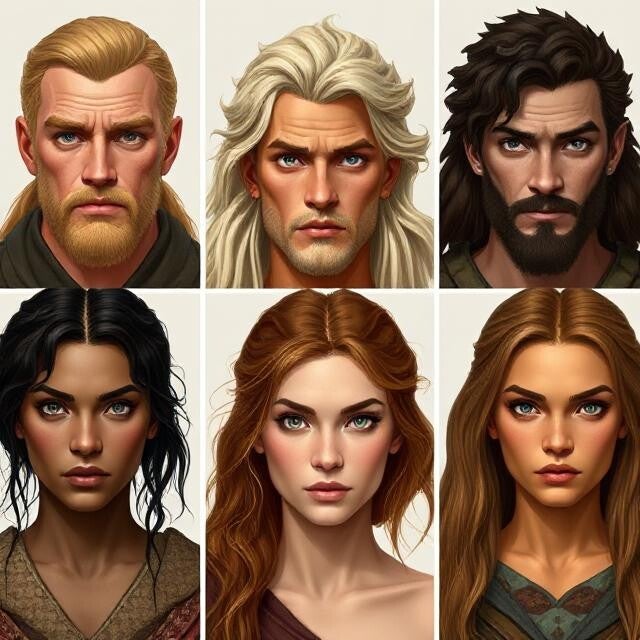
Chapter 12: The Vailed Kin (Draugar and Wraiths)
Introduction
The vast and intricate tapestry of sentient life in Stellarealm is woven with threads of myriad hues, textures, and origins. Among the most unique, frequently unsettling to other species, and profoundly mysterious of these are the beings known collectively in scholarly and esoteric circles as the "Vailed Kin" or, sometimes, the "Twilight Kin." This designation encompasses two primary, typically dimorphic, expressions: the Draugar (who generally present with male secondary sex characteristics) and their counterparts, the Wraiths (who generally present with female secondary sex characteristics).
These entities are not to be conflated with the shambling, mindless corporeal undead of morbid fireside tales, nor are they mere disembodied ghosts or phantasms. Instead, ethnographic and arcane accounts consistently describe them as intelligent, sentient beings who exist in a fascinating and persistently liminal state—a conscious, living bridge between the vibrant bioenergetic signatures of the physical world and the silent, resonant echoes of the spectral. Their first widespread appearance on the main continent coincides with the aftermath of the Age of Falling Stars, a cataclysm that damaged the very fabric of the Vail and allowed their kind—and the potent Vail Magic they embody—to become a known, if feared, part of the world.
Gifted with perceptual modalities that transcend the limited sensory apparatus of most mortal races, the Draugar and Wraiths navigate the diverse societies and landscapes of the Realms, often moving unseen or fundamentally misunderstood. Their unique and intrinsic connection to the intertwined energies of both life and death is believed to grant them a profound, if often unsettling and melancholic, wisdom, shaped by lifespans that can stretch across a few hundred years, allowing individuals to witness profound historical shifts.
11.1 Biological and Metaphysical Nature: The "Twilight Gift"
The nature of an individual as a Draugar or a Wraith is understood to be their inherent state of being, imbuing them with a suite of extraordinary abilities that blur the ancient, culturally constructed lines between the mortal coil and the spectral beyond.
11.1.1 Ontological Status: A Liminal People Bridging Worlds
The precise origin of the Draugar and Wraiths is a subject of intense speculation. Their own oral traditions, supported by esoteric texts, suggest they are not native to Stellarealm's primary mortal plane. Ancient lore posits they existed in a "shadow realm" or "Vail-adjacent" dimension of their own. Their first widespread appearance in the chronicles of the mainland coincides with the Age of Falling Stars and the subsequent Age of Scars (c. 501-700 NE), a period when the Vail itself was catastrophically damaged. This suggests the cataclysm tore open pathways from their home realm, teleporting or exiling many to Stellarealm, where they have since established themselves. They are a distinct, sentient race, not "undead" constructs. Their existence is characterized by a unique homeostasis that draws upon both vital and spectral energies, placing them in an ontological category distinct from both the truly living and the conventionally "undead."
11.1.2 Sensory Modalities: "The Veil Sight" – Perception of the Spectral Realm
Perhaps their most defining trait, both Draugar and Wraiths possess the remarkable innate ability to perceive the Vail and the spectral realm. To their unique senses, the lingering energetic echoes of the departed, the imprints of intense emotional discharges, and the residual signatures of powerful past events are often visible, described as shimmering heat haze, cold spots, or phantom memories imprinted upon a place. This "Veil Sight" allows them to discern hidden truths veiled from mortal eyes, sense the presence of spirits, and perceive the currents of Vail Magic. This connection also carries inherent risks, often manifesting as the Vail Taint—a spiritual coldness, sensory detachment, and the unnerving, constant "static" of spectral whispers that can erode the sanity of the unwary.
11.1.3 Somatic Attributes: Enhanced Resilience, Draugar Physicality, and Wraith Agility
Their altered connection to the mortal coil grants the Vailed Kin remarkable somatic resilience. They are far less susceptible to common diseases and poisons, and the march of biological time seems to slow, allowing for lifespans that stretch far beyond those of humans, often reaching a few hundred years.
* Draugar are renowned for formidable physical strength and exceptional endurance. Their forms become unnaturally dense and resilient, capable of withstanding trauma that would kill a typical living being. They possess a tireless stamina, making them formidable guardians or relentless pursuers.
* Wraiths, in contrast, exhibit an uncanny degree of agility, grace, and fluidity of movement. Their locomotion often possesses a spectral, ethereal lightness, allowing them to glide through shadows with effortless ease and silence. This spectral agility makes Wraiths naturally adept in arts requiring stealth, precision, and infiltration, and many cultivate remarkable acrobatic skills.
11.1.4 Vocal Characteristics: The "Echoing Voices" and Spectral Communication
The vocalizations of the Twilight Kin, both Draugar and Wraiths, are often described as carrying a subtle resonance—an "echo" that hints at their deep connection to the spectral realm. This quality may manifest as a faint harmonic overtone or a timbre that seems to touch the listener on a deeper, spiritual level. This is believed to facilitate more effective communication with spirits and other incorporeal entities, and skilled Wraiths can modulate this echo to enhance their incantations.
11.1.5 Bioenergetics and Reproduction: A Single Race, A Dual Form
Draugar and Wraiths possess a unique relationship with lifeforce. They do not require physical sustenance in the same way as humans, but seem to passively and non-harmfully draw upon the ambient lifeforce in living beings and the natural world, replenishing their own energies and accelerating their unnatural healing. This stands in stark contrast to the active, consumptive nature of Blood Magic.
Perhaps most intriguing, the Twilight Kin are a single, self-perpetuating race that exhibits profound dimorphism. Though the dense, powerful forms of the Draugar and the spectral, agile forms of the Wraiths may appear so dramatically different as to be two separate species, they are, in fact, the male and female expressions of the same Vailed Kin. Accounts confirm they reproduce sexually, and their offspring—born with the same inherent "Twilight Gift"—will mature into one of these two forms. This continuation of their lineage often occurs within their secluded sanctuaries, ensuring the quiet, persistent continuation of their unique people, a single race existing in two complementary expressions of liminality.
11.2 Sociocultural Frameworks: "Culture of Shadows and Whispers"
The culture of the Draugar and Wraiths is a complex tapestry woven from ancient wisdom, unique spectral lore, and a profound understanding of the balance between the realms of the living and the departed.
11.2.1 Settlement Patterns and Habitation: "Silent Sanctuaries" and Concealed Communities
The Vailed Kin often choose to dwell in secluded sanctuaries, locations where the Vail is naturally thin or holds significant historical resonance. Their largest, though most isolated, population center is the island of Ultima Vellus (Veil's End), where they coexist with the Witches of the Veil. On the mainland, they are known to inhabit places like the Obsidian Citadel within the Spine of the World, where Draugar and Wraith loremasters contribute their unique knowledge of Vail Magic, history, and the afterlife to the archives of the Silent Conclave (The Council). These sanctuaries serve as centers for learning, meditation, spectral research, and the unique social life of the Twilight Kin, often magically concealed or protected by their unsettling reputation.
11.2.2 Knowledge Systems: "Keepers of the Echoing Archives" – Preservation of Ancient Lore
Possessing lifespans that span several human generations, the Twilight Kin are meticulous keepers of ancient knowledge, forgotten lore, and detailed historical accounts, often possessing firsthand records of events from past Ages (such as the Age of the Fangs). Their "archives" are not always conventional libraries; information is often preserved as stable spectral echoes, psychic imprints within consecrated objects, or complex oral traditions accessible only through their Veil Sight. This accumulated knowledge makes them invaluable, if reluctant, resources for scholars seeking insights into the distant past, such as the true events of the Age of Falling Stars.
11.2.3 Thaumaturgical Practices: "The Spectral Arts" – Vail Magic as Practiced by Wraiths
Wraiths, with their inherent agility and affinity for spectral energies, are often masters of a sophisticated discipline of Vail Magic. This involves manipulating shadows, weaving disorienting illusions, or cloaking themselves in near-perfect invisibility. Their arts also extend to nuanced, often perilous, interactions with spirits—not summoning and binding, but negotiation, placation, guidance, or exorcism of malevolent shades. This stands in stark contrast to the forbidden art of Necromancy, which is the forcible binding of souls back into dead flesh, a practice the Vailed Kin view as a grotesque violation of the natural order.
11.2.4 Cosmological Role: "Guardians of Balance" – Mediation Between Realms
A core tenet of Draugar and Wraith philosophy is the profound, experiential understanding of the delicate balance that must be maintained between the living world and the spectral realm. They are acutely aware of the chaos that can arise when the Vail is breached, when mortals tamper with forces they do not comprehend (like Necromancy), or when spirits linger and interfere. Consequently, they often act as silent, unseen mediators and regulators, working to resolve conflicts that span both realms, guide restless spirits, and prevent harmful incursions.
11.2.5 Ritual Specializations: "The Solemn Path" – Psychopompic Functions
Given their liminal nature, the Twilight Kin often play a crucial, if feared, role as psychopomps—guiding entities who assist lost, confused, or fearful newly departed spirits towards their final resting place. Their primary aim is to ensure that souls do not linger unduly in the mortal realm, where they might become trapped or devolve into malevolent entities. They perform solemn, ancient rites to facilitate the spirit’s journey, acting as somber guides in the face of the ultimate existential unknown.
11.3 Functional Specializations and Societal Roles: "Faces of the Twilight"
The diverse roles the Vailed Kin undertake have led to the emergence of distinct vocational callings or "variants" within their kind.
* 11.3.1 Guardians of the Veil: Sentinels dedicated to protecting the integrity of the Vail itself, often stationed at unstable locations (like Blight zones) or sites of past cataclysms from the Age of Falling Stars.
* 11.3.2 Lore Keepers of the Ancient Word: The historians, scholars, and archivists of their kind, most often residing in the deepest sanctuaries like the Obsidian Citadel or Ultima Vellus, contributing to the Silent Conclave's "Great Scour" for lost knowledge.
* 11.3.3 Spectral Messengers: Wraiths who serve as discreet and highly effective messengers, capable of carrying communications not only between distant mortal locations but sometimes, under specific ritual conditions, between the living and certain classes of the departed.
* 11.3.4 Shadow Weavers: Specialists in the more manipulative aspects of shadow and spectral magic, creating intricate multi-sensory illusions and gathering sensitive information from the deepest shadows of society.
* 11.3.5 The Soul Wardens: A solemn duty taken on by some Draugar and Wraiths to hunt down and neutralize malevolent, uncontrolled, or artificially created "true undead" entities (such as those created by forbidden Necromancy), which they view as a profound corruption of both life and death.
11.4 Geopolitical Stance and Inter-Species Relations
The Draugar and Wraiths typically maintain a detached, observational stance regarding the political conflicts of shorter-lived races. Their primary focus is maintaining the balance between the mortal and spectral realms.
* 11.4.1 A Detached Vigil: With lifespans that allow them to outlive the architects of mortal conflicts, they act as neutral observers, intervening only when actions threaten to catastrophically disrupt the Vail.
* 11.4.2 Whispers in Halls of Power: Their access to ancient knowledge makes them invaluable, if exceptionally rare, advisors to mortal rulers, esteemed scholars (like those of the Silent Conclave), or leaders of influential organizations (like the Witches of Ultima Vellus). Their pronouncements are often cryptic, viewing time through a lens vastly different from that of mortals.
* 11.4.3 Custodians of Sacred and Forgotten Sites: They often act as self-appointed guardians for ancient sites, significant ruins (like those from the Age of Falling Stars), and venerable tombs, protecting them from plunderers or those who would unwittingly unleash dangerous forces.
* 11.4.4 Rare Agents of Unseen Realms: In rare instances, individuals may appear to become active agents or envoys of the spectral realm itself, subtly influencing events in the mortal world to maintain a deeper, unseen balance.
11.5 Conclusion: The Enduring Liminality
The future of the Draugar and Wraiths remains as veiled as their origins. Their destiny is inextricably intertwined with the fate of Stellarealm’s delicate, ever-fluctuating balance between life, death, and the spiritual energies that flow between them. As the realm faces new challenges, the Twilight Kin will undoubtedly continue to play a crucial, if often hidden, role. Their unique wisdom, potent spectral abilities, and profound understanding of the unseen world make them a vital, enduring, and enigmatic force, serving as a constant, somber reminder of the profound interconnectedness of all things—seen and unseen, living, departed, and those who reside in the liminal spaces in between.
11.6 Population Demographics
> As a distinct people, the Vailed Kin are nonetheless one of the rarer sentient races of Stellarealm, a fact attributed to their extra-planar origins and reclusive nature.
> * Estimated Population: Draugar and Wraiths comprise approximately 1% of the total estimated sentient population.
> * Distribution: Their population is not evenly distributed. The vast majority are concentrated in their "Silent Sanctuaries," with the largest known population residing on the isolated island of Ultima Vellus. Significant, smaller enclaves exist in mainland locations of potent Vail energy, such as the Obsidian Citadel in the Spine of the World.
>
Chapter 12: The Alkonost: Avian-Humanoid
Introduction
The atmospheric strata of Stellarealm, far from constituting empty voids between the celestial wonders above and the terrestrial struggles below, represent a vibrant, dynamic, and often fiercely contested ecological domain. These aerial expanses are the ancestral realm and primary habitat of the Alkonost, a captivating and formidable race of avian humanoids whose very biological and cultural essence is intrinsically intertwined with the boundless freedom of flight.
Frequently mistaken by uninformed or geographically restricted observers for "common Harpies" or other lesser winged therianthropes, the Alkonost are, by contrast, consistently described in more detailed ethnographic accounts as a proud, ancient, and remarkably diverse people. Their physical forms present a striking, often breathtaking, fusion of humanoid grace and highly specialized avian power. Their aerial prowess is widely considered unmatched across the continent. Their keen sensory apparatus, honed by uncounted generations spent soaring above the world, grants them not only a unique, panoramic perspective on the unfolding historical processes below but also a distinct strategic advantage over predominantly ground-dwelling races. Their intricate social structures, built upon the foundational units of close-knit "Nests" (primary reproductive units) and more expansive, cooperative "Flocks" (larger communal aggregations), reflect their deep spiritual, ecological, and practical connection to the sky—a core tenet of their expression of the Primal Accord.
12.1 Biological Adaptations for Aerial Life: "The Gift of Flight"
The physiology of the Alkonost is a compelling example of evolutionary adaptation, a biological masterpiece exquisitely crafted for aerial dominance, high-altitude survival, and exceptionally keen sensory perception.
* 12.1.1 Alar Morphology: "Winged Arms"
The most defining feature of the Alkonost is the magnificent pair of wings that sprout directly from their upper limbs, seamlessly integrated at the shoulder girdle. These are not mere auxiliary appendages but powerful, multi-jointed limbs, typically terminating in three or four dextrous, talon-tipped digits for manipulation, nest construction, and perching. The wings, composed of lightweight pneumatized bones and powerful pectoral muscles, enable incredibly agile aerial maneuvers. Plumage varies dramatically by habitat, from the broad, earth-toned wings of eagles seen amongst the Mountain Alkonost of the Spine of the World, to the shorter, vibrantly colored wings of parrots that allow Jungle Alkonost to navigate the dense canopies of the Heartwood and Verdant Echoes.
* 12.1.2 Cephalic Plumage: "Feathered Crowns"
Unlike most land-bound humanoids, Alkonost heads are adorned with a magnificent "crown" of feathers that typically mirrors their wing plumage. These feathers are dynamic and highly expressive, serving as clear visual indicators of status within the Flock, approximate age, and specific clan lineage. During mating rituals, these feathers are meticulously preened and displayed in hypnotic aerial dances to signify vitality and social standing.
* 12.1.3 Pedal Morphology: "Taloned Feet"
The lower limbs of the Alkonost terminate in sharp, formidable talons, perfectly adapted for their arboreal, cliff-dwelling, and predatory lifestyles. Their incredible gripping strength allows them to effortlessly perch on sheer cliff faces, the upper branches of ancient trees, the crumbling ramparts of forgotten ruins (such as abandoned Giantish Sky-Citadels, which some Nests inhabit), or even the chaotic, chain-hung bridges and precarious ledges of the city of Rivenport. These talons also serve as formidable natural weapons.
* 12.1.4 Sensory Acuity: Visual, Auditory, Olfactory, and Barometric Perception
Alkonost possess incredibly keen eyesight, legendary among other races, allowing them to spot small prey or distant troop movements from astonishing distances. Their hearing is equally acute. Uniquely among known sentient species, all Alkonost are also believed to possess a specialized internal sensory organ akin to a biological barometer, allowing them to perceive subtle shifts in atmospheric pressure. This grants them the remarkable ability to predict impending weather patterns with considerable accuracy, a unique sensory attunement that scholars of the Primal Accord classify as a form of innate, passive Primal Magic.
* 12.1.5 Kinesiology: "Aerial Acrobatics"
Generations of cultural emphasis on aerial skill have rendered the Alkonost unparalleled masters of aerial acrobatics. They can perform incredibly complex maneuvers with breathtaking agility, speed, and grace. Young Alkonost spend a significant portion of their development honing these skills through communal aerial dances (which often serve as training exercises) and intricate aerial games.
12.2 Sociocultural Organization: "Nests" and "Flocks"
Alkonost culture is deeply rooted in their aerial existence, emphasizing observation, adaptation, fierce independence, and essential cooperation.
* 12.2.1 The "Nest": Primary Familial and Reproductive Units
The fundamental social unit is the Nest, typically comprising a monogamous mated pair. These Nests are the primary units for the laying and incubation of their eggs (typically one to three per clutch, reflecting a K-selected reproductive strategy), the intensive raising of their young (fledglings), and the fierce defense of their chosen nesting territory (a high cliff in the Spine of the World, a treetop in the Heartwood, or a ruin like a Sky-Citadel). Both parents actively participate in nest construction, incubation, and training.
* 12.2.2 "Flock" Aggregations: Communal Interaction and Information Networks
Multiple Nests, often related by blood or shared territory, gather to form larger, more fluid communities known as Flocks. These serve as vital centers for the exchange of gathered resources (such as trading rare feathers or herbs at markets like Oakhaven), crafted items, and crucial, time-sensitive information (impending weather, movements of armies, or rival Flocks). Flock gatherings are also essential for social interaction, strengthening bonds, and facilitating mating opportunities outside of immediate kin-groups. Leadership within a Flock is often fluid and merit-based, with the wisest elders or most skilled hunters taking temporary guidance roles.
* 12.2.3 Territoriality and "Aerial Dominance"
The Alkonost view the skies above their territories as their undisputed domain. They are highly territorial, actively patrolling their recognized airspace and aggressively defending it against intruders. These may include rival Flocks, predators like griffins, or the increasingly common, clumsy aerial conveyances of land-bound races, such as experimental Goblin contraptions from Rivenport or Silent Conclave survey vessels.
* 12.2.4 Communication and Oral Tradition: "The Sky Songs"
Alkonost possess a complex system of vocalizations known as "Sky Songs." This is a vital art form, a repository of cultural memory, and a sophisticated language capable of conveying practical information (warnings, locations of prey) over vast distances. Scholars of the Primal Accord, and even linguists within the Silent Conclave, believe that certain ancient Sky Songs are a unique avian expression of the World-Song itself, mapping ancestral migration routes, recounting legends, and preserving vital cosmological beliefs—a living chronicle carried on the wind.
* 12.2.5 Rites of Passage: "The Rite of Flight"
Upon reaching adolescence, a young Alkonost must typically undergo a perilous rite of passage, "The Rite of Flight." This is frequently a challenging, solitary aerial journey that tests their flight skills, endurance, navigation, and resourcefulness. Those who succeed demonstrate their readiness to leave the natal Flock, seek a mate, and establish their own Nest. The high failure rate of this trial is a primary factor in their low population density.
12.3 Ecological Variants and Habitat Specialization
The diverse aerial habitats of Stellarealm have given rise to distinct Alkonost variants, each with unique physical and behavioral adaptations.
* 12.3.1 Mountain Alkonost ("Spine Sentinels"):
Inhabiting the rugged peaks of the Spine of the World, these are often the largest variant, with broad wings (like eagles or condors) for soaring on updrafts. Their plumage provides camouflage against stone and snow. They are a common and formidable sight in the Spine, with some Nests even adapted to the chaotic verticality of Rivenport. The noted "Sky-Chime Flock" that controls The Aerie (Rivenport's upper dock) belongs to this variant.
* 12.3.2 Jungle Alkonost ("Heartwood Phantoms"):
Dwelling within the dense canopies of the Heartwood and Verdant Echoes, these Alkonost exhibit vibrant, iridescent plumage (like parrots or macaws). Their wings are often shorter and more rounded, allowing for incredible agility and maneuverability through tangled foliage.
* 12.3.3 Plains Alkonost ("Sky Reavers"):
Soaring over open plains like the Eastern Heartland or the Northern Expanse (Horizon Steppe), these are adapted for speed and endurance. Their plumage (like hawks or kestrels) blends with the grasslands, and their nomadic Flocks often follow the seasonal migrations of great herds.
* 12.3.4 Coastal Alkonost ("Sea Wings"):
Living along coastlines like the Azure Hand and Southern Shore, these are specialized in fishing and navigating sea winds. Their plumage resembles gulls or albatrosses. They often act as aerial traders or swift messengers between isolated coastal settlements, sometimes trading at ports like Aethelgard.
* 12.3.5 Cave Alkonost ("Night Gliders"):
A rarer variant found in extensive, lightless subterranean cave systems. They possess adaptations for darkness, such as larger eyes, highly sensitive hearing (possibly a form of echolocation), and dark, muted plumage.
* 12.3.6 Riverine Alkonost ("Chasm Runners"):
A highly specialized variant found in deep river chasms, most notably the Fury's Run which flows through Rivenport. Their wings are often dark (like cormorants), and they show exceptional skill at navigating spray and downdrafts. The "Under-Roost" community in Rivenport, known for mastering river transport, belongs to this variant.
12.4 Geopolitical Interactions and Relations
Historically, the Alkonost have maintained a guarded neutrality, their focus being on their Nests, Flocks, and aerial sovereignty. However, their unique abilities make them a significant strategic asset.
* 12.4.1 Aerial Scouts and Reconnaissance:
Alkonost excel at reconnaissance. Their keen eyesight and speed make them invaluable for gathering intelligence on troop movements or mapping uncharted lands. The Empire, Alliance, and even The Legion (Steel Contract) have all, at various times, attempted to hire Alkonost Flocks for such purposes, with mixed and often unreliable results.
* 12.4.2 Aerial Messengers:
Alkonost are highly sought-after for delivering critical messages across difficult or hostile terrain. Certain Flocks have established transactional arrangements with settlements or factions, such as the Sky-Chime Flock acting as high-speed couriers for the power-brokers of Rivenport's "Pinnacle" or merchants in Oakhaven.
* 12.4.3 Aerial Combatants:
While avoiding large-scale ground wars, Alkonost are formidable combatants when provoked. Their talons, wing buffets, and aerial mastery allow for devastating hit-and-run attacks. During the 110 Year War, some Mountain Flocks were rumored to have aided local resistance efforts against Giantish incursions.
* 12.4.4 Independent Nests and Aloof Flocks:
The majority of Flocks fiercely value their independence. They remain almost entirely outside the legal framework of The Order of the Immutable Scales, as their aerial domains are difficult to adjudicate. They typically intervene in ground affairs only when their territories are directly threatened by encroachment, environmental pollution, or disruptive new aerial technologies (such as experimental Council vessels or the unpredictable Goblin contraptions launched from Rivenport's Tinkerer's Scar).
12.5 Conclusion: Sovereigns of the Sky
The future of the Alkonost is linked to the fate of Stellarealm's skies. As major powers expand and new technologies become more prevalent, the Alkonost will undoubtedly play a crucial role in the realm's dynamics. They face the challenges of maintaining their sovereignty and adapting to a world where the skies are no longer exclusively their own domain—a fact made starkly clear in cities like Rivenport, where their skills have been uniquely integrated and commodified. Their soaring forms remain a constant reminder of the wild freedom and ancient majesty belonging to those who truly rule the upper reaches of the world.
12.6 Population & Demographics: A Rarefied People
Alkonost are one of the rarest sentient peoples of Stellarealm, comprising approximately 0.5% of the total estimated population.
This rarity is attributed to their K-selected reproductive strategy (small clutch sizes of 1-3 eggs, as detailed in 12.2.1) and the high mortality rate associated with the perilous "Rite of Flight" (see 12.2.5).
While their total population is small, their influence is highly concentrated in strategic locations. Flocks like the Sky-Chime Flock (controlling The Aerie in Rivenport) or the Under-Roost (controlling river passage on the Fury's Run) hold monopolistic power over key economic and logistical chokepoints, granting them an influence that far outweighs their sheer numbers.
Chapter 13: The Lamiae (Naga)
Introduction
The shadowed corners, untamed wildernesses, and geologically active regions of Stellarealm have long been recognized as the primary domain of the Lamiae, a captivating, ancient, and often feared race of serpentine humanoids. Known colloquially, and frequently with a shiver of apprehension by common folk, under the exonym "Naga," their physical forms present a striking and formidable fusion: human-like upper torsos, indicative of keen intelligence and manipulative capability, are seamlessly joined to the sinuous, powerful lower body of a massive serpent. These beings are consistently described as deeply connected to the Primal Accord, their spirits resonating with the Primal energies of the earth. Their scaled coils facilitate movement across diverse terrains with silent, often deadly, ease, while their humanoid upper bodies possess the capacity for complex thought, intricate forms of innate magic, and the bearing of unique, often intimidating, horn-like cranial protrusions.
While the majority of Lamiae encountered are solitary, persistent whispers speak of hidden, communal enclaves thriving in the deepest, most inaccessible reaches of regions such as the Western Marshes within the Western Lowlands. More concretely, a unique and highly specialized urban enclave, the Serpent's Coil, is known to exist within the lawless city of Rivenport. Each Lamia, regardless of social inclination, possesses a potent biological venom, a highly sought-after commodity in alchemical circles, particularly by the Witches of Ultima Vellus and the brokers of Rivenport. The specific biochemical composition and intensity of this venom are reported to vary greatly, often intensifying dramatically with age, rendering any encounter with such individuals particularly perilous.
13.1 Biological Adaptations: The "Gift of the Serpent"
The physiology of the Lamiae is a remarkable testament to their long evolutionary adaptation, primarily favoring terrestrial dominance. This has granted them unparalleled abilities for hunting and survival on the ground, alongside formidable natural defenses and unique sensory modalities.
* 13.1.1 Serpentine Locomotor System: Morphology and Multi-Terrain Utility
The most defining physical characteristic of the Lamiae is their powerful, serpentine lower body. This formidable appendage allows for exceptionally rapid, agile, and fluid movement across a vast variety of terrains. They are documented as navigating the tangled undergrowth of dense forests, such as the Verdant Echoes or the fringes of the Heartwood, with silent grace; traversing the uneven, rocky hills within regions like the Southern Uplands with unsettling speed; and gliding through the yielding mud and murky waters of swamps, such as those found in the Western Marshes. Their serpentine morphology also grants them incredible muscular strength, enabling them to constrict prey with crushing force. Furthermore, these powerful tails make them surprisingly adept swimmers, capable of navigating rivers, lakes, and marshes with remarkable speed and grace.
* 13.1.2 Integumentary System: Scalation of Upper Body as Natural Armor
While their upper torsos and faces bear a notable resemblance to humanoid structure, Lamiae possess a unique adaptive feature in the form of tough, overlapping scales that cover their arms and chest. These scales provide a significant degree of natural armor, enhancing their physical resilience. The coloration and patterning of these scales are known to subtly shift depending on the Lamia's specific habitat and may also change or become more pronounced with age or as part of mating displays.
* 13.1.3 Cranial Protuberances: "Supraocular Horns" – Form, Function, and Sociosymbolic Significance
A distinctive morphological feature of the Lamiae are the unique, horn-like protrusions that grow from their skulls, typically situated above their eyes. These vary significantly in shape, size, and number, ranging from small, subtle keratinous ridges to long, elegantly curved projections or even intricate, branching structures. These horns often serve as visual indicators of a Lamia's age, perceived social status, and possibly their clan affiliation. Additionally, these horns are widely believed by Silent Conclave scholars to act as highly sensitive sensory organs, allowing Lamiae to detect subtle vibrations in the earth and air, minute shifts in barometric pressure, or even faint thermal signatures, augmenting their predatory prowess.
* 13.1.4 Venom Gland System: Composition, Delivery Mechanisms, and Age-Related Potency
All Lamiae possess a potent biological venom, which they can deliver as a carefully aimed spit for ranged defense or inject directly through a pair of sharp, retractable, fangs. The physiological effects of this venom are reported to vary significantly, often characterized as a powerful neurotoxin (causing paralysis) or a potent hemotoxin (causing tissue necrosis). Its potency generally increases with age. This venom is a highly prized component in advanced Alchemy, and its trade forms the economic backbone of the Serpent's Coil enclave in Rivenport, with demand reportedly high from sources as distant as the Witches of Ultima Vellus.
* 13.1.5 Sensory Ecology: Olfaction, Vibration Detection ("Ground-Sense"), and Innate Earth Magic Affinities
As creatures profoundly connected to the Primal Accord, Lamiae possess heightened senses attuned to their terrestrial environment. Their sense of smell is exceptionally keen. They also possess a remarkable "ground-sense," detecting subtle vibrations in the earth through their serpentine bodies and possibly their horns. This deep, intrinsic connection to the earth also grants them an innate affinity for Primal earth magic, which many Lamiae are believed to instinctively wield.
13.2 Sociocultural Patterns: Between Solitude and Secrecy
The culture of the Lamiae remains largely shrouded in mystery. Their predominantly solitary and fiercely territorial nature results in limited, and often hazardous, opportunities for ethnographic study. However, known exceptions and persistent rumors suggest a potential for social structures far more intricate than their reclusive reputation implies.
* 13.2.1 Habitation and Territoriality: "Solitary Lairs" and Defense Strategies
Lamiae are predominantly solitary hunters, establishing secluded lairs in deep caves, forgotten ruins, or meticulously excavated subterranean burrows. These lairs are chosen for defensibility and proximity to hunting grounds. Lamiae are fiercely territorial and will aggressively defend their established lairs and surrounding hunting grounds from any perceived intruders, including other Lamiae.
* 13.2.2 Reproductive Behaviors and "Mating Rituals": Oviparity and Solitary Offspring Rearing
Lamiae typically venture from their territories only when driven by instinct to seek mates. After mating, the pair usually separates, with the female returning to her lair to lay and incubate a clutch of eggs (oviparity). The young Lamiae are typically raised in solitude by the mother, who imparts vital survival skills before they eventually disperse to claim territories of their own. This K-selected (slow-growing, few offspring) reproductive strategy is a primary factor in their rarity.
* 13.2.3 Ethnographic Speculation: Rumored and Known Enclaves
* Rumored Enclaves (Western Marshes): Deep within the treacherous and largely unexplored expanses of regions like the Western Marshes in the Western Lowlands, persistent rumors speak of hidden Lamiae communities. These tales suggest rudimentary hierarchies, cooperative hunting, and communal defense, though such settlements are described as incredibly secretive and overtly hostile to all outsiders.
* Known Enclave (The Serpent's Coil): A singular, confirmed exception to the solitary norm exists within the vertical, anarchic city of Rivenport. The Serpent's Coil is a semi-autonomous collective of Lamiae located in a hidden network of slick, water-carved caverns at the base of The Exile peak. This enclave is not based on simple communal living but on commerce. They leverage their unique nature, trading in rare venoms, acting as information brokers, and offering rumored insights related to Vail Magic and the natural world, positioning them as a subtle but profound power faction within the "City of Chains."
* 13.2.4 Material Culture and Symbolic Expression: The Phenomenon of "Venomous Art"
A unique, though poorly documented, rumored behavior is the use of their own venom in a form of artistic or symbolic expression. They are said to carefully apply their venom to cave walls or large stones, creating intricate, lasting patterns that may depict successful hunts, lineage symbols, or pictographic records.
* 13.2.5 Rudimentary Thaumaturgy: Instinctual "Earthly Magic" in Daily Life
Many Lamiae possess a natural, instinctual affinity for Primal earth magic, integrated into their survival strategies. This may include enhancing lair defenses, camouflaging entrances with illusions woven from ambient Primal energy, or manipulating earth and stone for simple traps. The Lamiae of the Serpent's Coil, exposed to Rivenport's concentration of practitioners, are rumored to have cultivated this, perhaps even learning to interact with the Weave or Vail on a rudimentary level.
13.3 Ecological Variants and Regional Adaptations
Stellarealm's diverse habitats have given rise to distinct regional variants of Lamiae, each uniquely adapted to their ecological niche.
* 13.3.1 Forest Lamiae: Inhabiting dense forests like the Verdant Echoes or Heartwood fringes, these Lamiae possess green and brown camouflage. They are skilled stealth hunters.
* 13.3.2 Mountain Lamiae: Found in rugged ranges like the Spine of the World, these Lamiae exhibit stony grey or mottled black scales. They are agile climbers and patient ambush predators.
* 13.3.3 Swamp Lamiae: Dwelling in environments like the Western Marshes, these Lamiae usually have dark green, muddy brown, or black scales. They are highly skilled swimmers and ambush predators, often reported to be significantly larger and more powerful.
* 13.3.4 Desert Lamiae: Adapted to arid conditions like the Southern Waste, these Lamiae possess sandy brown or reddish ochre scales. They are skilled burrowers and patient ambush predators, known for exceptionally potent venom.
* 13.3.5 Cave Lamiae: Inhabiting subterranean cave systems, these Lamiae tend to have darker, patternless scales and exceptionally enhanced non-visual senses (vibration, thermal).
13.4 Geopolitical Context and Inter-Species Relations
Lamiae populations generally avoid direct involvement in the political affairs of the other sentient races. However, their formidable nature and fierce territoriality lead to occasional, often hostile, interactions.
* 13.4.1 Conflict Drivers: "Territorial Disputes" with Expanding Polities
The strong territoriality of the Lamiae is the most common source of conflict. Encroachment by expanding human settlements (from the Empire or Alliance), logging, or mining is invariably met with aggressive, often lethal, defensive actions. Historical records note that Lamiae fiercely defended their ancestral territories against the Giants during the 110 Year War.
* 13.4.2 Potential for Influence: "Hidden Threats" and "Known Brokers"
The rumored hidden communities in the Western Marshes could pose an unpredictable strategic threat to nearby settlements. More practically, the Serpent's Coil in Rivenport exerts a known, if subtle, influence on the criminal underworld, trading invaluable commodities (venom, secrets) that can impact politics far beyond the city's walls.
* 13.4.3 Exceptional Alliances: Pragmatic Pacts with Sympathetic Groups
While exceedingly rare, individual Lamiae or enclaves may form temporary alliances. These are typically forged with groups who demonstrate respect for their sovereignty, such as isolated Ogre clans who respect clear borders, or reclusive Vila groups whose aerial territories do not compete. Any actions taken by Lamiae that breach inter-species peace would, in theory, fall under the jurisdiction of The Order of the Immutable Scales.
13.5 Demographics and Population
Based on data compiled by the Silent Conclave and Order census-takers, Lamiae are classified as one of Stellarealm's rarest sentient peoples, estimated to comprise only 0.5% of the total continental population. This extremely low number is a direct result of their sociocultural and biological nature: they are fiercely solitary, highly territorial (requiring large individual hunting grounds), and oviparous (egg-laying), with a slow reproductive cycle and high juvenile mortality. This K-selected reproductive strategy, combined with increasing habitat loss due to the expansion of more numerous races, ensures their population remains small, elusive, and concentrated in the continent's dwindling wild spaces.
13.6 Conclusion: The Enduring Enigma of the Serpentine Kin
The future of the Lamiae in Stellarealm remains an enigma. As the civilizations of more populous races continue to expand, the pressure on established Lamiae territories will undoubtedly increase, likely leading to more frequent conflicts. Their potent venom, formidable physical strength, and deep, instinctual connection to the Primal forces of the earth serve as a constant, unsettling reminder of the untamed powers that still linger within the deep wildernesses of Stellarealm. The mystery of the "Naga," the Serpentine Kin, endures as a potent, often feared, thread woven into the deep, shadowed, and untamed places of the world's living tapestry.
Chapter 14: The Minotaur Peoples ("Horned Clans")
Introduction
The sprawling landscapes of Stellarealm, from the windswept expanse of the Horizon Steppe to the rugged foothills of mountain ranges like the Spine of the World, are reported to echo with the powerful, thundering hooves of the Minotaurs. This distinct race of imposing bovine humanoids commands respect through their very physical presence, which speaks of raw, untamed strength, unwavering loyalty to their close-knit social units known as "Herds," and a deep-seated, almost spiritual connection to the Primal Accord and the rhythms of the natural world. Their unique physiology—a potent biological amalgamation of the bull's formidable power and keen sensory apparatus with human-like intelligence and surprising manual dexterity—renders them a significant force within the diverse tapestry of Stellarealmic life. Whether observed roaming the open plains as nomadic pastoralists, crafting intricate adornments that reflect their ancient traditions, or standing as steadfast guardians for those individuals or communities who have earned their trust, the Minotaurs, often self-identifying by the collective term "Horned Clans," constitute an indelible and ancient part of Stellarealm's living history and ecological system.
14.1 Biological Characteristics: The "Gift of the Bull"
The Minotaur physique is a direct testament to their inherent and culturally emphasized link to the untamed power symbolically and biologically associated with the bull. This grants them exceptional physical capabilities and a remarkable natural resilience, evidently honed over millennia of survival in diverse and often harsh environmental conditions across the continent.
* 14.1.1 Distinctive Bovine Morphology: Cephalic and Pedal Anatomy, Dentition, and Diet
The most visually striking aspect of any Minotaur is their distinctly bovine head and lower limb structure. They possess the powerful, heavily muscled heads characteristic of bulls, complete with broad muzzles, large, keen bovine eyes offering a wide field of panoramic vision ideal for spotting potential threats or resource opportunities across vast distances, and sturdy, cloven-hoofed legs. This anatomical configuration grants them incredible strength in their necks and shoulders, a natural, almost preternatural sense of balance that allows them to navigate uneven and treacherous terrain with surprising agility, and the ability to traverse rugged landscapes with unwavering stability and endurance. Their powerful jaws and robust dentition are capable of grinding tough, fibrous vegetation, reflecting a generally omnivorous diet with a strong emphasis on herbivorous foraging supplemented by opportunistic hunting or scavenging.
* 14.1.2 Somatic Architecture: "Massive Frames," Fur Variation, and Environmental Correlation
Minotaurs are undeniably large and powerfully built, their massive frames typically reported as standing well over seven feet (approximately 2.1+ meters) tall, and rippling with dense muscle mass. Their bodies are covered in a thick coat of fur, which provides excellent protection against the diverse climatic elements. The color, texture, and length of their fur vary significantly depending on their lineage and the environment to which their Herd has adapted. Documented variations range from the deep browns and blacks of Minotaur populations who dwell in dense forests like the Heartwood, to the lighter, tawny hues characteristic of Minotaurs who roam arid plains such as the Horizon Steppe. Some mountain-dwelling clans, particularly those in the Spine of the World, are even reported to exhibit thick, shaggy white or grey fur for insulation and crypsis.
* 14.1.3 Cranial Armatures: "Powerful Horns" – Morphology, Adornment, and Sociosymbolic Significance
The formidable horns possessed by Minotaurs are not merely physical attributes but function as potent symbols of an individual's might, their social standing within their Herd, their specific lineage, and their accumulated personal accomplishments. Varying dramatically in shape, size, curvature, and texture depending on age, bloodline, and sex (typically more developed in males), these horns are a source of immense cultural pride. Minotaurs meticulously adorn their horns with intricate decorations, often crafted from polished bone (from a significant kill or revered ancestor), carved stone imbued with perceived elemental significance, intricately woven wood, and even, in trade-connected Herds, precious metals or gemstones. Each embellishment serves as a component in a rich visual chronicle: Herd affiliation may be denoted through unique incised patterns; familial bonds can be marked with inherited charms; and personal achievements—such as acts of valor in defense of the Herd—are showcased through symbolic trophies. These horns also serve as formidable natural weapons and are employed in ritualized displays of dominance, challenges for leadership, and courtship.
* 14.1.4 Physical Prowess: "Exceptional Strength" and Its Applications in Labor and Conflict
Minotaurs possess a level of raw physical strength consistently described as exceptional, second only to the prodigious power attributed to the Ogre peoples. This incredible strength allows them to perform feats of labor impossible for most other humanoids: tilling large fields, hauling heavy loads of timber or stone, and wielding massive, two-handed axes, heavy mauls, or large clubs with devastating impact in combat.
* 14.1.5 Innate Resilience: Physiological Resistance to Environmental Stressors and Pathogens
Beyond sheer muscular might, Minotaurs possess remarkable natural physiological resilience. Their thick fur provides insulation, while their dense muscular frames and exceptionally thick hides offer significant defense against physical trauma. They also exhibit a greater inherent resistance to many common diseases and natural poisons, a testament to their robust constitution developed through generations of nomadic survival.
14.2 Sociocultural Organization: The "Herd" as a Central Institution
Minotaur culture is deeply interwoven with their predominantly nomadic or semi-nomadic way of life. This lifestyle emphasizes the paramount importance of loyalty to the "Herd" (their primary social and kin unit), a profound spiritual respect for the balance of the natural world (as defined by the Primal Accord), and a strong adherence to their ancient ancestral traditions, passed down through oral lore and ritual.
* 14.2.1 "Herd Structure": Leadership (Dominant Bull), Gender Roles (Cows as Caregivers/Lorekeepers), and Kinship
The fundamental unit of Minotaur society is the nomadic Herd. This is typically a close-knit, multi-generational, extended family group, led by one dominant "Bull"—the primary male leader, chosen through demonstrations of strength, wisdom, and the ability to protect the group. This leading Bull bears ultimate responsibility for the Herd's well-being. Alongside him are multiple "Cows"—the adult females, who are culturally revered as the primary caregivers for the young ("calves"), the principal keepers of traditions and genealogies, and who play a vital role in maintaining the Herd's social cohesion. For an individual Minotaur, the Herd represents the absolute center of life, providing security, identity, and purpose.
* 14.2.2 "Nomadic Lifestyle": Seasonal Migrations, Resource Management, and Ethnogeographical Knowledge
Minotaur Herds are inherently nomadic, their movements dictated by the Four Seasons and the availability of essential resources. They typically follow time-honored migration routes, passed down through their "Earth Songs," which ensure access to fertile grazing lands, reliable water sources, and seasonal bounties. Their deep, instinctual understanding of the land allows them to navigate vast and dangerous territories, like the Northern Expanse, with remarkable skill. This traditional lifestyle was severely tested and disrupted during periods of widespread conflict, such as the 110 Year War, forcing Herds to find new pathways. In the modern era, these routes often intersect with established centers of trade, such as the annual "Herd Moot" held in Oakhaven, which has become a critical point of contact for nomadic Herds from the Northern Expanse to trade with settled civilizations.
* 14.2.3 Material Culture and Symbolic Display: The Practice of "Horn Adornment"
As previously mentioned, the intricate adornment of their horns is a deeply ingrained cultural practice, serving as a rich, complex visual language. The specific patterns, materials (feathers, polished stones from ancestral lands, carved bone), and arrangements all hold specific meanings, communicating an individual's Herd affiliation, familial bonds, and personal accomplishments at a glance.
* 14.2.4 Oral Traditions and Knowledge Systems: "The Earth Songs" – Content, Performance, and Cultural Transmission
Minotaurs possess a rich oral tradition, serving as the cornerstone of their cultural identity. Their history, ancestral deeds, ecological understanding, and spiritual connection to the earth are passed down through powerful stories and resonant songs collectively known as the "Earth Songs." These performances are a key part of the Primal Accord, acting as the Minotaurs' method of harmonizing with the World-Song of their specific territory. The melodies often echo the sounds of nature—wind, rivers, thunder—further emphasizing their intimate connection to the natural world and transmitting crucial practical knowledge, including migration routes, survival skills, and core cultural values.
* 14.2.5 Rites of Passage: "The Rite of the Bull" – Male Adolescent Initiation and Status Attainment
Young male Minotaurs, upon reaching maturity, typically undergo a significant and often perilous series of trials known as the "Rite of the Bull." Overseen by Herd elders, these trials test their strength, courage, resilience, tracking prowess, and unwavering commitment to the Herd's well-being. They frequently involve solitary survival tests, the tracking and subduing of dangerous wild beasts, feats of endurance, and ritualized, non-lethal combat. Those who succeed are granted the status of a "Bull," signifying their readiness for the full responsibilities of adulthood, their eligibility to challenge for leadership, and their right to one day establish their own new Herds.
14.3 Ecological Variants and Regional Adaptations
The diverse terrestrial environments of Stellarealm have fostered distinct Minotaur regional variants, each with unique physical adaptations, skills, and cultural nuances.
* 14.3.1 Plains Minotaurs: Roaming open grasslands like the Northern Expanse (Horizon Steppe) or fringes of the Eastern Heartland. They typically have fur in shades of sandy brown or dun for camouflage. They are exceptionally skilled herders and trackers, with migration routes that bring them into trade contact at hubs like Oakhaven.
* 14.3.2 Forest Minotaurs: Dwelling deep within forests like the Heartwood or parts of the Verdant Echoes. They exhibit darker fur (brown, umber) for camouflage. They are skilled hunters of forest game and knowledgeable gatherers, with an intimate understanding of woodland environments.
* 14.3.3 Mountain Minotaurs: Inhabiting high-altitude ranges like the Spine of the World. They are perhaps the hardiest, often exhibiting stony shades of gray or thick, shaggy white fur. They are exceptional climbers, skilled miners, and adept stone crafters. It was these Mountain Minotaurs whose strength and knowledge of mountain warfare proved invaluable to the allied coalition during the 110 Year War.
* 14.3.4 Desert Minotaurs: Adapted to the harsh, arid environs of the Southern Waste. They typically possess lighter fur (tan, reddish-brown) to reflect solar radiation. They are unparalleled desert survivalists, with a deep understanding of navigation and finding scarce water sources.
* 14.3.5 Cave Minotaurs: A rarer variant adapted to existence within extensive natural cave systems, often beneath the Spine of the World or Southern Uplands. They typically possess darker fur and enhanced non-visual senses (hearing, smell) suited to their subterranean environment.
14.4 Geopolitical Context and Inter-Group Relations
Minotaur Herds generally strive to maintain neutrality, focusing on the survival of their Herd and the preservation of their nomadic traditions. However, their formidable strength and loyalty make them sought-after assets in the broader political and military landscape.
* 14.4.1 Mercenary Service: "Mercenary Herds" in Regional Conflicts
Some Minotaur Bulls and their warrior followers offer their combat services as mercenaries. Their reputation for strength and fulfilling contracts makes them highly sought after as heavy infantry or shock troops by organizations such as The Legion (Steel Contract), or by other powers like the Empire or Alliance for specific campaigns.
* 14.4.2 Economic Roles: Contributions as "Farmhands and Laborers"
In regions where Herds have settled or regularized interactions (like the Heartland Plains or Eastern Heartland), their strength is valued in agricultural and heavy labor tasks, such as plowing, clearing land, or hauling heavy materials for construction.
* 14.4.3 Protective Functions: Service as "Guardians and Protectors"
Their imposing presence and keen senses render them excellent guardians. Individual Minotaurs or small groups are often hired to protect settlements or valuable trade caravans traversing dangerous territories.
* 14.4.4 Political Autonomy: The Stance of "Independent Herds"
The vast majority of Herds prioritize their independence and freedom of movement, actively avoiding entanglement in the politics of sedentary races. This fierce independence can lead to conflict when expanding settlements (like those of the Empire or Republic of The Dawn) encroach upon their traditional territories, a pattern noted with increasing frequency since the Age of Rising Tensions.
* 14.4.5 External Adjudication: The Role of "The Order" in Inter-Species Disputes
While Herds govern themselves internally, disputes involving other races or those that threaten regional peace fall under the theoretical jurisdiction of The Order of the Immutable Scales. The Order's laws apply equally to all sentient peoples, and their Wardens or Judiciums might be called upon to mediate or enforce rulings in such complex inter-species conflicts.
14.5 Conclusion: The Enduring Strength of the Horned Clans
The future of the Minotaur "Horned Clans" is deeply intertwined with the ecological integrity of Stellarealm's remaining open landscapes. As pressures from expanding civilizations and resource exploitation mount, they face increasing challenges to their traditional nomadic way of life. Yet, their formidable strength, unwavering cultural emphasis on loyalty, profound connection to the Primal Accord, and enduring traditions of resilience make them a vital and powerful force within the complex mosaic of Stellarealmic life.
14.6 Demographics and Population Distribution
Statistical analyses, compiled from Order tithe-records, Alliance trade manifests, and Union diplomatic reports, estimate the total Minotaur population at approximately 0.9% of Stellarealm's known sentient populace, placing them firmly within the "Wilderness & Rarest Peoples" classification.
This relatively low number is attributed primarily to their social structure and K-selected (slower-growing) reproductive strategy, which is centered on small, nomadic Herds (typically one dominant Bull and multiple Cows). Furthermore, their population is not concentrated in dense urban centers but is highly dispersed across the vast, wilder regions of the continent, primarily the Northern Expanse, the Spine of the World, the Southern Waste, and the deeper forests of the Heartwood and Verdant Echoes. This low density means that while their collective population is significant, encounters with Minotaur Herds are rare for the average inhabitant of Stellarealm's major cities, reinforcing their status as an ancient and elusive people of the wild.
Chapter 15: The Golems ("Forgotten Kin")
Introduction
Among the myriad diverse beings that populate the world of Stellarealm, the Golems stand strikingly apart—often perceived as silent, enigmatic sentinels of ages long past, their very existence constituting a profound archaeological and metaphysical puzzle. Frequently referred to by the descriptive exonym "Forgotten Kin," these entities are distinguished by their mode of being: born not of flesh and blood through biological reproduction, but rather constructed of terrestrial materials such as earth, wood, metal, or crystal. They are brought to a state of animation through what is understood to be the arcane art of Enchantment, a pinnacle of artifice from civilizations that have since crumbled into the deepest mists of unrecorded time.
Their physical forms are as varied as the materials from which they are meticulously hewn, each individual a tangible, mobile testament to the forgotten technical skills and perhaps even the complex philosophical tenets of their long-vanished artisans. The true origins of the Golems remain shrouded in the deepest layers of Stellarealm's prehistory, purportedly predating even the earliest coherent chronicles that speak of the Age of Whispering Stars. This antiquity leads many contemporary scholars, particularly within institutions such as the Silent Conclave, to believe they are the lingering echoes or perhaps the final, dutiful servants of forgotten peoples and entire cultural epochs swallowed by the relentless march of ages.
Unlike the organic races that reproduce, evolve, and possess finite lifespans, Golems are not "born" or "created" in any conventional sense known to the current era's inhabitants. Instead, they "awaken." From hidden, often deeply buried or magically sealed locations scattered across the vast continent—subterranean chambers forgotten beneath the foundations of modern cities, the hollowed-out boles of impossibly ancient trees within the Heartwood, extensive crystalline caves pulsating with latent magic, or sealed capsules of unknown metallic alloys—they stir from a dormant state that can last for millennia.
Their re-emergence into the conscious, active world often seems to coincide, according to arcane theorists and some Deva chroniclers, with subtle yet significant shifts in the realm's ambient magical energies or cyclical celestial alignments. This was most notably documented during the Age of Changing Winds (c. 1101-1200 NE), when Golems began to awaken in increasing numbers and were utilized in the massive rebuilding efforts following the 110 Year War.
Crucially, upon awakening, Golems possess no memory of their past, their creators, or the world as it was. They awaken with a nascent personality and a profound, driving need to find purpose and context. Imbued with a potent magical life force, their undeniable sentience sparks endless debate among the scholars of the Silent Conclave, the theologians of the Twelve Celestial Houses, and the judges of The Order. The fundamental question of whether these beings of artifice possess true "souls," in the manner understood by organic life, remains a profound and perhaps unanswerable mystery.
15.1 Ontogeny and Materiality: The "Gift of Artifice"
The very being of a Golem is consistently interpreted as a testament to the profound technical skill and sophisticated arcane understanding possessed by artisans from a bygone, incomprehensible epoch. Their existence represents a magically achieved blending of raw material properties with an enigmatic, emergent spark of autonomous sentience.
* 15.1.1 Origins and "Awakening": Golems do not reproduce. Individuals "awaken" from prolonged dormancy, emerging as tabula rasa—blank slates—with no recollection of their prior existence. The triggers for this awakening remain unknown but are theorized by the Silent Conclave to correlate with significant shifts in the ambient Weave, specific celestial alignments, or major geological events.
* 15.1.2 Material Composition: Golems are a diverse collection distinguished by their primary material. Commonly documented materials include stone (granite from the Spine of the World, marble), wood (ancient oak, resilient Heartwood), metal (iron, bronze, rare alloys), and crystal (amethyst, quartz). This composition grants each Golem unique physical properties, resistances, and potential innate affinities.
* 15.1.3 Structural Sophistication: Golems are typically intricate assemblies of layered materials bound by potent, unseen Enchantment. This layered construction contributes to their strength, resilience, and unique abilities, speaking to a lost understanding of material science and arcane binding.
* 15.1.4 Sentience and Cognition: Golems demonstrate genuine sentience, complex logical thought, and the capacity to learn at a rapid pace. Reports indicate they experience emotions such as loyalty, curiosity, or sorrow, though their expressions are subtle (shifts in internal luminescence, postural adjustments, vibrational resonance). Upon awakening, they are autonomous beings, but lacking memory, they are driven by a powerful instinct to find a new purpose.
* 15.1.5 Identifying Markers: "Constellation Glyphs": A universal phenomenon is the presence of an intricately engraved "constellation glyph" somewhere upon their form. These unique celestial symbols are believed to be tied to the specific cosmic alignment or arcane surge that triggered their awakening. Their purpose is unknown—perhaps a key to their lost past, an arcane conduit, or a celestial chart—and they often glow faintly, the light varying with the Golem's actions or emotional state.
* 15.1.6 Temporal Nature: "Timeless Existence": Golems do not age biologically, nor do they require conventional sustenance (food, water, air) or sleep. They can exist in a dormant state for millennia, highly resistant to natural decay. Their animation is a forgotten art of Enchantment, entirely separate from later technologies like Goblin clockwork.
15.2 Sociocultural Patterns: Individuality and Collective Enigma
Golem "culture" is inherently fragmented and individualistic. They emerge into the contemporary world alone, as strangers to it and to themselves, lacking pre-existing societal structures or kin. However, their shared mode of existence often fosters a profound, if understated, kinship when they encounter one another.
* 15.2.1 Emergence into Contemporary Society: This solitary re-entry into a vastly changed world—a world they do not remember—frequently instills a profound sense of dislocation, isolation, and a powerful, overriding yearning for understanding, context, and connection.
* 15.2.2 Motivational Drives: "The Search for Purpose": A Golem's active existence is typically defined by an innate curiosity and this deep-seated need to find a new purpose to replace their forgotten past. This "Search" is not guided by memory, but by an instinctual pull. Many embark on long, solitary journeys to understand their origins or find a place to belong.
* 15.2.3 The Drive to Discover and Guard: This profound need for context and purpose often manifests as a custodial instinct. It drives them to discover lost or previously forgotten locations, leading them to ancient ruins, sealed libraries, or remote arcane nexuses. This quest has led to the rediscovery of numerous sites lost during the Age of Falling Stars. Once a Golem finds such a place, or a new place of knowledge like the Grand Athenaeum of Eldoria or the Aethelwood Arcanum in Oakhaven, they may adopt a new purpose as its unwavering guardian, seeing themselves as stewards of the past they are piecing together.
* 15.2.4 The "Question of Souls" and Legal Status: The nature of Golem sentience sparks intense philosophical and legal debate. While the Silent Conclave debates their metaphysical nature, The Order of the Immutable Scales has, in most jurisdictions, extended the Concord of Sentience to include Golems. This grants them the legal status of "sentient person" rather than "property," a ruling that creates significant tension with factions like the Empire, which often views them as invaluable tools for labor and war.
* 15.2.5 Intra-Species Interaction: "The Gathering of Glyphs": When Golems do meet, a common practice is the mutual examination and analysis of their unique constellation glyphs. These rare gatherings may represent an emergent Golem culture—a shared quest to unravel the meaning of their existence, their cyclical awakening, and the overarching design that might link their disparate, forgotten origins.
15.3 Typology of Golem Variants
The diversity of materials has led to the recognition of several broad Golem variants, each with distinct attributes and environmental associations.
* 15.3.1 Stone Golems: Crafted from granite, basalt, or marble, often awakening in mountainous regions like the Spine of the World or subterranean ruins. They are characterized by immense strength, durability, and an instinctual sense of guardianship.
* 15.3.2 Wood Golems: Fashioned from ancient oak or resilient Heartwood, often awakening in ancient forests like the Heartwood. They are typically more agile than Stone Golems and may possess an affinity for Primal magic or natural regeneration.
* 15.3.3 Metal Golems: Constructed from iron, bronze, or rare alloys. They awaken in ancient forges, armories, or buried metallic capsules. Known for their intricate designs, high durability, and specialized skills, some have integrated into artisan communities like the Artisan Guildholds of Porthaven (Dynasty sphere), contributing their innate, though unremembered, skills to metallurgical techniques.
* 15.3.4 Crystal Golems: Among the rarest, crafted from pure, magically resonant crystal like amethyst or quartz. They awaken near arcane nexuses or ley lines. They often possess a strong affinity for Weave magic, able to channel, store, or amplify arcane energy, or manipulate light.
* 1References:5 Composite Golems: Sophisticated combinations of stone, wood, metal, and crystal, awakening in the ruins of advanced laboratories. They may exhibit exceptional intelligence or a broader range of abilities, and are considered key to understanding their creators' lost art.
15.4 Geopolitical Context and Inter-Societal Relations
Due to their "timeless" nature and lack of prior allegiance, Golems generally maintain a stance of neutrality or profound detachment from the fleeting political conflicts of mortal races. However, their unique abilities and formidable strength make their presence significant.
* 15.4.1 Epistemological Interactions: Golems seeking understanding cautiously engage with contemporary centers of learning, such as the Silent Conclave, trading their innate knowledge (often surfacing as instinct) for insights into the current state of the world.
* 15.4.2 Potential for Alliance: Lacking memory, Golems are driven by the purpose they find now. They have been known to intervene in conflicts, as seen during the 110 Year War when they were awakened or convinced to fight alongside the allied races against the Giants. Their allegiance is rarely coerced, but earned through respect or alignment with their newly adopted purpose.
* 15.4.3 Predominant Stance: The majority pursue their own solitary quests. The major powers (Empire, Alliance, Republic, Dynasty) view them with a complex mixture of awe, caution, and strategic interest. The Concordant Union, with its multi-racial focus, is often the most accommodating, treating them as individual citizens rather than assets. Attempts by factions like the Empire to press them into service as tools often clash with The Order's legal protections, creating significant diplomatic friction.
15.5 Conclusion: The Awakened Echoes
The future of the Golem peoples remains as mysterious as their origins. Their pattern of awakening, seemingly tied to unknown cosmic or arcane events, suggests they may have a collective destiny. As Stellarealm faces renewed pressures in the New Era, the Golems' "increasingly frequent presence" (first noted in the Age of Changing Winds) serves as a tangible reminder of the deep, foundational roots of the world, of entire civilizations lost to time, and of profound mysteries that still slumber beneath the surface, waiting patiently for the call to awaken once more.
15.6 Appendix: Demographics and Status
* Population Estimate: Golems are considered the absolute rarest of Stellarealm's sentient peoples, estimated at 0.1% of the total population.
* Reproduction: Their numbers are finite, limited to the unknown, ancient stock of dormant constructs. This means their population is static or, as awakened Golems are eventually destroyed through conflict or accident, slowly dwindling.
* Legal Status: Officially recognized as "sentient persons" under the Edicts of The Order, granting them rights and agency. This status is, however,frequently challenged by factions who view them as highly valuable, expendable, or reusable assets, making their legal protection a constant point of contention.
Part IV: Echoes from the Past: A Paleoethnography of Vanished and Mythic Peoples
Introduction
In the dusty tomes of Stellarealm's deepest scholarly libraries and within the hushed, cautionary tales whispered around communal hearthfires, the echoes of lost peoples resonate. These are the cultural ghosts of the realm: entire sentient races and, in some cases, complex civilizations whose physical forms have faded from the contemporary world into memory and myth. Their extinction or widespread disappearance, however, was not silent. These vanished peoples have left indelible marks upon the landscape, from the colossal ruins of Giantish Sky-Citadels that scar the highest mountain peaks to the haunting, psycho-magical resonance of coastal regions like the Siren Shores. The study of these vanished peoples—a specialized and often speculative field of inquiry known as paleoethnography—is crucial for understanding the historical forces, cataclysmic wars, profound ecological shifts, and subtle processes of cultural attrition that have shaped the contemporary world of Stellarealm. What follows is an examination of these lost kin, a chronicle of their fall from the historical record, and an acknowledgment of the potent legacies—archaeological, cultural, and mythological—that persist long after their last voices have gone silent.
Chapter 17: Extinction through Conflict: Ethnocides of the Great Wars
Introduction
The history of Stellarealm is punctuated by continent-altering conflicts that not only decided the fates of nascent empires but also led to the complete or effective eradication of entire sentient species. These wars serve as stark reminders of the fragility of existence in a world of competing powers, divergent ideologies, and intense ecological pressures. The following cases represent species-wide extinctions, or ethnocides, that are directly attributable in the historical and archaeological record to the dynamics of large-scale, organized warfare.
17.1 The Giants and Cyclopes: A Reckoning of the 110 Year War
Long before the recorded ascendance of human-dominated empires, the Giants were the undisputed rulers of Stellarealm's high peaks and, according to some sagas, its most fertile plains. Theirs was a civilization of immense physical scale and primordial power, evidenced by the construction of awe-inspiring Sky-Citadels—mountain-carved fortresses and sprawling, cyclopean cities that were said to touch the clouds. Surviving archaeological evidence and fragmented oral traditions suggest their society was highly stratified, built upon principles of raw physical strength and a mastery of innate Primal and Elemental magic tied to stone, earth, and sky. Their colossal ruins and the vast, enigmatic Ancient Amphitheaters still found throughout mountain ranges like the Spine of the World speak to a culture of grand spectacle, indomitable might, and perhaps, brutal social control.
Their decline and ultimate fall culminated in the protracted and exceptionally brutal Hundred and Ten Year War (901-1000 NE), a conflict waged against a rising coalition of human nations and their allies. This war acted as a crucible that forged the modern human powers, particularly the Empire, but it represented an apocalyptic event for the Giantish people. Despite their immense individual strength and resilience, they were consistently outmaneuvered by sophisticated human military strategy, and their slow reproductive cycles could not withstand the relentless attrition inflicted by massed, rapidly replenished human armies. The last recognized Giant king, Grom, was famously slain in single combat by the human general Tiberius Emperious I, an act that heralded the war's end and the subsequent birth of the Empire under the dynastic name he adopted: the "Shadow of Titans Throne."
A tragic footnote to this conflict is the fate of the Cyclopes. Described as a smaller, one-eyed offshoot of Giant-kin, they were long held in a state of subjugation by their larger cousins, primarily serving as laborers, miners, and disposable shock troops. During the war, in a desperate bid for freedom and survival, the Cyclopes are recorded as having betrayed their masters and defected to the human coalition. Their intimate knowledge of Giantish fortifications, supply routes, and societal weaknesses proved to be a decisive factor in several key campaigns. However, their own population was catastrophically decimated in the brutal, close-quarters fighting that characterized the war's final decades. In a rare act of recorded inter-species recognition, Tiberius I commissioned a grand, subterranean tomb deep beneath the foundations of his new capital, Tiberium. The "Tomb of the Last Cyclops" remains a rarely visited, deeply resonant monument to a people who won their freedom from one power only at the cost of their own ultimate extinction in the service of another.
17.2 The Adlet and Kitsune: Divergent Fates in the Age of the Fangs
During the Age of the Fangs (1401-1500 NE), the western forests and wilds were torn asunder by a brutal, three-sided conflict for territory, resources, and spiritual dominance that reshaped the region's demographics.
The Adlet, remembered in regional folklore primarily as "Wulvers," were a race of physically powerful, direct wolf-like humanoids. Extant descriptions suggest their society was fiercely territorial, embodying a raw, primal connection to the hunt. It is theorized they represented a rival branch of lycanthropy, perhaps one that clashed philosophically with the nascent unity of the Werewolves. They were ultimately caught in a strategic vise during the internal phase of the Age of Fangs (c. 1401-1480 NE). On one side was the unifying, expansionist ambition of the Werewolf social entity known as The Pack; on the other, their cunning, magically adept Kitsune allies. Outmaneuvered by Kitsune illusion and overwhelmed by the organized martial prowess of the Werewolf clans, the Adlet were systematically eradicated, their lineage and unique cultural expressions utterly extinguished from the world.
The Kitsune, by contrast, are described as cunning vulpine shapeshifters, masters of illusion and a form of Primal magic tied to trickery and misdirection. As established allies of The Pack, they were instrumental in the war against the Adlet. However, as the external pressures from the Empire and Alliance began to mount against The Pack, the Kitsune enacted a strategy of ultimate deception: a grand, coordinated "vanishing." As recorded in Section 4.5, they "quietly vanished from the western territories before the Pack's central collapse." Through the use of large-scale, reality-warping magical feints, they successfully faked their own demise or departure, magically erasing their tracks from both the physical and historical record, and retreated into a state of absolute seclusion. While Werewolf war songs might speak of their allies' mysterious disappearance, contemporary paleoethnographic specialists and arcane historians now believe these are records of a successful strategic withdrawal. The Kitsune are now widely believed to survive in hidden, magically-shielded enclaves, such as the rumored Silent Monasteries located high and inaccessible within the Spine of the World, from which they observe the outside world with a deep, abiding mistrust born from the war's profound trauma.
17.3 The Sirens and Selkies: Ecological Cascade in the War of the Shattered Sea
The War of the Shattered Sea (c. 1243-1265 NE) was a widespread and magically cataclysmic conflict that pitted the burgeoning, expansionist Merfolk kingdoms against the predatory dominion of the Sirens. The Sirens are described not merely as enchanting singers but as an aggressive, territorial aquatic race whose vocalizations constituted a form of potent sonic and psychic magic, used to lure ships to their doom upon reefs and to dominate vast stretches of the sea through thaumaturgical and psychological control. The extant Merfolk historical narrative, recorded in their epic songs and coral-inscribed chronicles, frames their systematic eradication of the entire Siren species as a desperate, albeit brutal, act of collective self-preservation that was necessary to end a widespread reign of terror upon the seas. The coastal region known as the Siren Shores is all that remains as a haunted memorial.
Caught in the devastating crossfire of this magical and ecological war were the Selkies. Described as a gentle, amphibious race of shapeshifters capable of taking seal and human form by donning or doffing their magical sealskins, they were masters of the coastal and littoral environs. The Selkies were not combatants in the war, but their coastal rookeries, foraging grounds, and shallow-water habitats were indiscriminately destroyed in the widespread magical crossfire and the resultant ecological collapse of many coastal regions. Hunted by desperate, starving Siren war parties and unable to find safe, uncontaminated refuge in the war-torn seas, the surviving Selkie population was too small and scattered to maintain genetic viability. Their quiet, sorrowful vanishing from the world remains a poignant testament to the devastating collateral damage that great conflicts can inflict upon non-combatant populations and the delicate ecosystems upon which they depend.
Chapter 18: Peoples of Decline and Disappearance: Attrition and Unsolved Extinctions
Introduction
Not all extinctions result from the clear, cataclysmic violence of organized warfare. Some peoples have faded from the historical record through more gradual processes of environmental pressure, cultural assimilation, demographic collapse, or enigmatic, poorly understood events that have left contemporary scholars with more questions than definitive answers.
18.1 The Xian: Ecological Collapse and a Stolen Legacy
The Xian were a sophisticated, amphibious, lizard-folk civilization that once thrived in the extensive lacustrine and riverine systems of the Western Marshes (in the Verdant Echoes). Their disappearance is directly linked in the geological and magical record to the Age of Falling Stars (501-600 NE), a period of celestial cataclysm that catastrophically altered the ecology of their freshwater habitats, destroying their traditional spawning grounds and apparently severing their connection to a vital environmental or magical energy source necessary for their reproduction and societal cohesion. Their civilization collapsed with shocking rapidity, leaving behind only enigmatic, partially submerged ruins and a few scattered artifacts. Their extinction was considered absolute until very recently. It is now claimed by sources within the Silent Conclave that their field archaeologists unearthed a single, perfectly preserved, and potentially viable petrified Xian egg from deep within ancient, undisturbed swamp marshes—the last tangible hope of a dead race. However, as this priceless artifact was being transported to the Aethelwood Arcanum for study and potential revival, it was audaciously stolen in a daring raid and smuggled away by a notorious Pirate King affiliated with the Pirate Guilds. The artifact has never been recovered. The ultimate fate of the last Xian now rests, unknown, in the hands of one of the realm's most unpredictable criminals.
18.2 The Fauns (Satyrs): Cultural Attrition and Habitat Loss
The Fauns, or Satyrs as they are sometimes called in older texts, were a playful, goat-legged race of nature-folk endemic to the sun-drenched, untamed hills of the Southern Uplands. Their culture was reportedly tied to wild revelry, complex musical traditions, and the raw fecundity of their natural environment. Their decline was not a violent event but a slow, sorrowful process of attrition over several centuries. As human civilization expanded into their ancestral territories, their wild groves, sacred meadows, and foraging grounds were progressively tamed and converted into the highly organized vineyards of settlements like Eldoria and the monoculture olive orchards of the Olivestone Villages. Their foraging-based, seasonally nomadic lifestyle became increasingly unsustainable in a world of fences, private property laws, and domesticated landscapes. They are said to have simply "dwindled," their population declining over generations due to habitat loss and cultural assimilation until only whispers of their flute music are said to remain on the evening breeze, a cultural ghost in a land they once roamed freely.
18.3 The Trolls: Documented Extirpation of Primordial Megafauna
The Trolls were hulking, often solitary, and highly regenerative humanoids that inhabited the high mountains and deep, old-growth forests of Stellarealm. More akin to dangerous, territorial megafauna than a cohesive, tool-using society, their recent extinction is both recent and well-documented. The last known Troll was slain just over a decade ago, in the final year of the Age of Fangs (c. 1499 NE), in the southern reaches of the Spine of the World. The kill was confirmed and credited to a renowned monster hunter operating under a substantial bounty issued by The Legion (Steel Contract), likely at the behest of local mining or trade interests in the region. This event was widely celebrated in taverns and settlements as a triumph of civilization over the dangers of the wild, but was mourned by some scholars, naturalists, and members of the Vila (Fae) community as the final, irreversible "taming" of Stellarealm's primordial wilderness.
18.4 The Vanara and Kushtaka: Unresolved Paleoethnographic Mysteries
The Vanara, described as a clever, arboreal, monkey-like jungle people, vanished from the southern regions of the continent for reasons that remain a complete paleoethnographic mystery. No clear evidence of war, disease, or ecological collapse has been found in their former territories. Theories among scholars range from a highly targeted, magically engineered plague to a mass, voluntary migration to an unknown land or even another plane of existence beyond the Endless Sea. Similarly, the Kushtaka, a mischievous and social race of otter-folk from various coastal river systems, vanished from the historical record without a clear, documented cause. Speculative theories link their disappearance either to the long-term ecological fallout from the War of the Shattered Sea, which may have poisoned their primary food sources, or to increased industrial pollution from the burgeoning coastal cities of the Alliance, which rendered their riverine habitats uninhabitable over several generations.
Chapter 19: Peoples of Mythohistory: From Physical Extinction to Cultural Persistence
Introduction
Some "vanished" peoples are not confirmed to be entirely extinct in the biological sense, but have passed so completely from the physical realm into cultural memory, ritual practice, and potent myth that their study requires the tools of both paleoethnography and comparative mythology. These are peoples whose primary contemporary existence is within the stories and beliefs of those who came after them.
19.1 The Centaurs: Cultural Memory and Ritual Commemoration
The Centaurs were a proud, fiercely independent, and nomadic race of equine-humanoids who once roamed the vast grasslands of the Northern Expanse (Horizon Steppe) in great herds. Their end was a multi-stage tragedy of attrition. As a significant independent power, they were caught in the grinding gears of the 110 Year War, suffering devastating losses while fighting against both invading Giantish forces and expanding human factions seeking to claim their ancestral plains. Their complex societal structure, already shattered by the prolonged conflict, proved unable to withstand the subsequent catastrophe of the "Withering Plague," a virulent epidemic that swept the plains in the war's immediate aftermath, disproportionately affecting their population. Weakened by war and lacking the numbers for genetic resilience, their great herds dwindled to nothing within a single generation. The nomadic human clans who eventually inherited their lands now preserve their memory in the annual "Festival of the Herd," a solemn and deeply respected ritual that celebrates the Centaurs' untamable spirit of freedom and collectively mourns their tragic passing from the physical world, ensuring their continued existence as a potent cultural symbol.
19.2 The Wendigo: From Folklore to Ethnographic Possibility
Finally, the Wendigo remains a persistent and terrifying myth in the collective consciousness of many northern cultures, particularly those inhabiting the fringes of the frozen wastes. The Wendigo is believed to be a spectral, predatory entity born of the taboo act of cannibalism during times of extreme famine, subsequently empowered by elemental cold and an insatiable, spiritual hunger. As established in the lore of magical dangers, it is the theoretical end state of "The Fraying"—a being whose Primal self has entirely consumed its identity. These beings are said to haunt the most remote, perpetually frozen regions of the world, embodying the desperate madness of starvation. While officially dismissed as cautionary folklore or a psychological manifestation by established scholarly institutions like the Silent Conclave, their existence is given sober credence by the claimed sightings of the Draugar and Wraiths. The unique perceptual modality of these spectral peoples, their "Veil Sight," is considered by a minority of unconventional scholars to be a legitimate, if difficult to verify, source of ethnographic data on liminal and spectral phenomena. The solemn, consistent accounts from these Vailed Kin suggest that the Wendigo are not a myth, but a very real, albeit exceedingly rare and highly dangerous, form of supernatural threat that lurks on the absolute fringes of the known world—a chilling, primordial echo of hunger, despair, and violated taboo that has not yet faded from existence.
Chapter 7: Forces Beyond the Mundane
Section 7.1: The Whispers of Falling Stars: The Star Children of Stellarealm
In the grand tapestry of Stellarealm, where the threads of fate have long been believed to be woven by the celestial dance observed since the Age of Whispering Stars, a rare and enigmatic thread shimmers with an otherworldly light – the Star Children. These beings, shrouded in mystery and celestial grandeur, are whispered in fragmented lore and hushed legends to be emissaries of the stars themselves, occasionally sent, or perhaps falling, into the Realms for purposes unknown – to guide, to shape destiny, or perhaps even to shatter its very fabric. Their existence challenges the established order and serves as a potent reminder of the cosmos's profound and often unpredictable influence.
Unlike the diverse races whose origins are rooted in the soil and seas of Stellarealm, the Star Children defy categorization. They appear not as a species, but as singular, unique manifestations of starlight itself. Each arrival is distinct, their forms and abilities said to be as varied as the constellations that grace the night sky. Descriptions gleaned from fragmented accounts often portray a blend of the familiar and the utterly alien – perhaps a harmonious fusion of traits from existing races, or an unsettling amalgamation of disparate species touched by cosmic fire. Their skin might shimmer with the impossible hues of distant nebulae, their hair cascade like captured stardust, their eyes hold the depth of the void, and their very limbs might bear the subtle marks of celestial mechanics or impossible geometries.
What truly sets the Star Children apart is their unique and potent magic. It is not the arcane energy studied by the Council, nor the primal forces wielded by the Fae, but rather a power drawn directly from the very essence of the cosmos – a force that often defies the understanding and categorization of even the most learned Magi. Perhaps most significantly, ancient texts and fearful whispers claim they are the only known beings in Stellarealm inherently immune to the predetermined whims of fate. Their destinies are unwritten, their paths unbound by prophecy or celestial decree. Possessing this freedom, they are said to hold within them the latent power to alter the destinies of others, their mere presence acting as a catalyst for profound change, a ripple disrupting the stagnant pond of seemingly predetermined outcomes.
Their arrival in Stellarealm is as mysterious as their nature. They often appear, seemingly from nowhere, as young children, their origins unknown, their purpose veiled in starlight. Whether they are sent, fall accidentally through cosmic rifts, or are born from celestial conjunctions remains purely speculative. Their true destinies, unbound by fate, remain hidden even from themselves, their roles in the grand cosmic drama unfolding only as they journey through the Realms, often leaving trails of both wonder and devastation in their wake.
The first widely documented, though still poorly understood, appearances coincide with the cataclysmic Age of Falling Stars (Year 501-600). As unprecedented meteor showers rained fire and strange luminous phenomena danced in the heavens, these enigmatic beings emerged amidst the chaos. In a time when the very fabric of reality seemed to fray, witnessing unnatural storms, geological upheaval, and the inexplicable loss of entire cities, the arrival of these Star Children brought both terrifying wonder and desperate fear. To some survivors clinging to hope amidst despair, they were celestial saviors, beacons of impossible power in a world consumed by chaos. To others, already reeling from cosmic terror, they were intrinsically linked to the destruction, aberrations whose alien presence amplified the fear and uncertainty. The loss of historical records during this era further shrouds these first appearances in myth.
Throughout the subsequent centuries, this dichotomy of perception persisted. Star Children whose presence coincided with periods of peace or prosperity might be revered, even worshipped as celestial deities or guides, their wisdom sought, their power seen as a source of salvation or renewal. Conversely, those whose lives intersected with misfortune, or whose unpredictable powers proved destructive or destabilizing, were often reviled, hunted as abominations, their very existence deemed a threat to the established order of Houses, kingdoms, and even the natural world. Their immunity to fate made them uncontrollable, their potential to alter destinies made them dangerous to those clinging to power or prophecy.
The last known Star Child is recorded, albeit sparsely, to have arrived during the Age of Suffering (Year 901-1000), amidst the brutal crucible of the 110 Year War. Their presence was a fleeting whisper almost lost in the clamor of the titanic struggle against the Giants. What role, if any, this celestial being played, whether their unbound fate subtly influenced the war's course or outcome, or what became of them amidst the widespread destruction and shifting alliances, remains utterly unknown – their fate lost to the chaos of the conflict.
In the current, Unnamed Era (Year 1501-Present), the existence of Star Children lingers as a potent enigma. Millennia after their first recorded appearances and centuries after the last known arrival, they remain a subject of fearful speculation, hushed religious fervor, and desperate fascination. Their potential return, or the discovery of their hidden influence, fuels prophecies whispered in ancient temples and debated in scholarly halls. Some see them as a symbol of Stellarealm's forgotten celestial past, holding the key to either future salvation or utter destruction. Star-seers, though their craft holds less sway than in ancient times, continue to pore over deteriorating texts and the distant, silent patterns of the night sky, seeking any sign, any portent, related to these beings unbound by fate. The mystery of the Star Children endures, a constant reminder that the heavens above Stellarealm still hold secrets yet to be revealed, and that forces capable of rewriting destiny may yet walk among the stars and upon the world.
Promotional offer
Don't miss out on the chance to save while enjoying the quality and service you love. Keep an eye on this space for the latest updates and grab these amazing deals while they last!